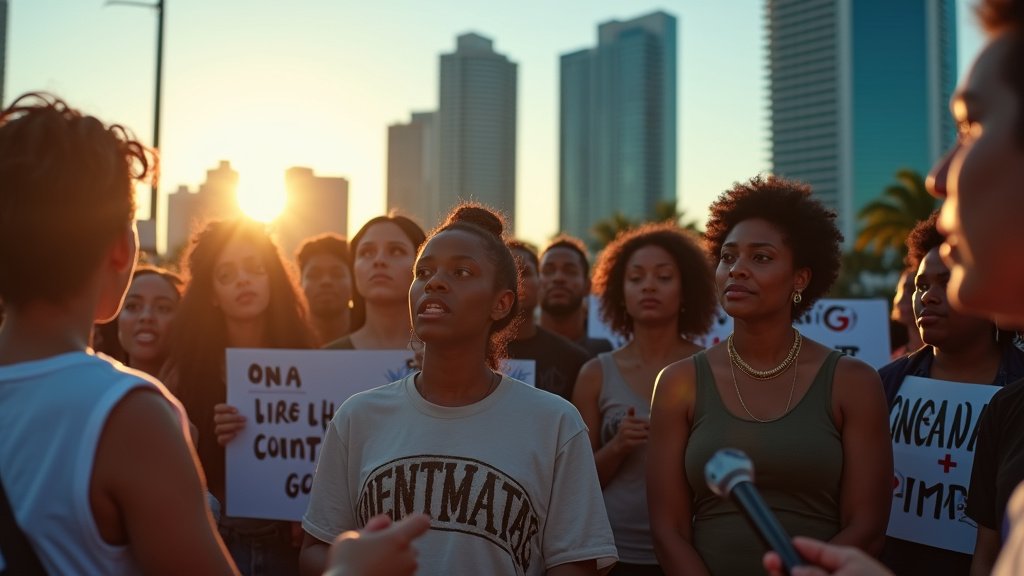
MIAMI, FL – A coalition of Miami activists, joined by documentary filmmaker Billy Corben, has once again intensified its public pressure campaign on FIFA and Miami-Dade County officials, urging robust protections against perceived “overzealous immigration enforcement” during the upcoming World Cup tournament. The group, which held a prominent press conference on October 2, 2025, is also demanding that local tax dollars allocated for the global sporting event be redirected towards essential community services. This latest push comes as concerns mount over potential immigration crackdowns impacting attendees and reflects a growing tension between the celebratory nature of the World Cup and the realities of federal immigration policies.
Mounting Fears Over Immigration Enforcement
The core of the activists’ demands centers on shielding World Cup attendees from federal immigration agents, particularly within and around stadiums. Their fears are significantly fueled by a recent New York Times report that detailed 145 human rights concerns identified at previous FIFA Club World Cup games, with several allegations pointing to the presence of U.S. Customs and Border Protection (CBP) and U.S. Immigration and Customs Enforcement (ICE) officials at tournament venues. “We unequivocally believe that any human rights plan that does not include protections for fans who are immigrants living in the United States or visiting the country is incomplete,” stated a press release from the activist coalition. They are urging the Miami Host Committee to commit to “no immigration enforcement in or near the stadiums during the games.”
Previous protests throughout 2025, including one in June and another following the October press conference, have highlighted similar anxieties. Activists cite the “Trump Administration’s recent immigration policies” as having a chilling effect, potentially deterring international visitors and local fans alike. Some activists have warned that such enforcement could lead potential attendees to opt for World Cup games held in Canada or Mexico instead of the United States.
Community Funding Debate: World Cup Subsidies vs. Local Needs
Beyond immigration concerns, the activists are also scrutinizing the significant public financial investment in the World Cup. Miami-Dade County is set to subsidize the event with over $60 million in public funds, a figure that has drawn sharp criticism, especially in light of the county’s reported $400 million budget deficit. At the October 2 press conference, Billy Corben highlighted this disparity, stating, “Miami-Dade is a proud county of immigrants, and we are subsidizing the World Cup with over $60 million in public cash and resources. In a year in which we suffered a $400 million budget deficit, Mayor Daniella Levine Cava is failing us all.”
This sentiment has been echoed by local officials, including Miami-Dade County Vice Chairman Kionne L. McGhee. McGhee has been a vocal proponent of halting World Cup funding, demanding the immediate return of approximately $46 million to support critical community programs that have faced severe budget cuts. These cuts reportedly affect services for seniors, children’s summer lunch programs, mental health resources, and various non-profit organizations providing direct aid. McGhee has characterized the spending as “moral failure,” arguing that “Entertainment cannot come before humanity.”
County leaders have countered that Miami-Dade’s commitment of $46 million to the World Cup is largely binding due to a host city agreement signed years ago, obligating the county to provide support for public safety, transit, and facilities. While the county has sought private sector funding to offset costs, critics argue that the prioritization of the tournament over essential services is unacceptable.
FIFA’s Human Rights Framework and Federal Response
FIFA has stated its commitment to human rights, implementing a framework that requires host committees to develop action plans addressing nondiscrimination, worker protections, and anti-trafficking. However, advocacy groups and labor unions have expressed skepticism about the enforceability of these plans, particularly after host cities missed initial deadlines for draft action plans. FIFA’s history, including scrutiny over migrant worker conditions at the 2022 World Cup in Qatar, has led many to question the organization’s true commitment to upholding human rights standards.
The Department of Homeland Security (DHS) has responded to the rising concerns by stating that “international visitors who legally come to the U.S. for the World Cup have nothing to worry about.” DHS emphasized that “What makes someone a target for immigration enforcement is whether or not they are illegally in the U.S.— full stop.” Despite this assurance, the presence of federal agents at major events, as was hinted at by CBP social media posts and reported sightings during the Club World Cup, continues to be a significant point of contention.
The activism surrounding the World Cup in Miami underscores a complex intersection of global sport, immigration policy, and local community needs. As the tournament draws closer, the demands for FIFA and local officials to address these pressing issues are expected to continue, shaping the narrative around Miami’s hosting of this prominent international event. The current news cycle highlights a trending concern for many communities grappling with similar dilemmas, making this a significant development in ongoing discussions about large-scale event hosting and human rights.
Looking Ahead: A World Cup Under Scrutiny
The activists have indicated that while an official from the 2026 FIFA World Cup Miami Host Committee has contacted them, no meeting date with FIFA has yet been set. They stress the need for direct engagement with those who understand the complexities of immigrant communities. The World Cup, projected to bring billions in economic impact to Miami and draw hundreds of thousands of visitors, is now also a focal point for advocacy regarding fundamental rights and community welfare. The coming months will reveal whether FIFA and local authorities will adequately address these critical concerns, ensuring the tournament is not only a sporting spectacle but also a truly inclusive and safe event for all.
This news is trending as the global sporting community prepares for one of the most anticipated events, with Miami seeking to showcase its vibrant culture while navigating these crucial human rights and financial discussions. The headline news of these activist efforts continues to draw attention to the responsibilities that accompany hosting such a massive international gathering.