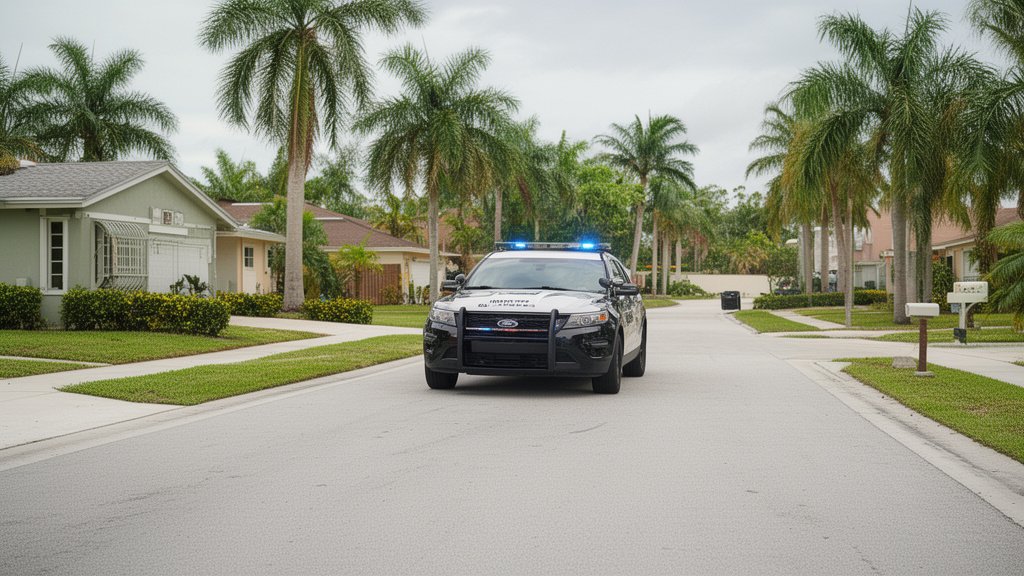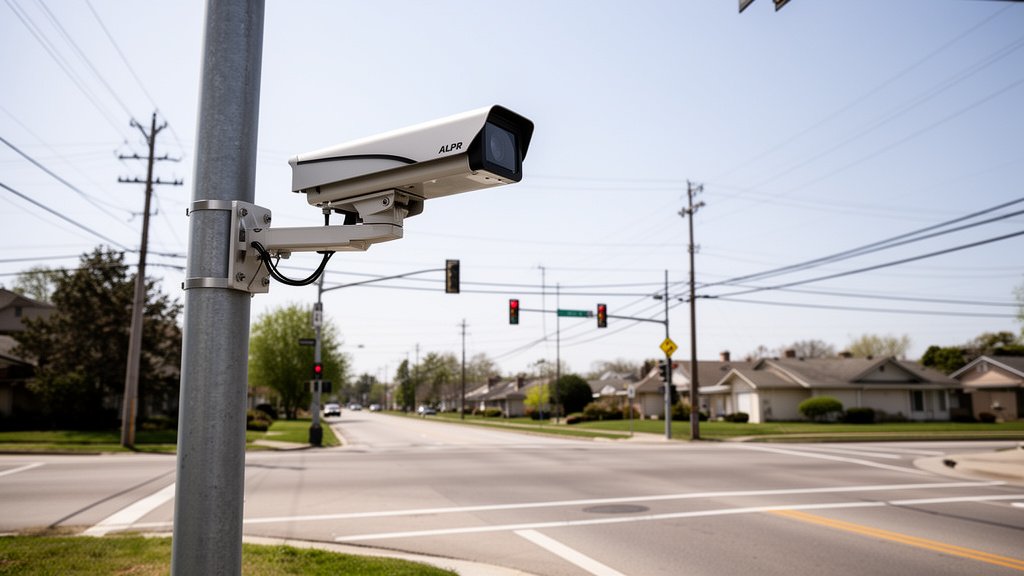
Public safety technology is undergoing a rapid, high-tech transformation, and at the center of the storm lies the widespread deployment of Flock Safety’s automated license plate readers (ALPRs). These devices, often mounted on suburban poles and highway infrastructure, have become a staple in law enforcement toolkits across the United States. While agencies tout these tools as essential for solving property crimes and locating missing persons, civil liberties groups and concerned citizens are increasingly questioning the long-term implications of a dragnet surveillance infrastructure that never sleeps. The debate is now forcing a shift in how these companies operate, with new industry standards like ‘proactive lockout’ and impending transparency mandates set to redefine the relationship between public data and police access by the end of 2026.
- Rapid Deployment: Flock cameras utilize machine learning to capture vehicle data in real-time, functioning as a force multiplier for understaffed police departments.
- Privacy Concerns: Critics, including the American Civil Liberties Union (ACLU), warn that the aggregation of driving patterns creates a dangerous database of citizen movement.
- Technological Safeguards: To address overreach, companies are implementing ‘proactive lockout’ features that automatically restrict access if usage violates strict department policies.
- The 2026 Deadline: A new industry-wide shift mandates the implementation of public-facing transparency portals by the end of 2026 to allow for greater oversight of data utilization.
Navigating the Surveillance-Privacy Equilibrium
The introduction of Flock Safety cameras into municipal landscapes represents more than just a hardware upgrade for law enforcement; it marks a significant evolution in the methodology of policing. Unlike traditional traffic cameras that may focus on speeding infractions, ALPR systems like those provided by Flock are designed to read license plates and vehicle characteristics—such as make, model, and color—in real-time, cross-referencing them against ‘hotlists’ of vehicles associated with criminal investigations.
The Mechanics of the ‘Proactive Lockout’
One of the most significant arguments against pervasive surveillance is the potential for misuse. There have been documented instances in various jurisdictions where law enforcement officers or authorized users have accessed databases for non-official purposes. In response to this, the industry is increasingly adopting the ‘proactive lockout’ mechanism. This software-defined control acts as a digital circuit breaker. If an authorized user attempts to query data without a valid case number, or if the system detects patterns of behavior that deviate from established use-of-force or data-access policies, the account is automatically locked. This feature aims to shift the burden of compliance from human oversight—which can be inconsistent—to algorithmic enforcement, ensuring that the system itself prevents unauthorized data extraction.
The Push Toward Transparency
Transparency has been the Achilles’ heel of the smart surveillance movement. For years, the proprietary nature of these technologies meant that the public was often unaware of what data was being collected, how long it was being stored, and who had access to it. This opacity is rapidly ending. By the end of 2026, a growing number of jurisdictions are requiring that surveillance providers implement mandatory transparency portals. These web-based interfaces are designed to provide the public with insight into the surveillance ecosystem, including statistics on how often cameras are accessed, the policies governing data retention (typically 30 days by default), and the specific agencies with which the data is shared. This move is a direct acknowledgment that public trust is a requisite for the continued operation of such intrusive technology.
Secondary Angles: Examining the Broader Impact
To fully understand the shift toward automated public monitoring, we must analyze three often-overlooked secondary dimensions: the historical evolution, the economic incentive, and the ‘Smart City’ convergence.
1. Historical Context: From Speed Cameras to Predictive AI
Public surveillance in the United States has evolved significantly. In the early 2000s, controversy centered on red-light cameras and the ‘privatization’ of traffic enforcement, where companies often took a cut of the fines collected. The modern ALPR movement differs; it is less about revenue generation and more about investigative efficiency. The historical transition from ‘punitive’ surveillance to ‘investigative’ surveillance marks a shift in how we view the public square. We have moved from automated ticket generation to automated movement tracking, a leap that fundamentally alters the nature of public anonymity.
2. Economic Efficiency and Resource Allocation
From a municipal budget perspective, the appeal of ALPR systems is financial. In an era where many police departments face staffing shortages, AI-driven surveillance offers a ‘force multiplier.’ Proponents argue that the cost of deploying a network of cameras is a fraction of the cost of hiring and training additional patrol officers to monitor the same geographic areas. However, this economic argument often ignores the hidden costs of data security, potential litigation related to privacy rights, and the long-term maintenance of the digital infrastructure, which may pose a financial risk to taxpayers if these programs are challenged in court.
3. The Future of ‘Smart Cities’ and Data Ownership
We are approaching a point where ALPR data is not an isolated stream but part of a larger ‘Internet of Things’ (IoT) ecosystem. In the future, vehicle surveillance data could be integrated with facial recognition, environmental sensors, and private doorbell camera networks. The ultimate question facing policymakers is one of data ownership: does a citizen have a reasonable expectation of privacy while driving on a public road? As the technological capabilities for tracking grow, the legal framework is struggling to keep pace, potentially leaving the definition of ‘public’ vs ‘private’ space in the hands of private technology vendors rather than elected legislators.
FAQ: People Also Ask
Q: How long does Flock Safety typically store the data captured by their cameras?
A: By default, Flock Safety systems typically store data for 30 days. After this period, the data is deleted unless it has been tagged for an active criminal investigation, ensuring that the system does not maintain a permanent, searchable database of innocent citizens’ movements.
Q: Can I opt-out of being recorded by Flock cameras?
A: No. Because these cameras are deployed in public spaces and on public thoroughfares, there is no mechanism for an individual to opt-out of the surveillance. The technology operates on the legal principle that there is no ‘reasonable expectation of privacy’ when driving a vehicle in public view.
Q: What is a ‘transparency portal’ and why is it important?
A: A transparency portal is a public-facing website that provides the community with visibility into the local surveillance program. It is important because it allows the public to hold law enforcement accountable, see how often the system is used, and understand the safeguards in place to protect civil liberties.
Q: Are these cameras the same as facial recognition?
A: No. Flock Safety cameras are primarily designed for Automated License Plate Recognition (ALPR). They focus on vehicle identification, make, model, color, and license plate characters, rather than identifying specific human faces.