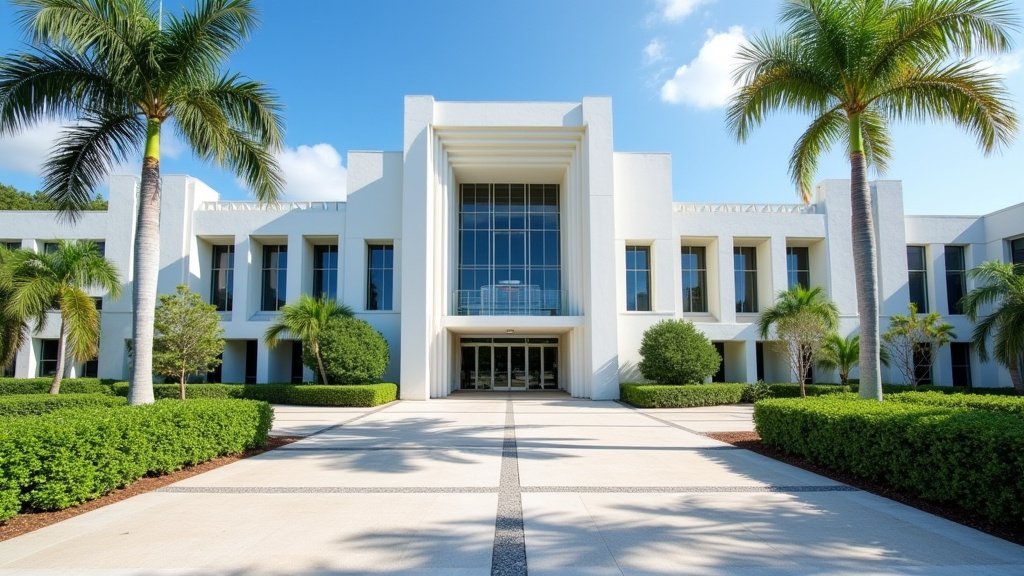
In a significant challenge to state-level housing mandates, Miami Beach officials have formally moved to initiate potential legal action against the Florida government regarding the controversial Live Local Act (Senate Bill 102). The City Commission’s decision comes amid a growing climate of uncertainty, fueled by an exodus of developers who find themselves caught in the crossfire between state-sanctioned density bonuses and stringent local zoning ordinances. As Miami Beach seeks to protect its unique urban character and historic districts, the move signals a high-stakes standoff that could redefine the boundaries of “Home Rule” in Florida.
Key Highlights
- Commission Authorization: The Miami Beach City Commission has officially approved the preparation of legal strategies to challenge the enforcement of the Live Local Act within city limits.
- The Preemption Conflict: At the core of the dispute is the Act’s ability to override local zoning height and density restrictions, which the city argues undermines its ability to manage growth and infrastructure.
- Developer Withdrawal: The city has reported instances of developers pulling back from projects, citing the legal ambiguity and the potential for prolonged litigation between the municipality and the state.
- Constitutional Stakes: The legal challenge will likely test the limits of the Florida Legislature’s power to preempt municipal zoning authority in the name of affordable housing initiatives.
The Legal Battle for Local Zoning Sovereignty
For decades, Miami Beach has operated under a tightly controlled planning framework, designed to balance its high-density tourism economy with the preservation of historic residential neighborhoods. The introduction of the Live Local Act has fundamentally disrupted this balance. By allowing developers to bypass local height and density restrictions if at least 40% of units in a project are designated as affordable housing, the state has effectively stripped municipalities of their primary tools for managing urban evolution.
The Genesis of the Conflict
The Live Local Act, signed into law to combat Florida’s skyrocketing housing costs, created a streamlined path for developers to build high-density, multi-family housing in commercial, mixed-use, or industrial zones. While the intent was to accelerate the supply of workforce housing, the reality in highly built-out cities like Miami Beach has been different. City planners and elected officials argue that the “one-size-fits-all” nature of the legislation does not account for the specific infrastructure limitations, flooding risks, and density caps required for a barrier island. The City Commission contends that the state’s preemption is not merely an housing policy, but an infringement on the city’s charter, which allows local governments to set zoning standards appropriate for their communities.
Economic Ripples and Developer Uncertainty
The clash has created a chilling effect on the real estate market. When municipal zoning ordinances are challenged by state law, investors face a perilous “legal gray zone.” Developers are hesitant to break ground on projects that utilize the Live Local Act incentives, fearing that a successful city-led lawsuit could render their building permits invalid or necessitate costly, retroactive redesigns. This uncertainty is exactly what the City Commission hopes to resolve—or exacerbate—by bringing the matter before a judge. Officials argue that developers are already retreating because they cannot guarantee the viability of their projects amidst the current legislative volatility. By seeking clarity through the court system, the city hopes to halt the speculative gold rush that threatens to alter the city’s skyline irrevocably.
The “Home Rule” Constitutional Dilemma
This dispute sits at the heart of a long-standing philosophical and constitutional tug-of-war in Florida: the principle of Home Rule. Home Rule is intended to empower local governments to govern their own affairs, subject to state law. However, the state’s increasing propensity to preempt local authority—whether on plastic bag bans, vacation rentals, or, in this case, housing density—has led to a strained relationship between Tallahassee and municipal leaders. The Miami Beach challenge is not just about zoning; it is a referendum on whether Florida cities retain the right to determine their own physical and economic future, or if they are merely administrative arms of the state government.
What Lies Ahead: Litigation Strategy
Legal experts suggest that a lawsuit from Miami Beach would likely focus on the procedural implementation of the Live Local Act and potential violations of the Florida Constitution regarding municipal autonomy. The city is expected to argue that the state’s sweeping preemption lacks a “rational basis” when applied to a city with such unique topography and infrastructure constraints. Should Miami Beach successfully navigate the initial hurdles of such litigation, it could encourage other Florida municipalities to follow suit, potentially creating a statewide coalition that forces the state legislature to revisit the Act’s most aggressive provisions. Alternatively, a loss would cement the state’s dominance in zoning, setting a definitive precedent that municipal zoning laws are subordinate to state housing mandates, effectively ending the era of restrictive local height caps in Florida commercial zones.
FAQ: People Also Ask
1. What is the main issue Miami Beach has with the Live Local Act?
Miami Beach officials argue that the Act violates the principle of Home Rule by allowing developers to bypass local zoning height and density restrictions, which the city believes will negatively impact infrastructure, traffic, and the character of the community.
2. Why are developers withdrawing projects in Miami Beach?
Developers are pausing or canceling projects due to the legal uncertainty surrounding the Live Local Act. With the city preparing to challenge the law in court, investors fear that projects approved under the Act might eventually be found unlawful, risking their capital and construction timelines.
3. Will this lawsuit affect other Florida cities?
Yes. A legal challenge in a high-profile city like Miami Beach could serve as a bellwether case. If the court rules in favor of the city, it could embolden other municipalities across Florida to file similar lawsuits, potentially forcing the state legislature to amend the Live Local Act to restore some local control.