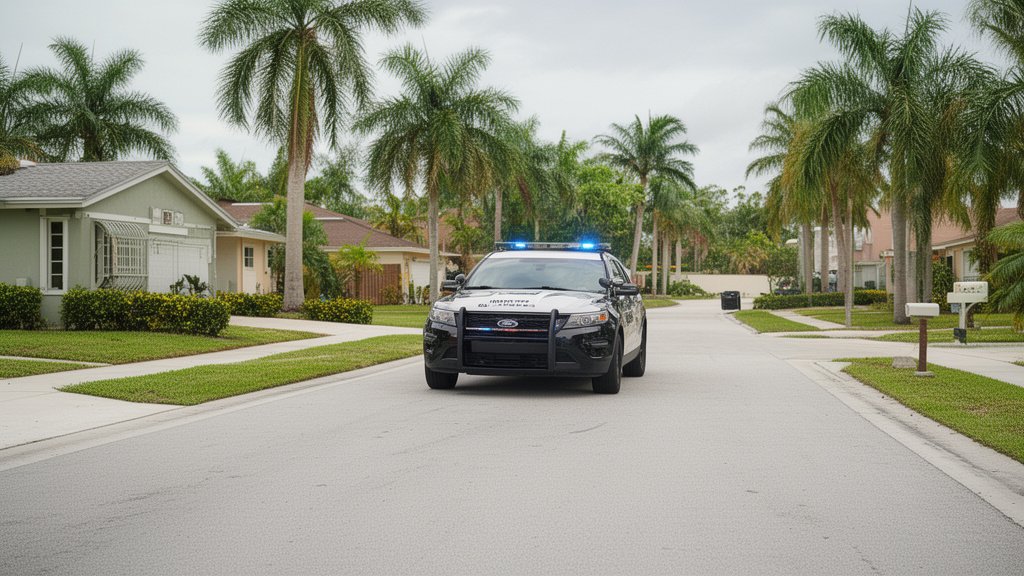
The Miami-Dade Police Department has issued a high-priority alert regarding the disappearance of 89-year-old Byron Davalos, an endangered senior who was last seen on October 15 in North Miami-Dade. Davalos, who suffers from Alzheimer’s disease, was operating a black 2013 Kia Soul at the time of his departure. The situation has triggered an urgent mobilization of resources, as investigators and family members express growing concern for his safety and well-being given the challenges associated with his cognitive condition. As search efforts intensify across the region, authorities are relying on public vigilance to help retrace his movements and secure his safe return.
Key Highlights
- Subject Details: Byron Davalos, 89, is described as an endangered missing person requiring immediate public assistance.
- Vehicle Information: He was last identified driving a black 2013 Kia Soul in the North Miami-Dade area.
- Last Known Activity: The disappearance occurred on October 15, prompting an ongoing investigation by the Miami-Dade Police Department.
- Medical Context: Davalos has been diagnosed with Alzheimer’s, which significantly increases the risk factor and the urgency of the search operations.
- Call to Action: Citizens with any information regarding the vehicle’s location or sighting of Mr. Davalos are urged to contact local law enforcement immediately.
The Anatomy of a Critical Search: Navigating the Disappearance of Byron Davalos
The disappearance of Byron Davalos serves as a sobering reminder of the complex logistical challenges faced by law enforcement when managing cases involving missing seniors. In high-traffic, densely populated areas like North Miami-Dade, the window for effective intervention is narrow. The disappearance of an individual with Alzheimer’s presents a unique set of variables, shifting the investigative focus from standard search protocols to specialized emergency response tactics, often categorized under state-led Silver Alert systems.
The Mechanics of the Silver Alert and Vulnerable Populations
When a senior citizen with cognitive impairment goes missing, the clock becomes the primary adversary. The Silver Alert system is a critical tool in these scenarios, designed specifically to disseminate information rapidly through broadcast media and electronic signage. Unlike a standard missing persons report, a Silver Alert assumes a high probability of immediate danger, given that the individual may be disoriented, physically fragile, or unable to communicate their distress to others.
The Miami-Dade Police Department’s swift action in this case highlights the institutional priority placed on the safety of the elderly. By identifying the vehicle—a 2013 Kia Soul—as a primary focal point, investigators are leveraging traffic cameras and automated license plate recognition (ALPR) systems. However, technology has its limits. The sheer geography of Miami-Dade County, with its interconnected highways and sprawling residential zones, makes the human element—the “eyes and ears” of the community—indispensable to the investigation. The goal is not merely to track the vehicle’s electronic signature but to find the intersection of human witness accounts and mechanical data points.
The Psychology of Wandering in Alzheimer’s Patients
Understanding the behavior of individuals with Alzheimer’s is paramount to the search strategy. Medical experts note that “wandering”—a common symptom of dementia—is often driven by a sense of purpose that no longer aligns with reality. An individual may attempt to drive to a former workplace, a childhood home, or a location they frequented decades ago. This behavior is rarely malicious or impulsive; rather, it is often a subconscious attempt to return to a state of comfort or familiarity.
In the context of the search for Byron Davalos, search teams are likely analyzing his personal history, previous routines, and habitual routes. While he was last seen in North Miami-Dade, investigators are casting a wider net, accounting for the possibility that he may have traveled significant distances while disoriented. This complicates the search, as the vehicle could be stationary in an obscure parking lot, broken down on a remote shoulder, or still in motion within the county’s intricate arterial road network.
Community Vigilance and the Impact of Public Data
Modern news cycles can sometimes desensitize the public to alerts; however, cases involving endangered seniors require a paradigm shift in how information is consumed and acted upon. The public is not merely an audience in this scenario; they are a mobile, pervasive sensor network. Each driver on the road in the South Florida area potentially holds the key to this investigation.
The effectiveness of this search is directly correlated to the precision of the information disseminated. By knowing the exact make, model, and year of the vehicle (a black 2013 Kia Soul), the public is equipped with a high-fidelity visual cue. This is not just a general missing person appeal; it is a targeted request for spatial observation. Organizations like the Alzheimer’s Association often emphasize that the “first 24 to 48 hours” are the most crucial. As this timeline extends, the strategy must transition from high-velocity pursuit to methodical, grid-based search patterns.
Future Implications and Preventive Measures
This incident inevitably raises broader questions about senior safety and the protocols available to caregivers. While the immediate focus remains solely on the safe recovery of Byron Davalos, the event underscores the importance of proactive measures. In the future, the integration of GPS tracking devices, voluntary registries for vulnerable adults, and increased community education programs will likely be central to mitigating the risks of such disappearances.
For families of those living with Alzheimer’s, the incident serves as a vital alert regarding the volatility of the condition. It necessitates a discussion on the boundaries of autonomy versus safety, particularly regarding the ability to operate a motor vehicle. As search teams continue their work, the community remains in a state of high alert, hoping for a resolution that brings Mr. Davalos home to his family. Every reported sighting—no matter how small or seemingly insignificant—is a data point that can collapse the search perimeter, bringing the investigation closer to a conclusion.
FAQ: People Also Ask
What is a Silver Alert, and how does it differ from an Amber Alert?
A Silver Alert is a public notification system specifically for missing seniors, typically those with Alzheimer’s, dementia, or other mental disabilities. While an Amber Alert is for abducted or missing children, the Silver Alert focuses on the specialized safety needs of the elderly and is designed to aid in quick location and recovery.
What should I do if I see the missing 2013 Kia Soul described in the report?
Do not attempt to intervene or approach the vehicle if you are unsure of the situation. Instead, immediately pull over to a safe location or use a hands-free device to contact the Miami-Dade Police Department. Note the exact time, location, and direction of travel, as these details are critical for the responding officers.
How does Alzheimer’s impact a person’s ability to drive safely?
Alzheimer’s affects cognitive functions, including spatial awareness, memory, and judgment. Patients may experience confusion, difficulty navigating familiar environments, or the inability to recognize signs of vehicle trouble, which significantly heightens the risk of accidents or getting stranded.
How can families register their loved ones with local police to prevent future incidents?
Many police departments maintain voluntary databases for vulnerable residents. Families can proactively contact their local precinct to provide emergency contact information, photos, and descriptions of their loved ones, which can be instantly accessed by officers if the individual goes missing.