Key Takeaways
- Official Confirmation: President Miguel Díaz-Canel confirmed for the first time that Cuban officials are in direct talks with the Trump administration.
- Early Stages: Despite the dialogue, the Cuban leader warned that a formal agreement remains “far off” as negotiations are only in the “initial phases.”
- Energy Crisis: The announcement comes as Cuba endures a three-month total fuel drought caused by a tightened U.S. oil blockade.
- Shadow Diplomacy: U.S. Secretary of State Marco Rubio reportedly held secret meetings in the Caribbean with high-ranking Cuban intermediaries.
- Goodwill Gesture: Havana has announced the release of 51 prisoners, a move seen as an attempt to de-escalate tensions during the delicate process.
Summary Lead
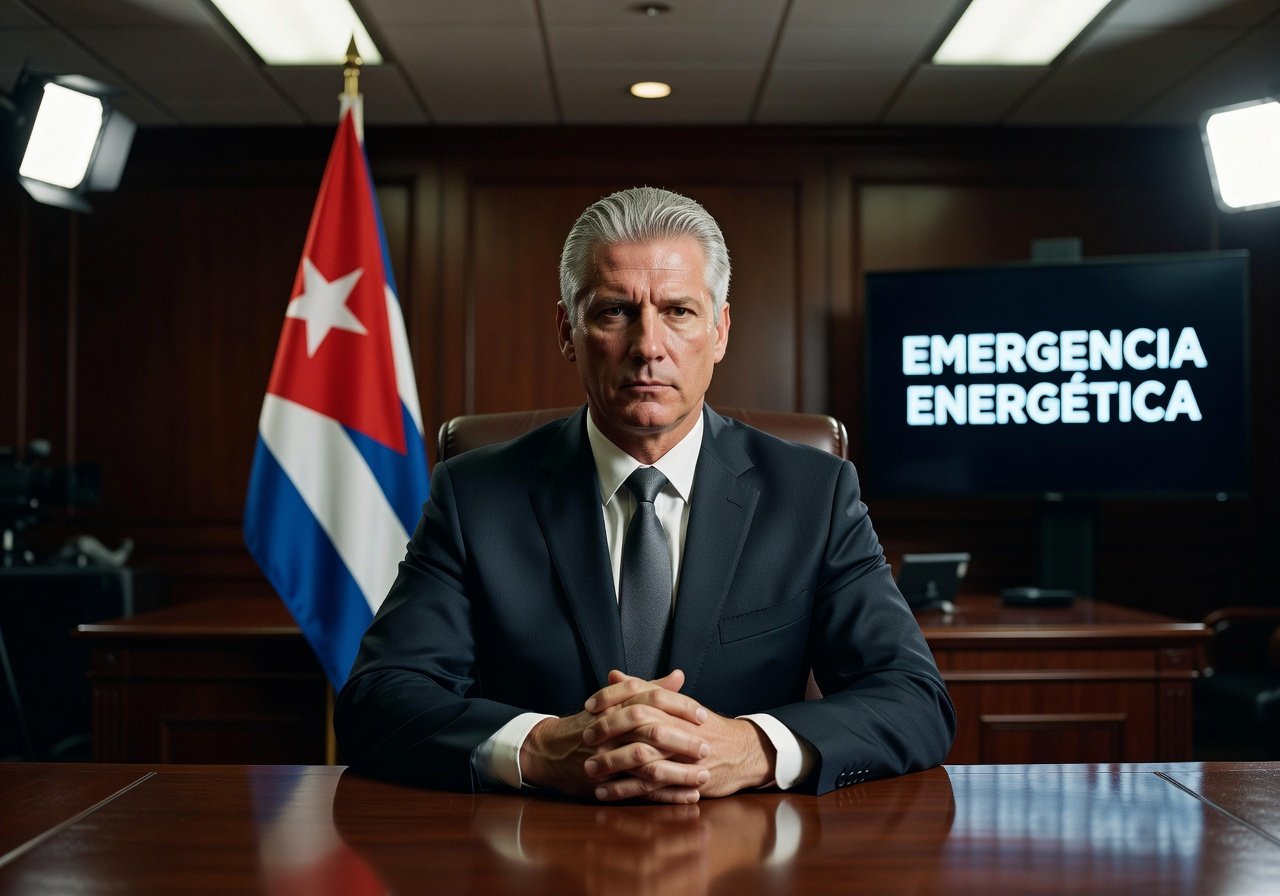
In a historic televised address on Friday, March 13, 2026, Cuban President Miguel Díaz-Canel officially confirmed that his government has entered into high-stakes negotiations with the administration of U.S. President Donald Trump. Speaking from the headquarters of the Communist Party in Havana, Díaz-Canel acknowledged that the “Miguel Díaz-Canel Trump talks” are aimed at resolving decades of bilateral friction. However, he tempered expectations by stating that the two nations are nowhere near a final settlement. This diplomatic pivot occurs against a backdrop of a catastrophic energy crisis on the island, where a U.S.-led blockade on petroleum shipments has left millions in darkness and brought the national economy to a grinding halt.
The Deep Dive
The confirmation of these talks marks the most significant diplomatic shift in the Caribbean since the Obama-era thaw. For weeks, rumors of secret meetings had circulated in diplomatic circles, bolstered by President Trump’s own cryptic comments that Cuba was “at the end of the road.” Today’s admission by Díaz-Canel provides a rare glimpse into a secretive process that could redefine the geopolitical landscape of the Western Hemisphere.
The Energy Stranglehold and the Pressure to Talk
The primary catalyst for Havana’s willingness to come to the table appears to be a desperate need for survival. Díaz-Canel admitted that no fuel tankers have reached Cuban shores in over 90 days, a direct result of a national emergency declared by the Trump administration earlier this year. This “energy blockade” has forced the shutdown of major thermoelectric plants, leaving much of the country with less than four hours of electricity per day.
“We are working under very adverse conditions that are having an impact on the lives of all our people,” Díaz-Canel stated. The president’s rhetoric shifted from defiance to a pragmatic acknowledgment that dialogue is the only viable path forward. Critics argue that the Trump administration’s “maximum pressure” campaign—which included threats of a “friendly takeover” following the recent political shifts in Venezuela—has effectively forced Havana’s hand.
Rubio’s Shadow Diplomacy
While Díaz-Canel was sparse on specific names, U.S. officials have leaked that Secretary of State Marco Rubio has been the architect of this new outreach. Reports suggest Rubio met secretly in late February with Raúl Guillermo Rodríguez Castro, the grandson of retired leader Raúl Castro, in St. Kitts and Nevis. Rubio, a longtime hawk on Cuba, is reportedly demanding significant structural changes in exchange for the lifting of the oil blockade.
According to sources familiar with the matter, the Trump administration is not just looking for economic concessions but is pressing for a “reimagining” of the Cuban political system. Díaz-Canel, however, remains firm on sovereignty, insisting that any talks must be based on “respect for the political systems of both countries.”
Prisoner Release: A Symbolic Olive Branch?
Just hours before the televised address, the Cuban government announced the release of 51 prisoners, facilitated by Vatican mediation. While the identities of those released have not been fully disclosed, human rights groups are closely watching to see if prominent dissidents are among them. This move is widely interpreted as a tactical maneuver to show “goodwill” to the Trump administration and the international community.
However, experts warn that the road ahead is fraught with obstacles. The Trump administration has historically viewed the Cuban government with deep skepticism, and the President has recently stated that Cuba has “a bad philosophy and a bad regime.” For Díaz-Canel, the challenge lies in securing energy relief without appearing to surrender the principles of the 1959 Revolution—a delicate balancing act that explains why he considers an agreement to be so distant.
FAQ: People Also Ask
Why is Cuba talking to the Trump administration now?
Cuba is currently facing its worst economic and energy crisis in decades. A U.S.-imposed oil blockade has prevented fuel shipments from reaching the island for three months, leading to widespread blackouts and social unrest. The government is seeking relief from these sanctions.
What are the main obstacles to a Cuba-U.S. agreement?
The primary obstacles include the U.S. demand for democratic reforms and the release of political prisoners, while the Cuban government insists on maintaining its socialist system and sovereignty. Additionally, the Trump administration’s “maximum pressure” policy creates a high-friction environment for negotiation.
Who is leading the negotiations for the United States?
U.S. Secretary of State Marco Rubio is reportedly the lead official handling the Cuba portfolio. He has been involved in secret meetings with individuals close to the Castro family to establish a framework for the current dialogue.