Key Takeaways
- Peak Enforcement: The first of two “peak weekends” began yesterday, March 12, and runs through Sunday, March 15, with the highest level of police visibility and restrictions.
- Financial Penalties: Non-residents face flat-rate parking fees of $100 at city garages and a staggering $548 towing fee plus administrative costs for illegal parking.
- Surveillance Blitz: License plate readers are active 24/7 on the MacArthur and Julia Tuttle causeways, and DUI checkpoints are operational tonight and tomorrow night.
- Beach Access: Ocean Drive access is limited to six specific streets (5, 7, 8, 10, 12, and 14), with security checkpoints screening for prohibited items like coolers, speakers, and glass.
- Strategic Shift: The city has rebranded its “breakup” as “Wake Up to a New March,” shifting the focus to fitness events and health-conscious tourism over the party-centric atmosphere of the past.
Summary Lead
Miami Beach officially entered its most restrictive enforcement phase for Spring Break 2026 today, Friday, March 13, as city officials and law enforcement agencies launched a massive “high-impact” security operation. Aimed at preventing the violent incidents and gridlock that plagued the city between 2021 and 2023, the current measures represent a calculated balance between maintaining the city’s “breakup” with unruly crowds and pivoting toward a wellness-focused tourist demographic. With police from multiple agencies patrolling Ocean Drive and the implementation of $100 flat-rate parking, the city is making it clear that the era of the wild, unvetted street party is over.
The Deep Dive
As the sun rises over the Atlantic this Friday morning, the landscape of South Beach looks less like a vacation hotspot and more like a high-security zone. Following two fatal shootings in 2023, Miami Beach leaders have spent the last three years refining a strategy to “end the chaos.” Today marks a critical test for that strategy as the first peak weekend of the month coincides with a wave of college travelers arriving from across the country. Miami Beach Spring Break restrictions are no longer just suggestions; they are a multi-layered infrastructure of deterrence.
The “Wake Up” Pivot: Beyond the Breakup
In previous years, the city’s messaging was confrontational, famously declaring it was “breaking up” with Spring Break. For 2026, Mayor Steven Meiner and the City Commission have adjusted the tone. The new campaign, “Wake Up to a New March,” seeks to replace late-night revelry with early-morning athletic events. By hosting the Life Time 305 Half Marathon and the Gymreapers Wodapalooza festival, the city is actively courting a “more mature, healthier” visitor.
“We are leaving the disorder of past spring breaks behind,” stated Commissioner Alex Fernandez. “We’ve found a new match—visitors who focus on wellness and enjoy the city the right way.” However, the invitation to “break a sweat” comes with the caveat that those who come to break the law will find themselves in a jail cell.
The Financial Toll: $100 Parking and $548 Towing
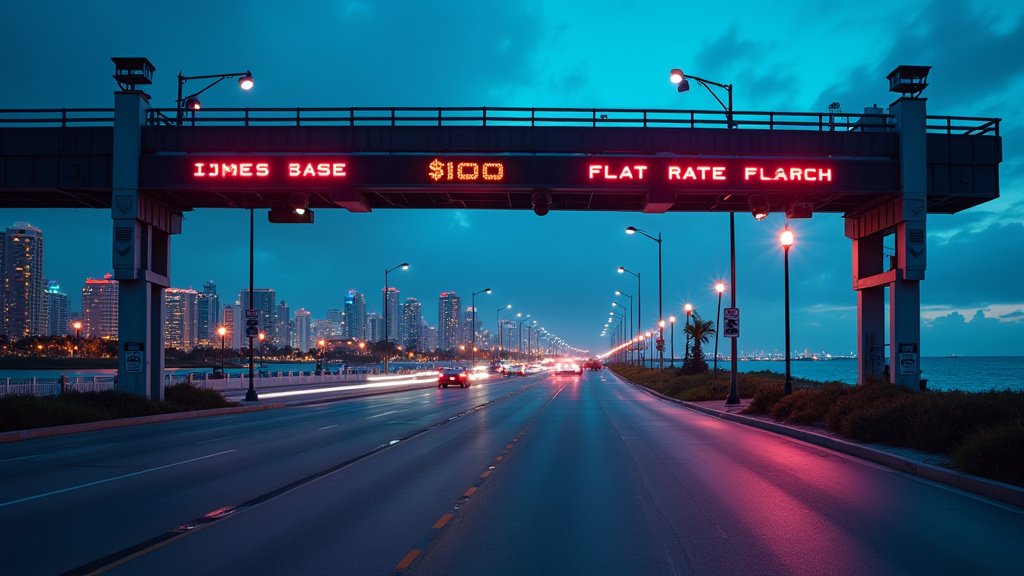
The most immediate deterrent for day-trippers and non-resident visitors is the astronomical cost of entry. Starting yesterday, parking garages in the Art Deco District (specifically G1 through G4) implemented a flat rate of $100 for non-residents. On-street parking in the district has risen to $20 per hour for non-residents, while residents maintain their $1-per-hour rate.
The city’s towing policy has also been weaponized as a tool of crowd control. The standard towing fee for non-residents has been doubled to $548, not including administrative fees and storage costs. City Manager Eric Carpenter has been given the authority to increase these rates further if the crowds become unmanageable. The message is clear: if you cannot afford the premium, South Beach is not the destination for you this weekend.
Surveillance State: Causeways and License Plate Readers
Technology is at the forefront of the 2026 enforcement plan. Starting at 10 p.m. tonight, license plate readers will be fully operational on the eastbound lanes of the MacArthur and Julia Tuttle causeways. These systems scan every vehicle entering the barrier island, instantly flagging stolen cars, outstanding warrants, and individuals with a history of violent offenses.
Additionally, the Miami Beach Police Department, assisted by the Florida Highway Patrol and the Miami-Dade Sheriff’s Office, will set up DUI checkpoints along major entry points. This “bottleneck” strategy is designed to slow the flow of traffic into the South of Fifth and Flamingo Park neighborhoods, ensuring that every visitor entering the city is vetted and sober.
The Security Net: Beach Checkpoints and Banned Items
The physical experience of the beach has also changed. Access to the sand along Ocean Drive is restricted to select entrance points at 5th, 7th, 8th, 10th, 12th, and 14th Streets. Each entrance is staffed by security personnel who conduct bag checks.
Items that were once staples of the Spring Break experience are now strictly forbidden. This includes coolers, glass containers, inflatable devices, and tents. Most significantly, the city has maintained its ban on amplified music without a permit, effectively ending the impromptu DJ sets and loud speakers that often fueled large, unruly gatherings. Package liquor stores in the Art Deco District are also mandated to close by 8 p.m. each night to prevent late-night alcohol-fueled escalation.
Economic Aftershocks: Business Owners in the Crossfire
While the city celebrates an 18% drop in crime since these measures were first introduced, the local business community remains divided. Long-time hotel owners, like Mitch Novick of the Sherbrooke Hotel, have noted that March—traditionally the most profitable month of the year—has been “strangled” by the restrictions.
“The barricades and the $100 parking make the city look like a disaster zone,” some critics argue. However, others, like Joel Stedman of the Washington Avenue Business Improvement District, believe the trade-off is necessary. The city points to rising resort tax revenue as evidence that a “higher-spending” class of tourist is replacing the traditional Spring Breaker, though many smaller businesses that relied on volume are still feeling the pinch.
FAQ: People Also Ask
Q: Is there a curfew in Miami Beach for Spring Break 2026?
A: Unlike 2024 and 2025, there is no automatic midnight curfew in place for 2026. However, City Manager Eric Carpenter and the Police Chief retain the authority to implement an emergency curfew at any moment if crowds become unruly or if public safety is threatened.
Q: What time do the Miami Beach beaches close?
A: In a slight easing of previous rules, beach access points are currently scheduled to close at 10 p.m. rather than the 6 p.m. closure seen in recent years. However, security checkpoints remain active throughout the day to screen for prohibited items.
Q: Can I drink alcohol on the beach during Spring Break?
A: No. Alcohol consumption and smoking are strictly prohibited on all Miami Beach beaches year-round. During Spring Break, these laws are enforced with a zero-tolerance policy, and violators are subject to immediate fines or arrest.