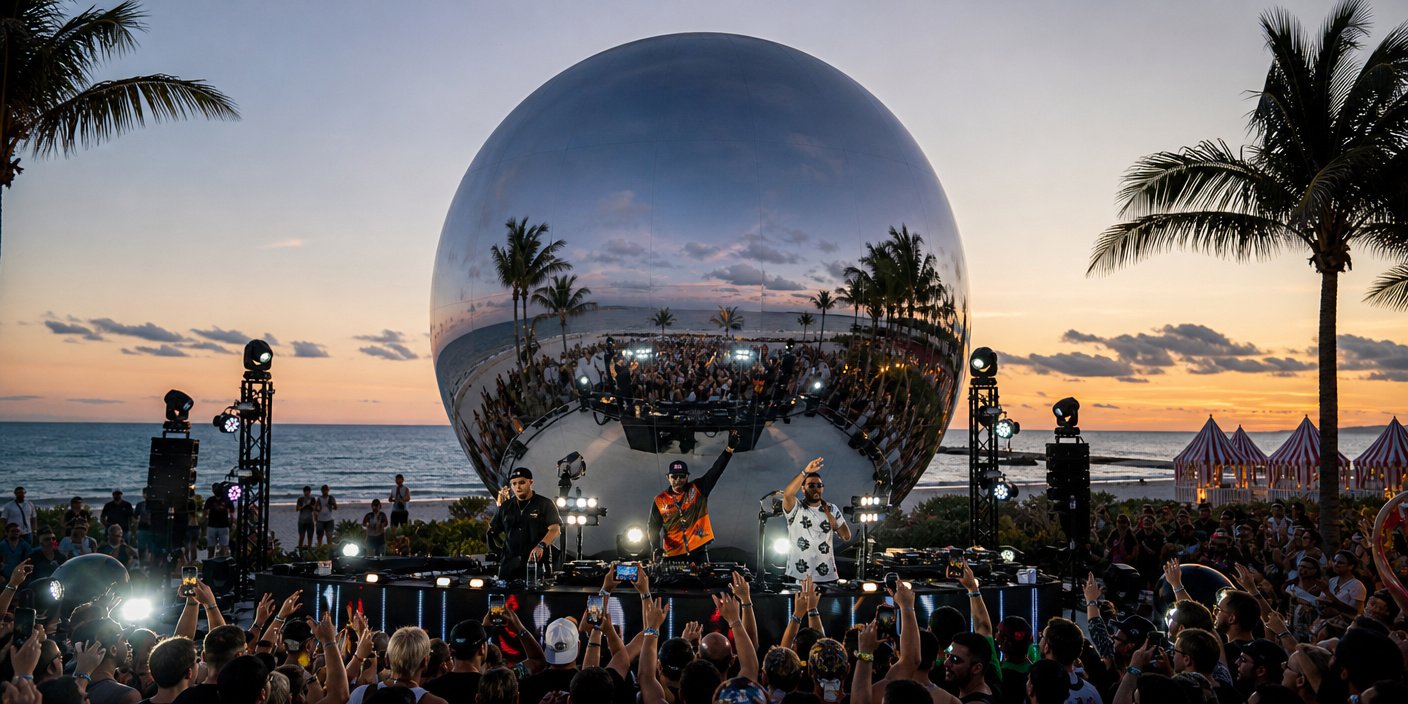
In a decisive move that sets a new precedent for large-scale urban events, the Miami City Commission has officially approved a 20-year contract with the organizers of the Ultra Music Festival, ensuring the global electronic music icon remains at its historic home in Bayfront Park through 2046. The unanimous decision, reached in late April 2026, marks the end of years of contentious negotiations and legal posturing, solidifying the festival’s role as a cornerstone of Miami’s cultural and economic identity. By formalizing this long-term arrangement, the city has attempted to balance the massive fiscal benefits of the event against the persistent quality-of-life concerns voiced by the Downtown Neighbors Alliance and local residents.
Key Highlights
- Long-Term Certainty: A 20-year license agreement keeps Ultra Music Festival at Bayfront Park through 2046, providing stability for both organizers and the city’s tourism sector.
- Rigorous Oversight: The contract is structured around mandatory five-year review intervals, where festival performance and community compliance must be re-evaluated by the City Commission.
- Economic Anchor: The festival continues to function as a financial powerhouse, with recent data estimating a $207 million direct local economic impact, supporting over 1,400 jobs.
- Termination Clause: The city retains a “revocable license” status, granting commissioners the power to cancel the agreement with a four-fifths supermajority vote, providing a fail-safe mechanism against mismanagement.
The Architecture of the 20-Year Deal
The 20-year agreement is not a blank check; rather, it is a sophisticated, tiered arrangement designed to mitigate risk for both the municipality and the event producers, Event Entertainment Group. After years of one-off permits and uncertainty, the City of Miami has opted for a structure that offers long-term planning capability while maintaining strict legislative oversight. The deal is effectively divided into four, five-year performance cycles. At the end of each interval, Ultra must present a comprehensive report to the City Commission, which will then formally evaluate the event’s logistics, security measures, and community compliance.
Understanding the Revocable License
Crucial to the contract’s approval was the retention of the “revocable license” legal status. Unlike a traditional lease, which offers tenants substantial rights, a revocable license is much more fragile. It empowers the City of Miami to terminate the agreement on an annual basis. This specific clause was likely the deciding factor for commissioners who were hesitant to commit to such a long duration. By requiring a supermajority vote (four out of five commissioners) to cancel, the city has balanced its need to protect the park with its desire to keep an internationally recognized event. This structure essentially forces the festival organizers to view every year as a test, ensuring that operational standards remain high.
The 5-Year Checkpoint Mechanism
The mandated five-year check-in is a novel approach to large-scale event management. In this model, the city essentially forces a “reset” conversation. Every five years, the festival must justify its continued residency by presenting data on noise levels, traffic control, and crowd management. If the festival fails to adapt to the evolving needs of the downtown area, the city has the legal framework to force modifications to the contract—or potentially end it. This mechanism transforms the festival from a static tenant into a dynamic partner that must constantly prove its value to the city administration.
The Economic Engine Behind the Beat
There is no ambiguity regarding why the City of Miami fought to keep Ultra Music Festival within the city limits. The event serves as more than just a musical gathering; it is a primary driver of the local economy. According to recent analyses, the festival generates over $207 million in direct local economic activity, a figure that is difficult for any municipal government to ignore. This capital flows directly into local hotels, restaurants, transit services, and retail, effectively kicking off the city’s tourism calendar each year.
Quantifying Impact: $207 Million and Beyond
The economic impact is not merely a surface-level statistic. The festival supports approximately 1,400 jobs annually in the region, ranging from logistical and security staffing to hospitality and service sector roles. Furthermore, the event significantly contributes to the Miami-Dade County GDP. For the City of Miami, Ultra is a marquee brand that aligns with its vision of being a global destination for tech, innovation, and entertainment. The visibility provided by the global broadcast of the festival acts as a form of non-stop marketing, keeping Miami at the top of the list for potential tourists throughout the year.
The ‘Infrastructure’ Argument
Perhaps the most telling shift in the conversation is the characterization of the festival. During the recent commission debates, some officials argued that Ultra has evolved into “infrastructure” for the city—a critical asset that requires sustained, long-term support to function properly. This perspective suggests that the city has moved past treating the festival as an temporary visitor. Instead, they are integrating it into the city’s long-term master plan, accepting that its presence is a permanent component of Miami’s downtown ecosystem. This shift in mindset is what ultimately enabled the 20-year commitment, as leaders began to treat the festival as a permanent business fixture rather than a disruptive interloper.
Friction in the Downtown Core
Despite the economic arguments, the path to a 20-year agreement was paved with significant opposition. The Downtown Neighbors Alliance (DNA) has been vocal in its dissent, citing valid concerns over the “industrial-grade” noise, traffic congestion, and the extended loss of use of Bayfront Park. The controversy reached a boiling point just days before the vote, when the DNA filed a lawsuit alleging that the festival violated noise limits established in a 2021 settlement agreement.
Resident Concerns and the Legal Landscape
For the residents of the downtown district, the approval of the 20-year contract felt premature, especially given the active legal dispute. Opponents argued that the city was stripping itself of its best negotiating leverage by securing the deal while the festival was potentially in breach of previous agreements. The DNA’s complaint highlights that, according to monitoring reports from the 2026 edition of the festival, sound levels exceeded the 95-decibel cap multiple times on the first day alone. To the residents, the contract approval signals that the city is prioritizing revenue over the quality of life for its permanent citizens.
Balancing Tourism and Quality of Life
The challenge for Miami’s leadership is to ensure that the city remains livable while capitalizing on its status as a global entertainment hub. The new contract attempts to address this by mandating that Ultra host two community meetings annually, organized by city officials, 45 days prior to the event. This is intended to give residents a seat at the table, allowing them to voice grievances before the stages are built. However, whether these meetings will lead to substantive changes in operational behavior remains the central point of contention. For many residents, the agreement is less about partnership and more about managing an unavoidable, high-volume neighbor.
Future Outlook: A New Standard for City Events
The 20-year Ultra deal signals a maturation of Miami’s event hosting capabilities. By codifying the relationship, the city is setting a template for how it will handle other massive events, such as Formula 1. The approach of blending long-term financial certainty with rigorous, scheduled operational audits is a model that other major metropolises are watching closely.
The Precedent for Major Festivals
As cities across the globe face similar pressures—balancing the massive influx of capital from major festivals against the growing needs of urban residents—the Ultra model provides a potential roadmap. It demonstrates that exclusivity and permanence don’t have to mean a lack of accountability. By embedding review checkpoints directly into the contract, the City of Miami has essentially created a feedback loop that forces the festival to modernize its practices as technology and neighborhood expectations change.
Managing the Urban Soundscape
Technological advancements in audio dispersion and noise mitigation will likely play a massive role in the next decade of this agreement. The festival’s ability to adhere to the 95-decibel limit will likely be the primary metric for the five-year reviews. If the organizers cannot solve the noise issue through engineering, the revocable nature of the license ensures that the city is not trapped in an untenable situation. The next 20 years will test whether Ultra can truly integrate itself into the neighborhood as a welcome resident rather than a tolerated inconvenience.
FAQ: People Also Ask
1. Can the City of Miami really cancel the Ultra Music Festival contract?
Yes. While it is a 20-year agreement, the contract is a “revocable license,” meaning the city retains the right to cancel it annually. However, doing so requires a supermajority vote (four out of five) from the City Commission.
2. What is the significance of the 5-year check-in intervals?
These intervals act as mandatory performance reviews. Ultra must submit a report to the city after every five years of the festival, allowing the Commission to evaluate the event’s compliance with noise ordinances, crowd control, and community engagement before proceeding to the next five-year segment.
3. How does the festival impact the local economy?
According to recent studies, the festival generates over $207 million in direct local economic impact. It supports approximately 1,400 jobs and significantly contributes to the GDP of Miami-Dade County, making it a critical financial driver for the downtown area.
4. What concerns have residents raised regarding the festival?
Local residents, primarily represented by the Downtown Neighbors Alliance, have cited excessive noise levels, traffic congestion, loss of access to public park space for nearly a month, and concerns over public safety and general quality of life in the downtown core.