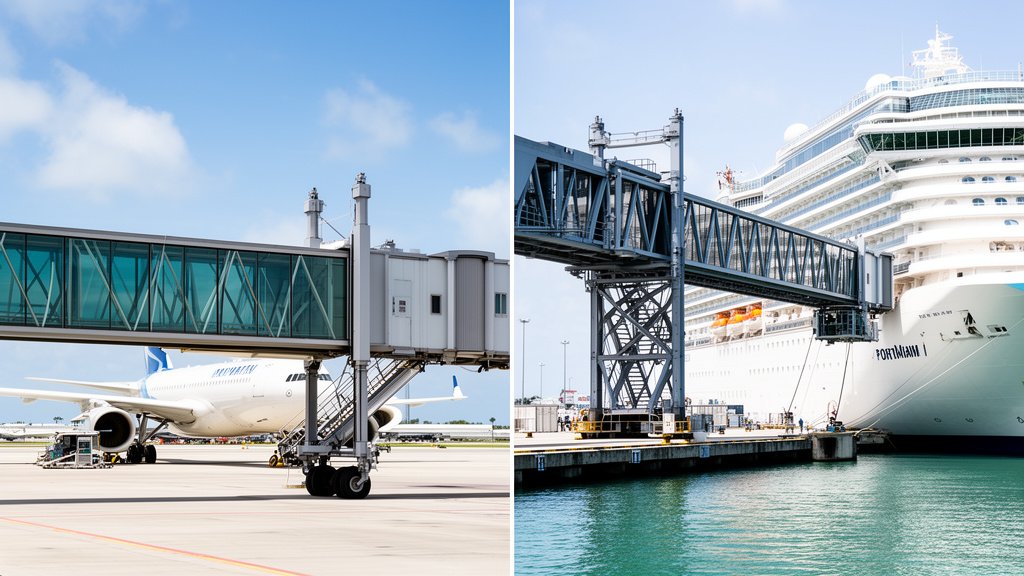
The Miami-Dade County Commission is set to deliberate on a substantial financial initiative that promises to reshape the transit experience at two of the region’s most critical economic engines: Miami International Airport (MIA) and PortMiami. The proposal, which seeks a total of $300 million, focuses on the procurement and installation of modern passenger boarding bridges—the essential, often overlooked link between the terminal and the vessel or aircraft. With $147 million of this total earmarked for immediate review on the upcoming county commission agenda, the move signals a proactive effort by local leadership to address the infrastructure demands of a rapidly growing global gateway.
The Urgency of Infrastructure Modernization
For major transit hubs like Miami International Airport and PortMiami, boarding bridges—often referred to as jet bridges at airports or passenger gangways at the port—are the frontline of operational efficiency. As Miami continues to solidify its status as a premier destination for both international travel and the global cruise industry, the physical infrastructure supporting these flows must not only be reliable but also capable of managing increased passenger volume. The current initiative is rooted in the necessity of replacing aging equipment that has been subject to years of heavy use in a harsh, salt-air, and hurricane-prone environment.
Aging boarding bridges present a dual challenge: higher maintenance costs and potential operational delays. When these systems fail, it creates a ripple effect of disruption, resulting in gate changes, passenger frustration, and scheduling bottlenecks. By seeking a comprehensive $300 million capital investment, Miami-Dade officials are shifting from a “fix-it-as-it-breaks” maintenance cycle to a long-term strategic renewal. This transition is critical for maintaining Miami’s competitive advantage, particularly as other global hubs upgrade to smarter, more energy-efficient, and faster-deploying boarding technology.
Allocation Breakdown: A Phased Approach
The $300 million request is structured to be comprehensive, ensuring that funds are not only available for the immediate purchase of hardware but also for the specialized installation, site preparation, and technological integration required for modern systems. The $147 million portion scheduled for the current county commission agenda serves as the pilot phase for this broader project.
This funding will likely target the highest-priority gates at MIA—where capacity has been strained by record-breaking international arrivals—and key terminals at PortMiami, which requires specialized gangways to accommodate the massive, next-generation cruise ships currently homeported in the city. The allocation strategy ensures that the most critical infrastructure bottlenecks are addressed first, while allowing the county to procure the remaining $153 million in future tranches based on the success and implementation speed of this initial phase. This phased approach provides fiscal accountability while addressing the immediate urgency of the modernization plan.
Operational Impact and Future-Proofing
Beyond simple replacement, the move to invest in new boarding bridges represents a commitment to future-proofing Miami’s transit hubs. Modern passenger boarding systems are significantly more advanced than their predecessors. They offer improved climate control, better accessibility for travelers with disabilities (ADA compliance), and integrated digital signage that enhances the overall “passenger experience”—a key metric for global airport and port rankings.
From a technical perspective, the newer bridges are designed for longevity. They incorporate corrosion-resistant materials, essential for the Miami coastal environment, and automated docking systems that reduce the risk of “bridge-to-hull” damage, a costly and frequent occurrence in older systems. Furthermore, as aircraft and cruise ship designs evolve, having flexible, modular boarding bridge systems allows MIA and PortMiami to remain compatible with a wider variety of vessels and planes, preventing technological obsolescence.
The Economic Ripple Effect
The economic impact of this proposal cannot be overstated. Tourism, international business, and cruise commerce are the pillars of the South Florida economy. A bottleneck at the airport or the port is a bottleneck for the region’s GDP. By investing $300 million in these specific infrastructure assets, the county is essentially underwriting the efficiency of the local travel and hospitality sector. Smooth, efficient, and modern boarding processes improve throughput, decrease turnaround times for airlines and cruise lines, and ultimately contribute to a more welcoming atmosphere for the tens of millions of visitors passing through Miami annually.
FAQ: People Also Ask
What is the total funding request by the county?
Miami-Dade County is seeking a total of $300 million for the upgrade and purchase of new passenger boarding bridges for Miami International Airport and PortMiami.
How much of the funding is up for immediate vote?
A $147 million portion of the total $300 million funding package is currently scheduled for review on this week’s county commission agenda.
Why are these upgrades needed now?
The current infrastructure is aging, leading to increased maintenance costs, potential operational delays, and a need for greater energy efficiency. Modernizing these bridges ensures reliability and better passenger accommodation.
Does this affect both airports and seaports?
Yes, the funding is specifically designated for both the Miami International Airport (MIA) and PortMiami, addressing the critical transit needs of both air and sea travel hubs within the county.