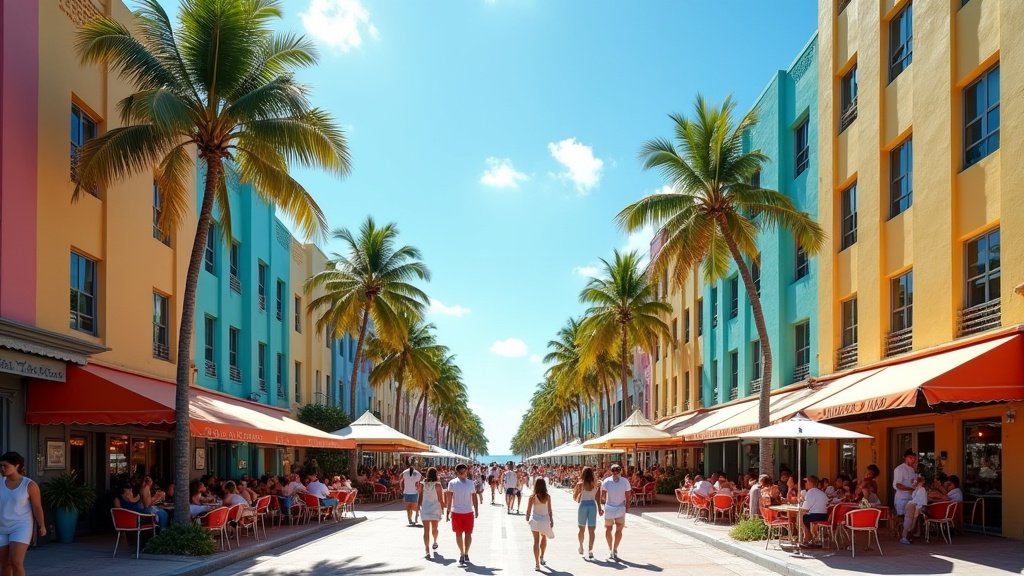
In a landmark decision that promises to redefine the aesthetic and economic pulse of South Florida’s most famous thoroughfare, the Miami Beach City Commission has voted unanimously to authorize a seasonal closure of Ocean Drive to vehicular traffic. Commencing this cycle, the stretch will transition into a pedestrian-only zone starting from Thanksgiving and extending through March annually. This strategic move, heavily supported by local business associations and urban planning advocates, marks a significant shift in how the city manages its high-traffic Art Deco District, signaling a calculated step toward a long-term goal of making the beachfront strip a permanent pedestrian-only destination.
Key Highlights
- Unanimous Approval: The Miami Beach City Commission voted unanimously to formalize the seasonal closure, reflecting a strong political consensus on the future of the district.
- Strategic Seasonal Timing: The car-free status will span from Thanksgiving through March, directly covering the peak tourism and high-traffic winter months.
- Business Integration: The initiative has received robust backing from local business associations, who view increased pedestrian flow as a driver for longer dwell times and higher retail spending.
- A Stepping Stone Strategy: City officials have framed this seasonal mandate as a pilot and structural evolution aimed at eventually establishing a permanent, year-round pedestrian thoroughfare.
The Strategic Transformation of an Icon
For decades, Ocean Drive has served as the visual shorthand for Miami Beach: neon lights, pastel Art Deco facades, and the constant hum of cruising automobiles. However, as the density of the area has increased, the logistical challenge of managing thousands of tourists alongside vehicular traffic has become increasingly untenable. The recent unanimous vote by the Miami Beach City Commission is not merely an act of traffic control; it is a profound reimagining of urban space. By reclaiming the street for pedestrians, the city is betting that the quality of the visitor experience will far outweigh the convenience of vehicular access.
Prioritizing the Pedestrian Experience
The decision centers on safety, aesthetics, and economic revitalization. Ocean Drive has historically struggled with a conflict between its role as a major thoroughfare and its identity as a world-class tourism destination. Traffic congestion, noise pollution, and the inherent dangers of mixing high-volume pedestrian foot traffic with cars have plagued the area. By eliminating vehicular traffic from late November through March, the city creates a vast, open-air promenade. This allows for expanded sidewalk cafes, safer cross-street navigation, and a more immersive experience for tourists looking to photograph and admire the historic architecture that defines the district.
Economic Implications and Business Support
Critics of pedestrianization often cite concerns about accessibility or a drop in retail traffic. However, in this instance, local business associations have been pivotal in advocating for the closure. The logic is grounded in modern urban retail economics: when people walk, they spend more time in shops, linger at cafes, and engage more deeply with the local culture. By creating a pedestrian-only environment, the city is effectively increasing the ‘walkable square footage’ of the district, which, in turn, is expected to boost revenue for restaurants, bars, and boutique hotels that line the street. The seasonality of the plan allows businesses to capitalize on the high-traffic winter months when pedestrian density is at its peak.
Navigating Logistical Hurdles
While the vision for a pedestrianized Ocean Drive is widely supported, the transition requires significant operational shifts. The city is currently finalizing plans for traffic rerouting and service access for deliveries and residents. The challenge lies in managing traffic displacement to adjacent parallel streets—specifically Collins Avenue and Washington Avenue—without causing bottleneck gridlocks. Furthermore, public transportation and rideshare drop-off points are being re-engineered to ensure that visitors can still access the area comfortably without a personal vehicle. This phase of implementation is crucial, as the success of the seasonal program will likely serve as the litmus test for a permanent, year-round pedestrian mandate.
Urban Planning in a Climate-Resilient Future
Miami Beach is also looking at the environmental benefits of the closure. Reducing vehicle idling and emissions in a dense, coastal urban corridor aligns with the city’s broader resilience and sustainability goals. As the city battles the realities of sea-level rise and the need for modern infrastructure, a car-free Ocean Drive offers a unique opportunity to redesign the streetscape with improved drainage, permeable surfaces, and sustainable landscaping. It is a proactive step that moves the city away from the mid-20th-century car-centric design and toward a 21st-century model that prioritizes human-scale utility and environmental sustainability.
FAQ: People Also Ask
Q: Will Ocean Drive be closed to cars all year round?
A: Currently, the approved measure is seasonal, running from Thanksgiving through March. However, officials have indicated that this is a strategic move intended to eventually facilitate a permanent, year-round pedestrian-only zone.
Q: How will this affect deliveries and residents living on Ocean Drive?
A: The city commission is coordinating with logistics providers and residents to establish specific delivery windows and access points to ensure that necessary services continue to operate efficiently while minimizing vehicle presence on the main thoroughfare.
Q: Is there opposition to the closure?
A: While the commission vote was unanimous, past discussions have included concerns from some business owners regarding delivery logistics and parking availability. However, these concerns are being addressed through comprehensive traffic management plans, and the overall consensus among the business association remains in favor of the project.
Q: Does this change where I can park near the beach?
A: The closure will shift parking dynamics in the area. The city recommends utilizing existing public parking garages and utilizing rideshare services, which will be redirected to designated zones near the pedestrian area to accommodate the changes.