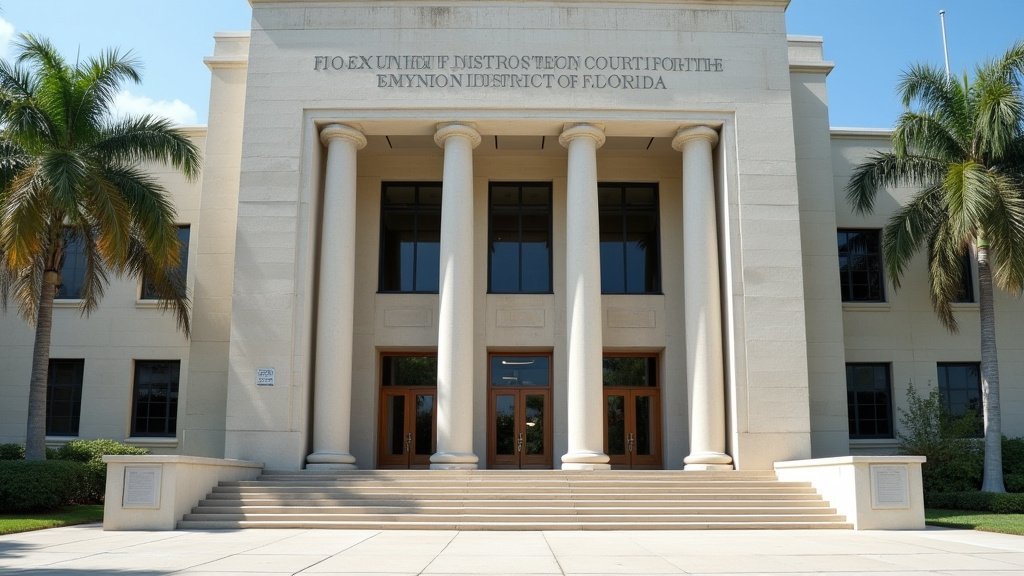
The United States District Court for the Southern District of Florida has delivered a definitive ruling regarding the pretrial detention of a key suspect accused of playing a central role in the assassination of Haitian President Jovenel Moïse. During a recent high-stakes hearing in Miami, a federal judge denied the defendant’s request for bond, determining that the gravity of the charges—which involve a sophisticated, transnational conspiracy to commit kidnapping and murder—presents an insurmountable flight risk and poses a continued danger to the community. This decision marks a pivotal moment in the complex legal saga surrounding the July 7, 2021, attack on the Haitian head of state, reinforcing the U.S. Department of Justice’s commitment to prosecuting those involved in the destabilization of the Caribbean nation.
The Legal Rationale Behind Detention
Presiding over the case, the federal magistrate underscored that the allegations against the defendant are not mere peripheral involvement but are central to the lethal conspiracy that unfolded in the hills of Pétion-Ville. Prosecutors argued, and the court concurred, that the defendant possesses the resources, connections, and external motivations to evade the jurisdiction of the United States.
The denial of bond is rooted in the specific nature of the indictment. The suspects in the Moïse assassination case are charged under United States statutes that carry life sentences, providing an obvious incentive for flight. Furthermore, the court considered the intricate network of mercenaries, retired military personnel, and political operatives spanning Haiti, Colombia, and Florida that facilitated the assassination. With investigations still ongoing in multiple jurisdictions, the court maintained that pretrial release would compromise the integrity of the pending judicial proceedings.
The Anatomy of an International Conspiracy
The assassination of Jovenel Moïse remains one of the most significant geopolitical crises in the Western Hemisphere in the last decade. The U.S. indictment details a meticulously planned operation, initially conceived as an arrest and kidnapping, which devolved into a brutal extrajudicial killing within the presidential residence.
Extraterritorial Jurisdiction and U.S. Involvement
The involvement of the U.S. court system is due to the nexus of the conspiracy; investigators discovered that key elements of the plot were planned and financed within South Florida. This extraterritorial jurisdiction allows the Department of Justice to prosecute the perpetrators regardless of their nationality, provided the underlying conduct impacts U.S. interests or utilized U.S.-based resources.
This case represents a test of international cooperation. With the Haitian judicial system struggling under political instability and limited resources, the Miami proceedings have become the de facto venue for justice. The collaboration between the FBI, Homeland Security Investigations, and Haitian authorities has been essential in unravelling a web of financial transactions that linked private security companies in Florida to the ground team in Port-au-Prince.
The Broader Impact on Haitian Stability
The legal proceedings in Miami are inextricably linked to the ongoing fragility of the Haitian state. The assassination created a power vacuum that facilitated the rise of powerful criminal gangs, which have since seized control of large swathes of the capital. The denial of bond for key suspects is viewed by many, including the Haitian diaspora and international observers, as a necessary step toward dismantling the impunity that has plagued the nation.
However, the slow pace of the judicial process has been a point of contention. While defendants are being held in Miami, the path toward a full trial remains lengthy. The complexity of evidence—ranging from decrypted WhatsApp communications to international money transfers—ensures that the pre-trial discovery phase will be exhaustive. For the prosecution, the objective is not merely conviction, but the complete mapping of the political and financial actors who funded the operation. For the defense, the strategy revolves around challenging the interpretation of “conspiracy” and distancing their clients from the final decision to kill the President.
Secondary Angles: Examining the Fallout
1. The Evolution of Transnational Private Security Accountability: This case has triggered a re-examination of how former military and law enforcement personnel are vetted and recruited by international private security firms. The presence of former Colombian soldiers in the assassination squad has forced these contracting companies to face intense scrutiny regarding their oversight mechanisms.
2. Digital Forensic Challenges in Modern Conspiracy: Unlike historical assassinations, this plot was managed via encrypted messaging apps. The trial will likely set precedents for how investigators use digital forensics to prove “intent to commit violence” in a decentralized, modern criminal network.
3. Diplomatic Friction and Local Justice: The discrepancy between the progress of the Miami-based prosecutions and the stalled investigation in Port-au-Prince continues to generate friction. As the U.S. proceeds with its convictions, the Haitian government faces pressure to demonstrate that it can achieve its own justice, highlighting the disparity in judicial infrastructure between the two nations.
As this case moves closer to trial, all eyes remain on the Southern District of Florida. The denial of bond is a clear signal that the court views these charges as a matter of extreme gravity, and that the accused will remain in custody while the machinery of American justice turns toward an eventual verdict.