The University of Miami and the City of Coral Gables have officially ratified a transformative 30-year development agreement, fundamentally altering the university’s footprint and expanding community infrastructure. This long-term pact—which secures a 30% increase in buildable campus area and facilitates a new 100-bed hospital—marks the most significant collaborative shift in the university’s recent history, balancing academic expansion with public accessibility.
Key Highlights
- 30-Year Horizon: A multi-decade framework ensures long-term predictability for development, zoning, and academic expansion.
- Medical Expansion: Authorization to construct a new, state-of-the-art 100-bed hospital facility on campus to bolster regional healthcare capacity.
- Public Integration: Transfer of the 5.5-acre Lee Lincoln Parcel to the City of Coral Gables to be utilized as a dedicated public green space.
- Density Growth: A sanctioned 30% increase in total buildable square footage for the university’s Coral Gables campus.
Reshaping the Gables: A Multi-Decade Blueprint for Growth
The ratification of the 30-year development agreement between the University of Miami (UM) and the Coral Gables City Commission represents a pivotal moment in the evolution of both the institution and the municipality. For decades, the university and the surrounding city have navigated the complex interplay of academic necessity, urban density, and community quality of life. This new agreement provides a definitive roadmap that reconciles these often-competing interests through a structured, long-term regulatory framework.
The Strategic Expansion of UM’s Footprint
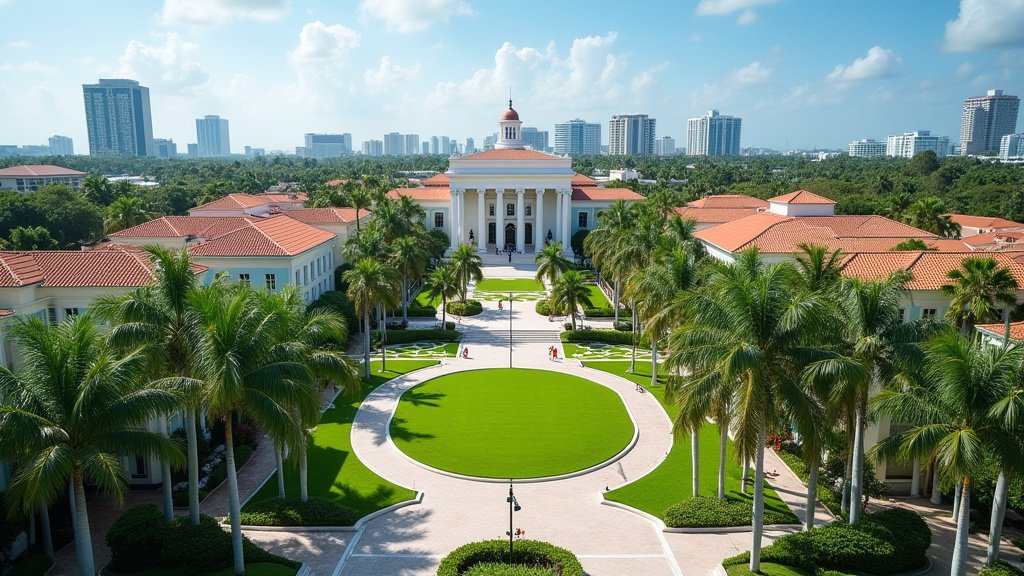
At the core of the agreement is the 30% increase in buildable square footage. This is not merely an expansion of physical structures but a strategic modernization of UM’s core infrastructure. The university has long aimed to keep pace with top-tier research institutions, which requires advanced laboratory facilities, updated student housing, and specialized administrative buildings. By formalizing this 30% threshold, the university gains the legal and planning certainty required to solicit donors and secure financing for projects that might have previously stalled in zoning review.
This growth is balanced by rigorous oversight. The Coral Gables City Commission, known for its strict adherence to the “City Beautiful” aesthetic, has ensured that this expansion will not come at the expense of the city’s architectural integrity. The agreement stipulates that all new development must align with community standards, ensuring that while the campus grows, it remains architecturally integrated with the residential and commercial fabric of the Gables.
Healthcare Innovation: The 100-Bed Hospital
The most tangible community benefit of the agreement is the approval for a new 100-bed hospital. As South Florida’s population continues to swell and the demand for high-acuity medical care increases, this facility is poised to be a critical asset. Integrating a hospital directly into the campus environment allows for a symbiotic relationship between medical research and clinical application. Students and faculty at the Leonard M. Miller School of Medicine will have unprecedented access to a live-clinical environment, fostering the next generation of physicians and researchers while providing immediate, high-quality care to the local population.
This project reflects a broader trend in academic medicine: moving clinical services closer to the heart of the research hub. By bringing 100 new beds online, the university is signaling its intent to dominate the regional healthcare market, competing directly with major private hospital systems by offering academic-grade, research-backed care.
The Lee Lincoln Parcel: A Green Legacy
Perhaps the most significant concession for the local community is the transfer of the 5.5-acre Lee Lincoln Parcel to the City of Coral Gables. In an area where land value is astronomical and open space is increasingly scarce, acquiring 5.5 acres for public use is a monumental win for the city. This land is designated to become a public park, providing a buffer zone between the bustling university campus and the surrounding neighborhoods.
This transaction exemplifies the “quid pro quo” nature of the 30-year agreement. The university receives the flexibility to intensify density elsewhere on campus, while the city receives a permanent expansion of its recreational infrastructure. It is a classic urban planning victory, turning underutilized land into a community asset that fosters pedestrianism and outdoor recreation.
Secondary Angles: Future Impacts
1. Economic Catalyst and Job Creation:
The construction and subsequent operation of a 100-bed hospital will necessitate a significant workforce. Beyond the short-term economic boost from construction jobs, the long-term presence of a major medical facility creates a multiplier effect. Nurses, administrative staff, maintenance crews, and specialized medical technicians will be needed, solidifying UM as the single largest economic driver in the Coral Gables area.
2. Navigating Urban Density and Traffic:
With a 30% increase in buildable area comes the inevitable concern regarding traffic flow and parking infrastructure. The agreement likely requires the university to invest in transit-oriented development (TOD). Future campus planning will likely emphasize vertical growth over horizontal sprawl, as well as enhancements to university-led transit shuttles to reduce the reliance on single-occupancy vehicles entering the Gables residential districts.
3. Academic and Research Competitiveness:
University rankings are heavily influenced by the age and quality of physical infrastructure. Modern, high-density campuses are more attractive to top-tier international students and grant-winning faculty. This 30-year plan effectively “future-proofs” the university, ensuring that the campus remains a premier destination for global research for decades to come.
FAQ: People Also Ask
How long is the development agreement between the University of Miami and the City of Coral Gables?
The agreement is a 30-year pact, providing a long-term regulatory framework for campus development and zoning until the expiration of the term.
What will happen to the 5.5-acre Lee Lincoln Parcel?
Under the terms of the agreement, ownership of the 5.5-acre Lee Lincoln Parcel will be transferred to the City of Coral Gables, where it is slated to be developed into a public park for community use.
Will the new 100-bed hospital be open to the general public?
Yes, the planned 100-bed hospital will function as a clinical facility, integrating with the university’s medical research capabilities while serving the broader public health needs of the Coral Gables and greater Miami-Dade community.
Does the 30% increase in buildable area allow for unlimited construction?
No. While the agreement permits a 30% increase in buildable square footage, all development projects must still comply with existing environmental regulations, architectural standards, and city oversight as outlined in the 30-year master plan.