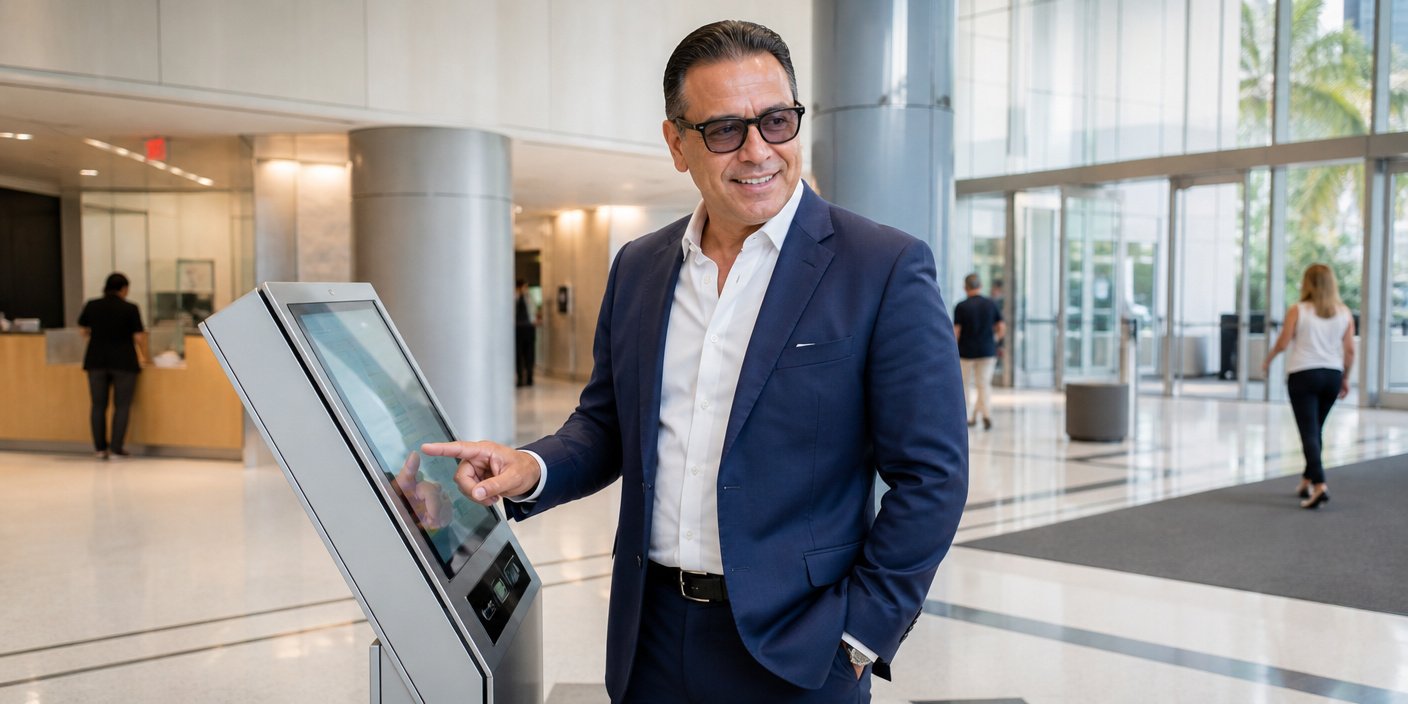
Miami-Dade County residents are all too familiar with the friction of local governance: submitting paperwork to one department, only to be told it belongs in another, then waiting weeks for a follow-up that never arrives. This cyclical frustration is the target of a major policy shift proposed by Manny Cid, currently the Mayor of Miami Lakes and a candidate for Miami-Dade County Mayor. His “No Wrong Door” policy is more than a catchy slogan; it is a structural redesign of how the county interacts with the public, aimed at collapsing bureaucratic silos and automating the resident experience.
Key Highlights
- Unified Service Access: The policy advocates for a single, integrated digital portal and physical service point, ensuring that a resident’s first point of contact is the only one they need to resolve their issue.
- Bureaucracy Reduction: By centralizing departments—particularly those involving permits, licensing, and social services—Cid aims to eliminate the “bounced around” phenomenon that plagues current county operations.
- Small Business Catalyst: A core pillar of the plan is streamlining the permitting process, which is widely cited as a major bottleneck for Miami-Dade entrepreneurs and developers.
- Data Integration Strategy: Success hinges on backend technical integration, requiring disparate county departments to share a unified customer relationship management (CRM) database.
The Blueprint for a Modernized Miami-Dade Administration
The fundamental premise of the “No Wrong Door” policy is that government should operate as a service-first organization rather than a collection of independent, defensive departments. In many local governments, departments function as independent fiefdoms, each with its own data protocols, software, and intake processes. When a citizen attempts to navigate this maze—whether applying for a business permit, requesting a social service, or reporting a code violation—they are forced to act as the “system integrator,” manually moving information from one office to another. Cid’s proposal seeks to invert this, placing the burden of coordination on the county’s administration rather than the individual.
The Anatomy of Bureaucratic Silos
To understand why this change is necessary, one must look at the historical context of Miami-Dade’s growth. As the county expanded, departments were added in a decentralized manner, often layering new technology over legacy systems that were never designed to communicate with one another. This has resulted in a patchwork of inefficiencies. The “No Wrong Door” approach requires a fundamental audit of these systems. It is not merely about a website update; it is about back-end database interoperability. By implementing a centralized CRM, any county employee—regardless of their specific department—should theoretically have the authority and the tools to direct a resident to the correct solution, or even facilitate the transaction directly.
The Economic Argument: Permitting and Growth
Perhaps the most pressing area for reform is the permitting department. For small business owners and residential developers in Miami-Dade, the permitting process is frequently cited as the primary obstacle to growth. High-interest rates and inflation have already tightened the market, but bureaucratic delays act as a hidden tax on development. Cid argues that by implementing a unified intake system, the county can track applications in real-time, identify where projects are “stuck,” and proactively move them through the approval chain. The goal is to shift from a system of reactive inquiry to one of proactive facilitation. This has massive downstream economic effects: faster permit approvals mean lower construction costs, quicker business openings, and a more responsive local economy.
Implementation Challenges and Technological Realities
While the concept is intuitively popular, the execution is complex. Transitioning a massive entity like Miami-Dade County to a “No Wrong Door” model involves significant change management. Existing staff must be retrained to operate within a unified system, and legacy IT infrastructure will likely require a complete overhaul or the implementation of an enterprise-wide software bridge. Critics of such plans often point to the potential for cost overruns in IT procurement and the inertia of long-standing civil service cultures. However, supporters of the Cid model point to successful implementations in other jurisdictions, where investment in cloud-based government services reduced labor costs by freeing up staff from repetitive administrative tasks, allowing them to focus on complex problem-solving.
Future Predictions: The ‘Smart County’ Integration
If successful, the “No Wrong Door” policy could act as the foundational layer for a broader “Smart County” initiative. Once the data is centralized and the departments are linked, Miami-Dade could leverage AI-driven analytics to predict service demand. For example, if a specific neighborhood sees a spike in building permit inquiries, the system could automatically deploy resources to that sector. This is the difference between a government that merely tracks its problems and one that anticipates them. This evolution of the citizen experience could redefine the social contract between the county and its residents, moving away from a transactional, high-friction relationship toward a seamless digital partnership.
FAQ: People Also Ask
Q: What exactly does ‘No Wrong Door’ mean in a practical sense for a resident?
A: Practically, it means that whether you call a phone number, walk into a service center, or visit the county website, you do not need to know which specific department handles your issue. The system recognizes the request and routes you or your paperwork to the correct internal process without you needing to “navigate” the bureaucracy yourself.
Q: Is this policy purely digital, or does it include physical government buildings?
A: It is both. While the digital aspect focuses on app and web integration, the policy also implies a redesign of physical service counters. The goal is to move from department-specific counters to a generalized service model where front-line staff are cross-trained to handle common inquiries across multiple departments.
Q: How does this proposal affect existing government employees?
A: It is a major transition. It requires significant training, a shift in organizational culture, and potential changes to job descriptions. It moves employees from siloed specialists to part of a broader, more flexible service team.
Q: Has this been tried elsewhere, and does it work?
A: Various iterations of the “No Wrong Door” concept have been implemented in social services, public health, and government administration across the U.S. and in international smart-cities. Data generally shows that while initial transition costs are high, the long-term ROI is found in increased operational speed and higher citizen satisfaction rates.