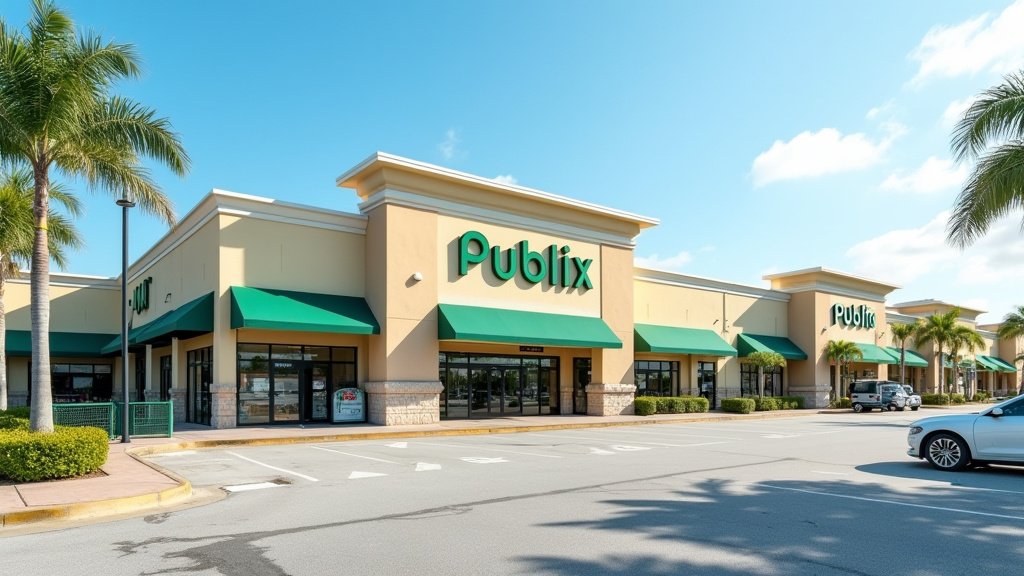
In a major financial maneuver, Lakeland-based retail giant Publix Super Markets has successfully closed on the acquisition of two prominent shopping centers in Miami-Dade County for a total of $107 million. This transaction marks a significant departure from the company’s traditional reliance on long-term leasing agreements, highlighting a calculated shift toward property ownership in one of the most competitive retail markets in the United States. By securing these assets, Publix is not only anchoring its own store locations but also positioning itself to control the underlying real estate, influence tenant diversity, and hedge against the volatility of commercial rent escalations in South Florida.
The Strategic Shift: Beyond the Grocery Aisle
For decades, the standard operating procedure for major grocery chains involved leasing space within shopping centers where they served as the primary “anchor tenant.” This model prioritized liquidity and operational focus on retail rather than capital expenditure on real estate. However, the $107 million investment in the Miami-Dade market suggests a strategic pivot. By transitioning into the role of a landlord, Publix is effectively insulating itself from the fluctuating costs of commercial property ownership in the Sun Belt.
Industry analysts note that as real estate values in Miami-Dade continue to climb, controlling the physical property allows Publix to dictate terms for co-tenants, manage common area maintenance fees, and, perhaps most importantly, secure their “prime real estate” footprint indefinitely. This is a defensive moat; it prevents competitors from encroaching on highly desirable sites and ensures that the shopping experience—from parking to site maintenance—remains aligned with the Publix brand standard.
Geography and Logistics: The Miami Corridor
The selection of these specific assets is no accident. One of the acquisitions is situated near the Miami International Airport (MIA), a strategic hub for logistics, distribution, and high-density commuter traffic. The second asset is located in the rapidly densifying Southwest Miami-Dade corridor. These locations represent high-barrier-to-entry markets where commercial land is becoming increasingly scarce.
By controlling the land near these logistics hubs, Publix is strengthening its supply chain resilience. Proximity to airport infrastructure and major arterial roads provides logistical advantages for fresh food delivery, reducing “last-mile” costs and streamlining the frequency of shipments. In a sector where inventory turnover is the primary engine of profitability, owning the infrastructure that supports the supply chain is a distinct competitive advantage.
Economic Implications and Competitive Moats
What does this mean for the grocery landscape in South Florida? The move forces competitors, such as Walmart, Kroger, and regional players, to grapple with a tightened market where the best real estate is increasingly owned, not leased, by the dominant player in the region. When Publix owns the shopping center, they hold the power of approval over who fills the vacant suites adjacent to their stores. This allows for curated tenant mixes that drive foot traffic—such as banks, pharmacies, or local boutiques that complement the grocery shopping experience.
Furthermore, this $107 million infusion serves as an inflation hedge. Commercial real estate in Miami-Dade has seen double-digit appreciation over the last five years. By purchasing the debt-free equity in these centers, Publix is effectively banking on the continued long-term growth of the Miami-Dade retail market. The company is treating its physical storefronts as appreciating assets rather than operating expenses.
Scaling the Portfolio: A Future-Proofing Strategy
While Publix has historically been a prudent operator, this acquisition signals a new phase of institutionalized real estate growth. We are likely to see the company continue to cherry-pick “trophy” retail assets in major Florida metropolitan areas. This is not just about selling groceries; it is about infrastructure dominance. By owning the “box” and the surrounding center, the company ensures that it remains the focal point of the community, regardless of how market rent rates shift for other retailers in the plaza.
As the Florida population continues to swell, the demand for retail space will outpace supply. Publix is essentially guaranteeing its own future access to the most high-value consumer demographics in the state by removing the middleman: the landlord. Whether this trend continues into other regions outside of Florida remains to be seen, but for now, the message is clear: Publix is planting its flag in the soil of South Florida, and they intend to stay there as the owner, not the tenant.
FAQ: People Also Ask
Q: Why is Publix buying shopping centers instead of leasing them?
A: Purchasing the properties allows Publix to control operational costs, manage the tenant mix, and shield itself from market-rate rent increases. It transforms a recurring operating expense (rent) into an asset-building investment.
Q: Which areas of Miami-Dade did Publix target?
A: The acquisition includes property near the Miami International Airport (MIA), a critical logistical hub, and sites in the densely populated Southwest Miami-Dade region.
Q: Does this acquisition imply a change in Publix’s core business model?
A: Not necessarily. Publix remains a grocery retailer first, but this move reflects an “integration” strategy where real estate control is used to support and protect their core retail operations.
Q: How does this affect smaller businesses in those shopping centers?
A: Existing tenants will likely continue their current lease terms until expiration. However, once Publix takes ownership, they effectively become the landlord, meaning they will manage lease renewals, property maintenance, and future commercial real estate decisions for those centers.