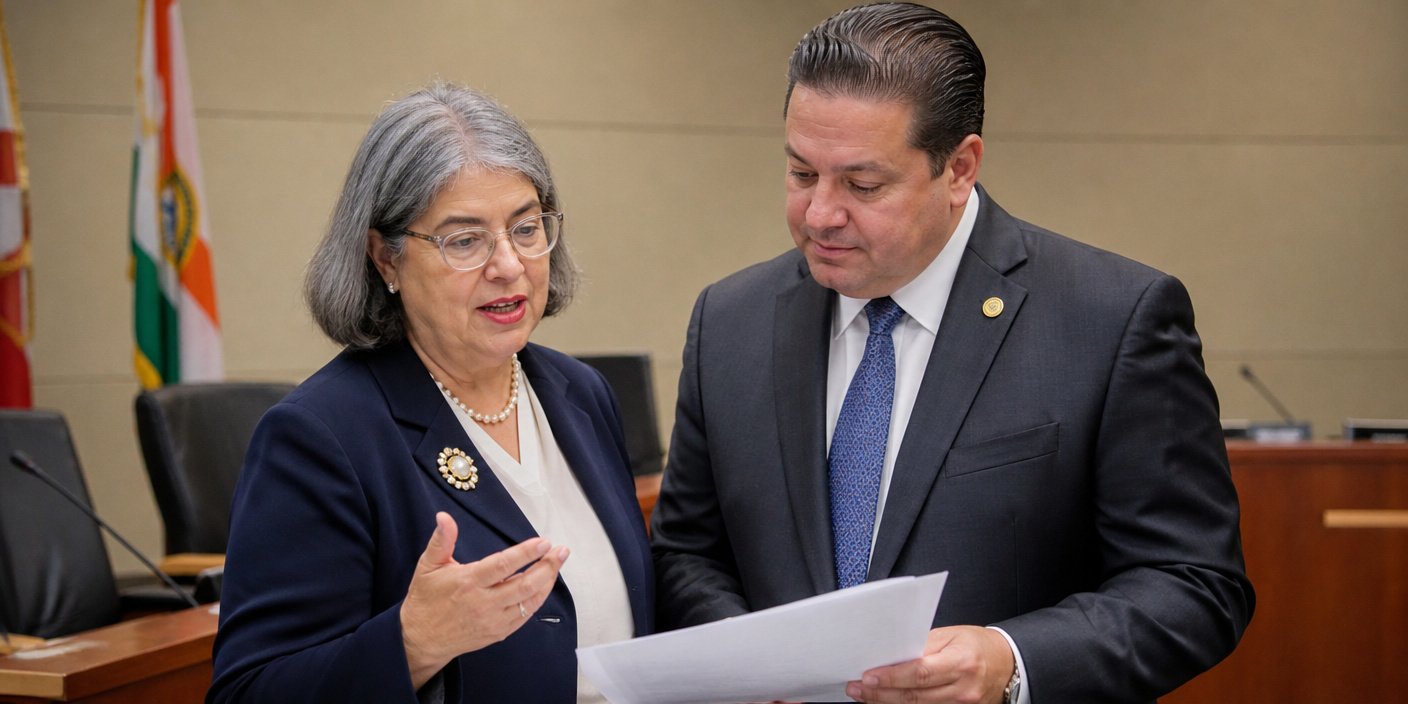
In a decisive move that underscores a massive structural transformation in regional law enforcement, Miami-Dade County has officially ratified a record-breaking $1.234 billion budget for the Miami-Dade Sheriff’s Office for the 2026-27 fiscal year. This historic funding, championed by Mayor Daniella Levine Cava and Board of County Commissioners Chairman Anthony Rodriguez, signals a robust financial commitment to the transition and long-term operational success of the newly established Sheriff’s Office. The finalized appropriation, which notably exceeds the agency’s initial budgetary request by a substantial $186.3 million, reflects the county’s aggressive prioritization of public safety and infrastructural readiness as the department assumes its full constitutional mandate.
A New Era of Fiscal Commitment
The approval of the 2026-27 budget is not merely a routine fiscal exercise; it represents the financial bedrock of a major transition in Florida law enforcement. Under the stewardship of Mayor Daniella Levine Cava and the strategic oversight of Chairman Anthony Rodriguez, the Board of County Commissioners has effectively front-loaded resources to ensure that the transition from the legacy Miami-Dade Police Department to a fully realized Sheriff’s Office is seamless.
The inclusion of the additional $186.3 million—above the original request—is specifically targeted to mitigate the complex costs associated with organizational restructuring, capital improvements, and the immediate need for state-of-the-art technological integration. In an era where law enforcement agencies are under increasing pressure to modernize, this surplus funding allows the Sheriff’s Office to avoid the “starvation” phases that often plague newly independent government agencies, ensuring that personnel and equipment are up to code from day one.
Strategic Allocation: Where the Money Goes
To understand the magnitude of this $1.234 billion figure, one must look at the specific operational demands of a metropolitan agency of this scale. The supplementary $186.3 million is designated for several critical pillars of development:
1. Technological Infrastructure: The modern sheriff’s office requires advanced digital forensic capabilities, modernized dispatch systems, and integrated cyber-security frameworks. This funding ensures the Sheriff’s Office is not merely keeping pace with current criminal methodologies but actively preempting them.
2. Capital Upgrades: With the agency shifting its administrative structure, significant physical real estate and facility renovations are required to support the increased headcount and the new constitutional requirements of the Sheriff.
3. Personnel Retention and Training: Competing for talent in the current labor market is expensive. A portion of the budget is earmarked to ensure competitive salaries that align with national standards, helping the department attract top-tier recruits and retain veteran officers who might otherwise be tempted by private security or surrounding municipal agencies.
Economic and Community Implications
The ripple effects of a billion-dollar law enforcement budget extend far beyond the station house. By securing this level of funding, Miami-Dade County is sending a clear signal to residents, business owners, and investors: the region is committed to long-term stability and safety. In major urban centers, the perceived stability provided by a well-funded, efficient police apparatus is often a prerequisite for economic development. As the Sheriff’s Office takes command, this budget provides the necessary runway for the agency to implement community-oriented policing initiatives that were previously hindered by strict fiscal constraints. The partnership between the Mayor’s office and the Board of Commissioners demonstrates a unified political front, essential for the successful deployment of such a massive public works expenditure.
Future-Proofing Public Safety
Looking toward the remainder of the 2026-27 fiscal year and beyond, the objective is sustainability. Critics of large public budgets often point to the potential for administrative bloat; however, the administration has framed this budget as an investment in efficiency. By providing the Sheriff’s Office with “excess” funding now, the county aims to reduce the long-term cost of catch-up measures.
The transition to an elected Sheriff is a permanent change in the fabric of Miami-Dade governance, and this budget reflects the permanence of that choice. It is a calculated bet that proper funding today will prevent the costly systemic failures that typically arise from under-resourced public safety transitions. As the agency begins to deploy these assets, all eyes will be on the operational outcomes—specifically, whether the increased financial support translates into tangible improvements in emergency response times, clearance rates, and community safety metrics.
FAQ: People Also Ask
Q: Why was the budget for the Miami-Dade Sheriff’s Office increased by $186.3 million above the request?
A: The additional $186.3 million was approved to cover essential transitional costs, including technological modernization, facility upgrades, and competitive recruitment strategies necessary to establish the Sheriff’s Office as a fully operational, independent agency after its restructuring.
Q: What is the total budget for the 2026-27 fiscal year?
A: The total approved budget for the Miami-Dade Sheriff’s Office is $1.234 billion, marking the largest funding allocation in the agency’s history.
Q: How does this impact the Miami-Dade Police Department transition?
A: This funding is designed to facilitate the smooth transfer of responsibilities from the former Miami-Dade Police Department to the newly established Sheriff’s Office, ensuring no disruption in public safety services during the change in governance.
Q: Who were the key figures behind this budget approval?
A: The budget was formally announced and supported by Miami-Dade County Mayor Daniella Levine Cava and Board of County Commissioners Chairman Anthony Rodriguez.