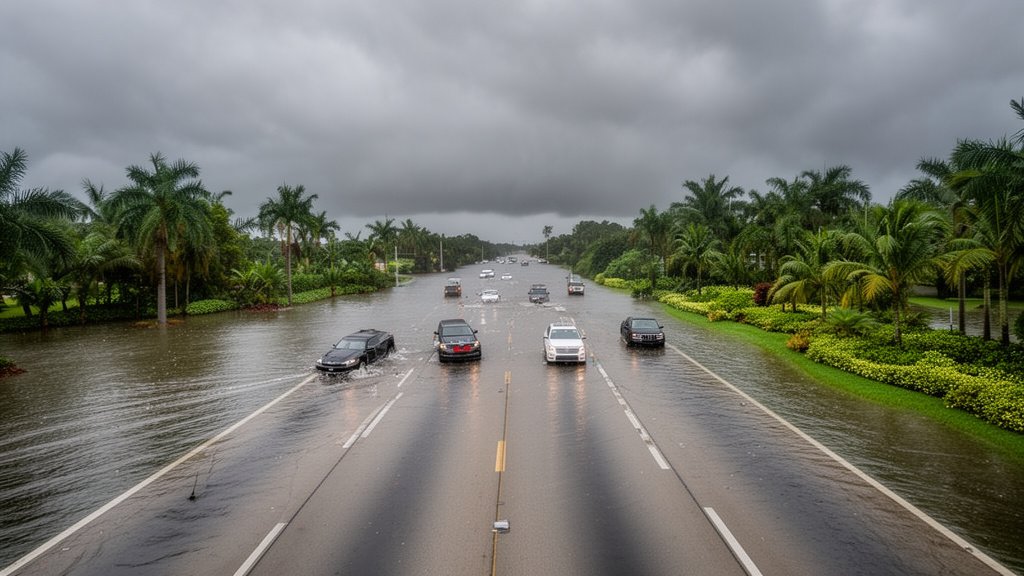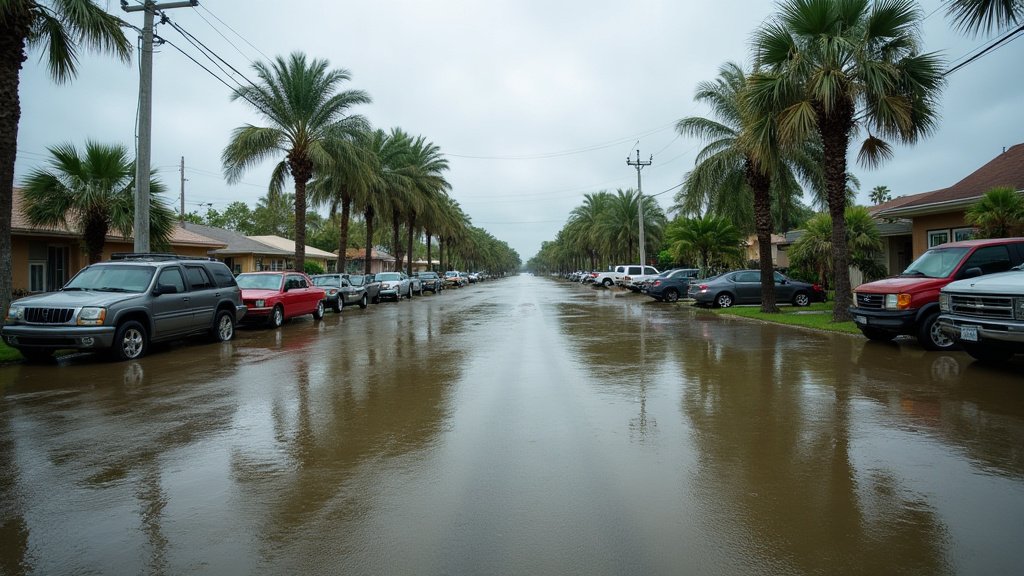
The South Florida region is currently grappling with a severe meteorological crisis, as a relentless, slow-moving storm system has delivered catastrophic rainfall totals, forcing authorities to declare states of emergency across critical municipalities. From Broward County to Fort Lauderdale and Hollywood, the inundation has overwhelmed drainage systems, halted public transit, and resulted in significant property damage, including the dramatic collapse of a synagogue roof in the region. As water levels continue to challenge emergency services, officials are shifting focus from immediate rescue operations to long-term recovery and infrastructure assessment.
Key Highlights
- State of Emergency: Governor Ron DeSantis has officially declared a state of emergency for Broward, Collier, Lee, Miami-Dade, and Sarasota counties to expedite resource allocation.
- Educational Halt: Broward County Public Schools, among the nation’s largest districts, announced widespread closures affecting thousands of students as campuses became inaccessible.
- Infrastructure Damage: Major arterial roads are impassable, and structural failures—such as the collapse of a synagogue roof—have been reported, highlighting the strain on aging urban designs.
- Record Rainfall: Meteorological data confirms multi-day rainfall totals exceeding 20 inches in several pockets of South Florida, surpassing historical precedents for the month of June.
- Evacuation Status: Emergency management teams have conducted localized evacuations in flood-prone neighborhoods where water intrusion has reached dangerous levels inside residential dwellings.
The Deluge: Assessing South Florida’s Infrastructure Crisis
The Meteorological Anomaly
The severity of this event stems from the stationary nature of the storm system, which acted like a firehose aimed directly at the South Florida peninsula. According to the National Weather Service (NWS), the atmospheric conditions stalled a moisture-rich plume of air, resulting in prolonged, torrential rain that far outpaced the capacity of regional drainage infrastructure. While Florida is accustomed to seasonal heavy rain, the density and duration of this particular system have pushed hydrological management systems to their absolute breaking point. The accumulation of over 20 inches of water in concentrated areas created a “flash flood” scenario that evolved rapidly, leaving little time for traditional water mitigation protocols to activate effectively.
Infrastructure on the Brink
The physical toll of the flooding is visible in the destruction of critical infrastructure. The reported collapse of a synagogue roof is a stark indicator of the structural stress placed on buildings by water weight and foundation saturation. Beyond private structures, the Florida Department of Transportation has been forced to close segments of major highways and arterial roads, effectively severing transit lines for emergency vehicles and civilians alike. The inability of the local drainage networks to discharge the massive volume of water into the Atlantic Ocean or regional canals has resulted in standing water that remains stagnant, creating secondary hazards involving sanitation, electrical short-circuits, and the potential for toxic runoff.
The Operational Shutdown: Schools and Government
The closure of Broward County Public Schools serves as a primary indicator of the regional paralysis. When a district of this magnitude—serving hundreds of thousands of students—shuts down, it signals a systemic failure of safe transit routes. The decision to close facilities was not merely a reaction to current weather, but a proactive measure to prevent the entanglement of school buses and parent vehicles in submerged roadways. Municipal offices in Hollywood and Fort Lauderdale have transitioned to emergency response modes, with local police and fire departments prioritizing life-safety operations over administrative functions. The declaration of a state of emergency by the state government is the essential legal mechanism required to unlock additional financial resources and deploy the Florida National Guard if necessary.
Economic and Societal Ripples
Beyond the immediate physical damage, this flooding event presents significant economic consequences. South Florida’s tourism-heavy economy is highly sensitive to infrastructure disruptions. The imagery of flooded streets, closed highways, and stalled airports typically results in immediate cancellations and a slowdown in commercial activity. Small businesses, which often lack the deep reserves of larger corporations, face a double-hit scenario: loss of revenue due to the closures and the high cost of repairs for water damage. Furthermore, the insurance landscape in Florida, already strained by hurricane risk assessments, will likely see renewed volatility as underwriters adjust premiums in light of these non-hurricane-related flood events.
The Climate-Infrastructure Nexus
A secondary angle of critical importance is the ongoing debate regarding climate resilience. Engineers and urban planners are increasingly highlighting that the region’s ‘built-to-standard’ infrastructure is becoming obsolete in the face of more intense, erratic rainfall events. The concept of ‘king tides’ and sea-level rise are often discussed, but this event highlights a different—yet equally dangerous—threat: the inability to drain land when the water table is already high. Adaptation strategies, such as the construction of deeper pump stations, the elevation of critical arterial roads, and the implementation of permeable urban surfaces, are moving from ‘theoretical’ to ‘mandatory’ in political discourse.
Emergency Management & Future Predictions
Looking forward, the focus shifts to mitigation. As the storm system slowly dissipates, the aftermath will require a massive cleanup operation. The Florida Division of Emergency Management is currently coordinating the distribution of high-capacity pumps to the hardest-hit areas. However, experts warn that the soil in South Florida is now so saturated that any subsequent heavy rain, even if light in intensity, could trigger a secondary flooding event. Residents are being advised to monitor local alerts and avoid all unnecessary travel until water recedes to safe levels. The long-term challenge remains: how to design a metropolitan area that can withstand the new ‘normal’ of extreme precipitation in a low-lying, coastal environment.
FAQ: People Also Ask
What should residents do during a state of emergency?
Residents should prioritize safety by avoiding travel, as roads are the most hazardous locations during flooding. Follow all directives from the Florida Division of Emergency Management, stay informed via local media, and prepare an emergency kit with essentials like water, flashlights, and batteries. Do not walk or drive through standing water, as the depth and potential electrical hazards are often hidden.
Why are schools being closed in Broward County?
Broward County Public Schools are closed primarily due to the inability to safely transport students. With roads submerged and school bus routes compromised, authorities deemed it safer to keep students at home rather than risking vehicles stalling in floodwaters or emergency access to campuses becoming blocked.
Is this flooding related to hurricane season?
While this event occurred during the early stages of hurricane season, it was caused by a slow-moving, non-tropical storm system. However, the event serves as a warning of the region’s vulnerability to extreme water events, which can be just as destructive as hurricane-force winds.
How can I report property damage to the authorities?
In a state of emergency, homeowners should document all damage thoroughly with photos and video before attempting any cleanup. Contact your insurance provider immediately to open a claim and check the official websites of the City of Fort Lauderdale or Hollywood for local resource centers and emergency contact hotlines to report structural issues.