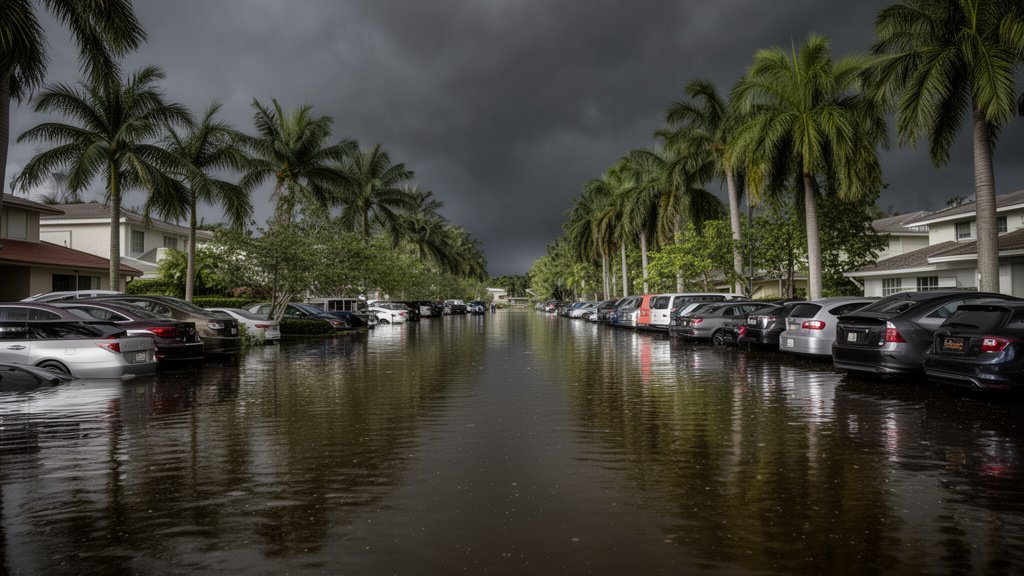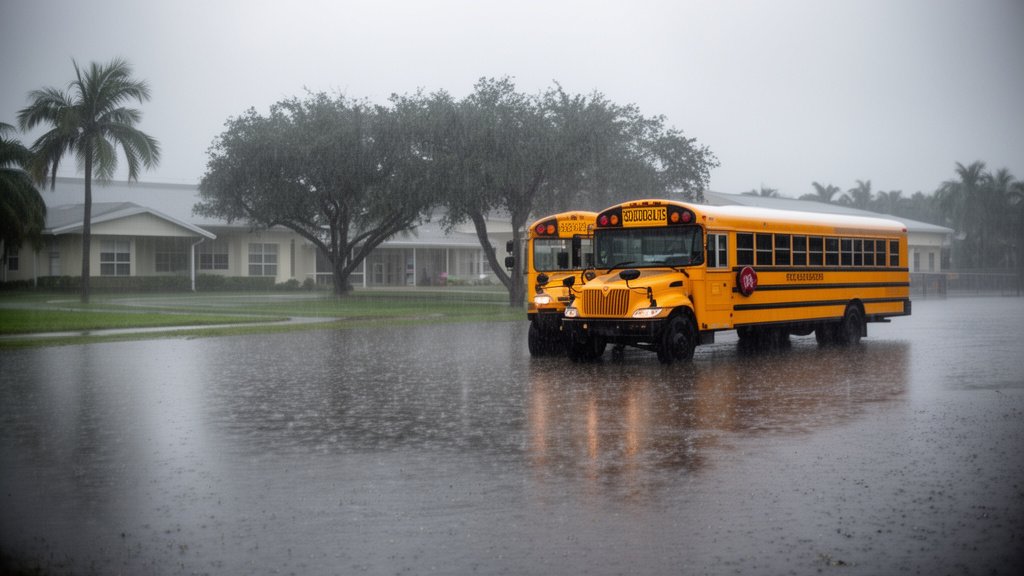
As of Thursday, November 19, 2026, the Miami-Dade County Public Schools (MDCPS) and Broward County Public Schools (BCPS) districts have officially announced a suspension of all campus operations. This precautionary measure comes in response to an relentless weather system that has delivered staggering amounts of rainfall to the South Florida region, pushing local infrastructure to its absolute limit. With up to 15 inches of rain reported in parts of Broward County, the decision to close was deemed a critical necessity to ensure the safety of students, faculty, and support staff.
Key Highlights
- District-Wide Closure: Both Miami-Dade and Broward County public schools are shuttered for all classes and activities on Thursday, November 19, 2026.
- Historic Precipitation: Isolated areas in Broward County have recorded upwards of 15 inches of rainfall, overwhelming localized drainage systems.
- Public Safety First: The closure follows urgent advisories from the National Weather Service, warning of significant flood risks and hazardous road conditions across the tri-county area.
- Operational Impact: The shutdown affects one of the largest combined public school populations in the United States, forcing thousands of families to make emergency childcare arrangements.
The Anatomy of a South Florida Rain Event
The decision to cancel classes across two of the nation’s largest school districts is not one taken lightly. The meteorological conditions developing throughout Wednesday evening and into the early hours of Thursday, November 19, 2026, presented a clear and present danger. Meteorologists have characterized the event as a stalled system that parked itself over the urban corridor, resulting in concentrated, high-intensity precipitation that exceeded the drainage capacity of municipal water management systems.
Meteorological Volatility and Infrastructure Strain
In Broward County, the situation became particularly acute. Rainfall totals reached 15 inches in specific sectors, which is a volume capable of turning residential streets into navigable waterways within minutes. This level of rainfall exposes the inherent vulnerabilities in South Florida’s aging drainage infrastructure. Most municipal systems are designed for historical average rainfall patterns, but as these “extreme weather events” become more frequent, the gap between engineering design capacity and real-world necessity continues to widen.
When school districts monitor the National Weather Service (NWS) data, they aren’t just looking at the total inches of rain; they are evaluating the rate of fall, the saturation levels of the soil, and the ability of the local road networks to remain passable for school buses. On this particular Thursday, the convergence of high-tide cycles and relentless downpours meant that standing water in many areas would not recede, effectively trapping neighborhoods and creating hazardous conditions for transportation.
The Human and Economic Cost of School Closures
Beyond the logistical challenges of bus routes and campus safety, the closure of MDCPS and BCPS creates an immediate ripple effect throughout the local economy. When the school system effectively halts, it creates a massive, unplanned burden on the working population of South Florida. Thousands of parents are suddenly left without childcare options, forcing a significant portion of the local workforce to remain at home.
This creates a secondary economic impact, often overlooked in the immediate rush of emergency reporting. From service industry employees to corporate office staff, the sudden absence of the school “stabilizer” disrupts productivity across the entire region. Furthermore, the district’s responsibility extends to the thousands of students who rely on school programs for nutritious meals. Emergency protocols are being activated to address how to bridge these service gaps, though the current flooding makes the logistics of meal distribution highly complex and potentially dangerous for staff.
Future Resilience: Preparing for the New Normal
This event is not an isolated anomaly but part of an escalating trend in South Florida. As researchers and urban planners look at the future of the region, the recurring nature of these flood events necessitates a fundamental shift in how educational institutions interact with environmental risks.
Integrating Data into Decision Making
The collaboration between the Miami-Dade Office of Emergency Management and school district leadership has become increasingly sophisticated. Rather than relying on gut feelings, districts are now utilizing real-time sensor data from drainage basins and traffic cameras to make “go/no-go” decisions. This data-driven approach is essential, yet it highlights the sobering reality that despite advanced warnings, the physical environment remains volatile. The question remains whether increased funding for hardening school infrastructure against flooding—elevating equipment, securing facilities, and improving campus drainage—will eventually be required to keep schools open during these escalating events.
Historical Context: Are We Witnessing a New Pattern?
Comparing the events of November 19, 2026, to historical flood data provides a stark perspective. South Florida has historically dealt with tropical depressions and seasonal surges, but the modern character of these rain events—characterized by sudden, high-volume “deluge” events that occur outside of traditional storm seasons—is shifting the baseline. Whether this is a result of localized atmospheric changes or a shift in the regional climate, the school districts are clearly treating this as a high-risk scenario that requires the adoption of a “safety-first” posture over business-as-usual operations.
FAQ: People Also Ask
Q: How long will Miami-Dade and Broward schools remain closed?
A: As of the latest update, the closure is currently for Thursday, November 19, 2026. District officials are continuously monitoring the weather and will communicate updates regarding Friday’s operations via their official communication channels and local news alerts.
Q: Was there any damage reported at the school campuses?
A: While most school facilities are built to withstand heavy weather, districts are conducting assessments to ensure no water intrusion has occurred in critical areas like electrical rooms, technology centers, or cafeterias. Specific damage reports will be released as teams complete site visits.
Q: Where can parents get updates on extracurricular activities and after-school programs?
A: All extracurricular activities, including sports, club meetings, and after-school tutoring, are canceled for the duration of this weather event. Parents should monitor the official district websites and social media accounts for the most accurate and up-to-the-minute information.
Q: Why was the decision to close made so late/early?
A: Decision-making is based on real-time data from the National Weather Service and local emergency management partners. Officials wait until the latest possible window to ensure they are basing decisions on the most accurate trajectory of the storm, attempting to balance student safety with the need to avoid unnecessary disruptions.