Torrential, record-breaking rainfall has paralyzed South Florida, triggering widespread flooding, mandatory school closures, and forcing the declaration of a formal state of emergency. As relentless storm cells linger over Miami-Dade, Broward, and Collier counties, municipal drainage systems have been pushed beyond their operational limits, creating a high-stakes crisis for residents and emergency responders alike.
Key Highlights
- State of Emergency: Governor Ron DeSantis has officially declared a state of emergency for multiple South Florida counties, enabling the mobilization of state resources to assist local relief efforts.
- Infrastructure Disruption: Major transportation hubs, including Miami International Airport (MIA) and Fort Lauderdale-Hollywood International Airport (FLL), have reported significant operational delays and cancellations due to waterlogged runways.
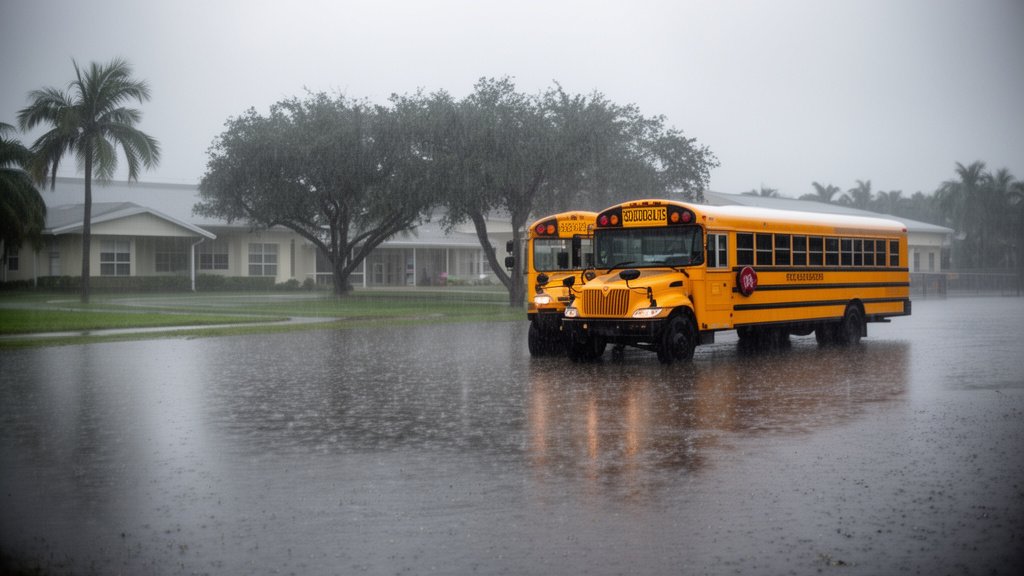
- School and Civic Closures: Public school districts across the affected regions have announced comprehensive closures, effectively halting classes to ensure student safety amidst impassable roadways.
- Meteorological Context: The National Weather Service (NWS) has noted that the flooding is driven by a slow-moving, moisture-rich atmospheric setup, resulting in rainfall totals that have shattered historical daily records.
The Anatomy of a Regional Deluge
The current flooding event gripping South Florida represents a convergence of atmospheric instability and geographical vulnerability. Unlike standard tropical storms that track through the region with a clear path of entry and exit, this event is characterized by stationary convection. The National Weather Service (NWS) has identified an unusual “train effect,” where multiple rounds of intense thunderstorms have repeatedly formed and tracked over the same saturated geography, leaving the soil and drainage systems with zero capacity to absorb incoming precipitation.
Meteorological Dynamics and The ‘Train Effect’
Meteorologists point to a stalled disturbance interacting with high-level moisture transport. This creates a scenario where the atmosphere acts like a fire hose pinned in one position. For the residents of South Florida, this translates to rainfall rates that have surpassed 3 to 5 inches per hour in localized pockets. The lack of steering currents in the upper atmosphere has essentially locked this storm system in place, preventing the typical dispersal that would otherwise alleviate the pressure on municipal infrastructure.
This specific meteorological configuration is becoming a growing concern for regional climate scientists. When the ground is already saturated from previous weather events, the “runoff coefficient”—the measure of how much water runs off the surface rather than soaking into the ground—nears 100%. This means virtually every drop of rain instantly becomes a flood hazard on streets, highways, and residential neighborhoods.
Infrastructure and Urban Drainage Failures
South Florida’s infrastructure faces a “perfect storm” of challenges. Much of the region is built upon low-lying, porous limestone with an average elevation of only a few feet above sea level. While the region has invested billions in pumping stations and improved drainage canal systems, these projects are designed to handle storm surges and standard heavy rainfall, not the extreme “flash” events that are now becoming more frequent.
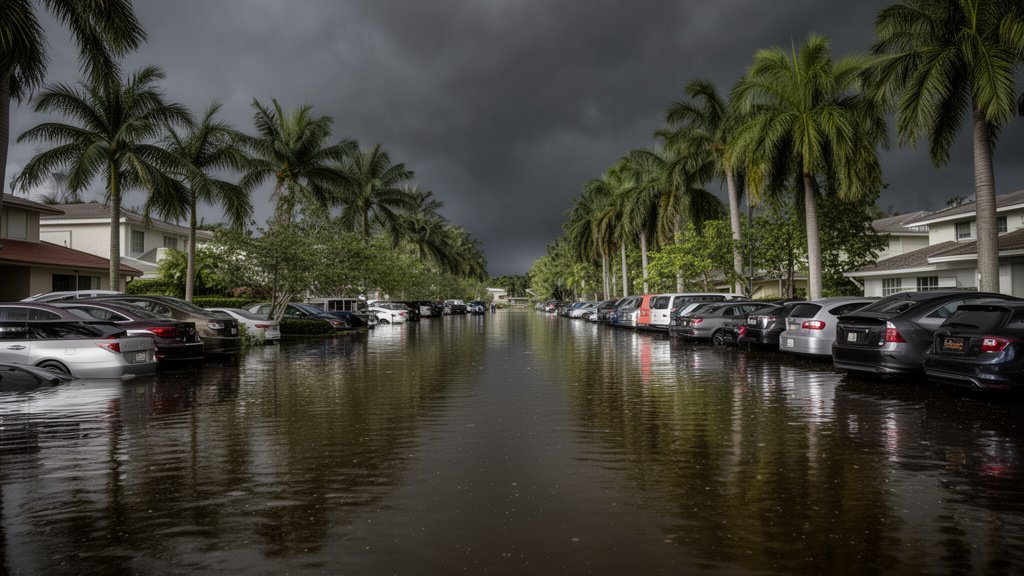
Local authorities in Miami-Dade and Broward counties have struggled to keep pace with the influx. Videos circulating from the region show vehicles stranded in water deep enough to submerge engines, while critical hospital operations have had to pivot to emergency power and contingency staffing protocols to manage the surge in flood-related medical calls. The reliance on gravity-fed drainage systems is a significant vulnerability; when the water table is high or the tide is incoming, these systems lose their efficiency, creating a bottleneck that forces water back onto the surface.
Socio-Economic Ripple Effects and Future Mitigation
The economic ramifications of these flooding events are multifaceted. Beyond the immediate costs of property damage and emergency response, there is the lingering impact on local commerce. Airports like MIA and FLL are not just transportation hubs; they are engines of the South Florida economy. When these gateways are paralyzed, the disruption to tourism, logistics, and international trade is immediate and severe.
Furthermore, this event highlights the urgent need for a shift in urban planning. Insurance premiums in Florida are already at historical highs, driven by climate risk assessments. Persistent, extreme weather events like this one are forcing lawmakers to consider aggressive “resiliency” mandates. This includes the elevation of critical roadways, the installation of more robust pumping capacity, and potential zoning changes that limit high-density development in the most flood-prone zones.
As the waters slowly recede, the conversation in Tallahassee and local city halls will undoubtedly shift toward long-term adaptation. The reality is that the current drainage standards are being tested against a changing climate baseline. Future infrastructure spending will likely prioritize “sponge city” concepts—urban designs that integrate wetlands, green roofs, and permeable pavement—as standard requirements rather than optional features.
FAQ: People Also Ask
Q: Why has a State of Emergency been declared?
A: A state of emergency allows the Governor to mobilize the Florida National Guard, expedite the procurement of emergency supplies, and unlock state-level funding to support local government agencies that have exhausted their own resources.
Q: What should I do if my home is flooded?
A: Turn off electricity at the main breaker if it is safe to do so. Avoid walking or driving through floodwaters, as they can contain debris, electrical hazards, and biological contaminants. Monitor local county emergency management websites for specific shelter locations.
Q: Is this flooding related to a specific tropical storm?
A: This event is caused by a broad, slow-moving area of low pressure and deep tropical moisture, rather than a named, organized tropical cyclone. However, the moisture content is tropical in nature, which is why the rainfall rates are so extreme.
Q: When will the schools reopen?
A: School reopening schedules are determined at the county level by district superintendents. Residents are advised to monitor official district social media channels and local news alerts for updates on a district-by-district basis.