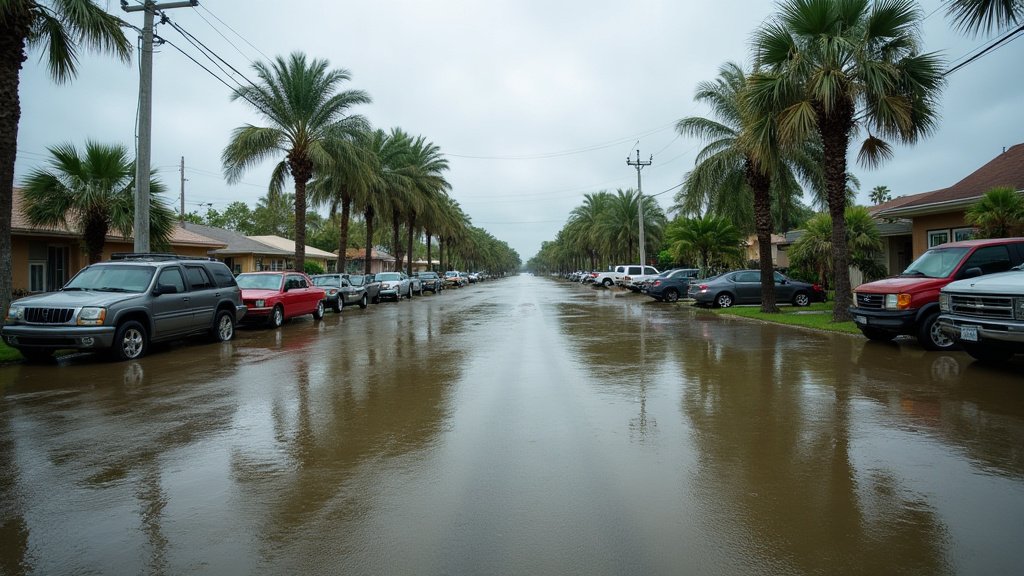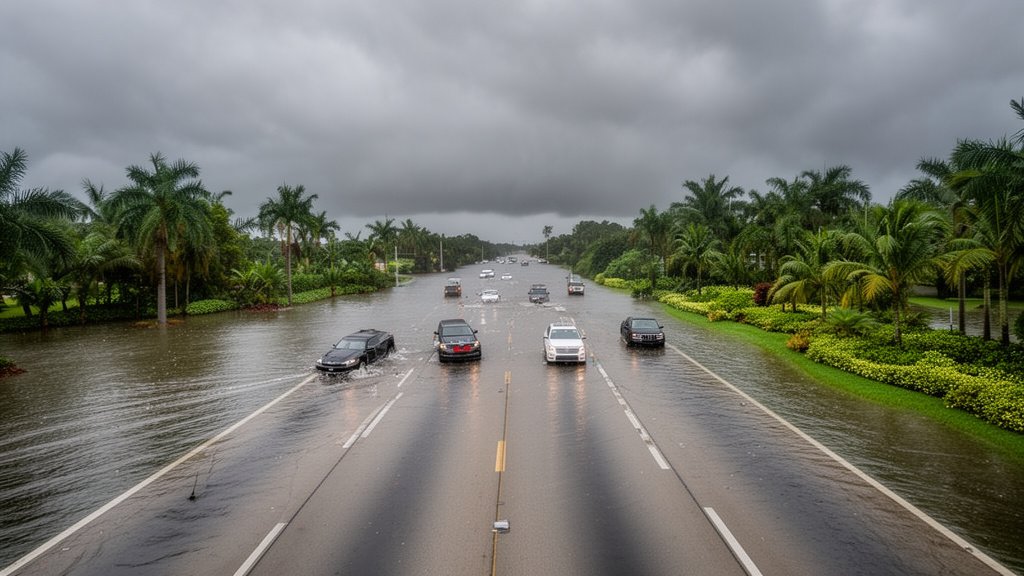
South Florida is grappling with a severe and unrelenting weather event as catastrophic flooding continues to paralyze the region, forcing local officials to declare a state of emergency. As residents navigate impassable roads and compromised infrastructure, the National Weather Service (NWS) continues to issue urgent flood advisories, warning that the ground, already saturated by over 15 inches of rain in specific localized zones, has no remaining capacity to absorb incoming storms. This, combined with high tide cycles and urban runoff, has created a dangerous environment where water levels remain stubbornly high, disrupting both public transport and daily life across Miami-Dade and Broward counties.
Key Highlights
- Record Precipitation: Localized areas have received over 15 inches of rainfall, far exceeding seasonal norms and overwhelming municipal drainage systems.
- Emergency Declarations: Miami-Dade and Broward county officials have formally declared states of emergency to fast-track resources and state-level support.
- Infrastructure Paralysis: Major arterial roadways, including segments of I-95 and I-595, have faced closures, while MIA and FLL airports have reported widespread delays and cancellations.
- Persistent Threat: The National Weather Service emphasizes that saturated soil conditions mean even moderate additional rainfall will lead to immediate, significant surface flooding.
The Anatomy of a Weather Crisis: Assessing South Florida’s Flood Vulnerability
The current crisis in South Florida is not merely a product of singular, isolated storms but the result of a stationary, wide-reaching atmospheric setup that has locked heavy moisture over the Florida peninsula. Meteorologists have described the event as a persistent ‘train’ of thunderstorms, where heavy cells continuously reform over the same saturated ground. This phenomenon has exposed the fragility of the region’s urban flood mitigation systems, which are designed to handle high-volume rainfall but struggle when that volume is sustained over multiple days without pause.
Meteorological Drivers and The ‘Saturated Ground’ Problem
The core issue currently driving the headlines is soil saturation. In typical weather patterns, rainfall percolates through the soil, eventually finding its way into the aquifer or drainage canals. However, when rainfall rates are as high as those recorded this week, the soil effectively becomes waterproof. The water table in many parts of South Florida is already high due to the region’s low elevation and proximity to the Atlantic Ocean and the Everglades. Consequently, when the rain does not stop, the surface water has nowhere to retreat. This creates the ‘standing water’ effect that has left vehicles stalled and neighborhoods inaccessible.
Impact on Regional Infrastructure and Transit
The logistical impact of this flooding has been swift and severe. For a region that relies heavily on its road network for everything from tourism to logistics, the closure of segments of major highways like I-95 is economically significant. Furthermore, the reliance on the Biscayne Aquifer for drainage means that when this system is full, the water backs up into the streets. The Miami International Airport (MIA) and Fort Lauderdale-Hollywood International Airport (FLL) have both been impacted, with ground crews unable to operate safely on the tarmac, leading to cascading delays that have stranded thousands of travelers. This disruption highlights a critical vulnerability in the regional supply chain, where a single weather event can halt interstate commerce for days.
Economic Implications and Long-Term Mitigation
Beyond the immediate need for sandbags and pumps, this event has reignited conversations regarding long-term climate resilience. Local governments are now facing intense scrutiny regarding the capacity of current stormwater pump stations. Experts suggest that the cost of inaction—measured in property damage, business interruption, and insurance premiums—is rapidly climbing. The recurring nature of these ‘once in a generation’ storms suggests that South Florida’s infrastructure may need an overhaul, shifting from traditional drainage models to more sophisticated, water-retention-based urban planning. As the region grows, the challenge remains: how to maintain economic vibrancy while living on low-lying land in an era of increasingly unpredictable, high-intensity precipitation.
Future Outlook: Navigating the Uncertainty
As residents look to the coming days, the primary concern is the potential for new flood advisories. The National Weather Service remains in close contact with state agencies, tracking the next wave of moisture. For those in low-lying areas, the advice is consistent: do not attempt to drive through flooded roads. The depth of standing water is often deceptive, and the risk of vehicle stalls and water-borne hazards remains the highest priority for emergency management teams. Recovery will be a slow process, contingent on the skies finally clearing long enough for the pumps and natural drainage systems to lower the water levels significantly.
FAQ: People Also Ask
Why does South Florida flood so easily during these storms?
South Florida is naturally low-lying and close to sea level, which limits natural drainage. When combined with dense urbanization—where asphalt replaces soil—the rainwater has nowhere to go. Coupled with high water tables and limited elevation, the drainage canals and pump systems are quickly overwhelmed during extreme precipitation events.
Are the I-95 and airport closures permanent?
No. Road closures and airport disruptions are temporary and operational. They are implemented by authorities for public safety during periods of active, heavy flooding. Once water levels recede and safety assessments are completed, these facilities are reopened. Travelers should check with their specific airline or the Florida Department of Transportation for real-time status updates.
What should residents do during a flood warning?
Residents are urged to stay off the roads to prevent stalling vehicles and worsening traffic for emergency responders. If you are in a flood-prone area, move valuables to higher ground, avoid walking through floodwater (which may be contaminated), and monitor local news outlets or the National Weather Service for real-time updates and emergency notifications.
How does this event compare to past flooding in the region?
The scale of this flooding, particularly in terms of the duration and the total accumulation of rain, is being compared to significant historical events in South Florida. While the region is accustomed to tropical storms, the stationary nature of this weather pattern has made it particularly challenging, testing the limits of current infrastructure design in ways similar to major hurricanes, albeit without the wind component.