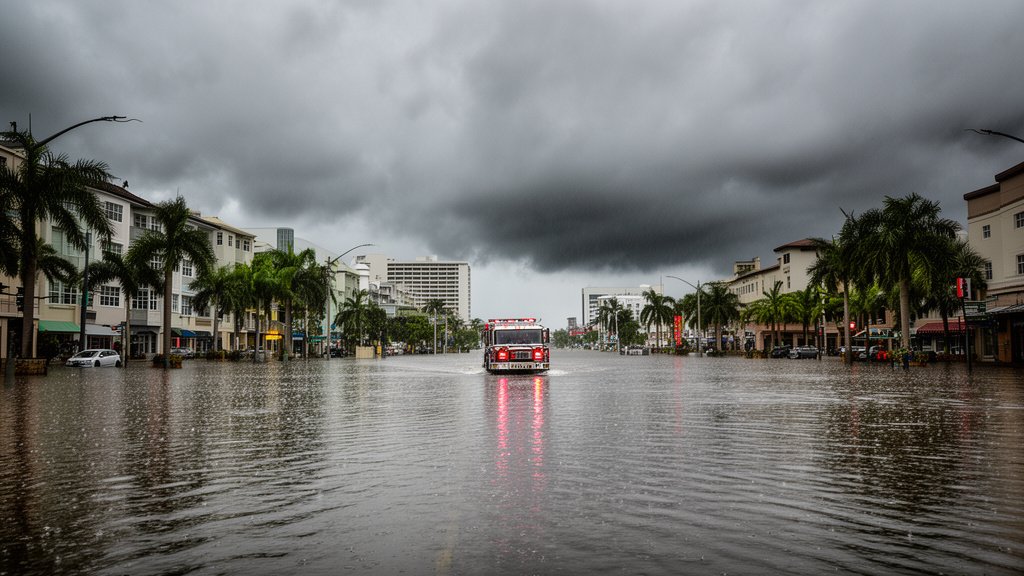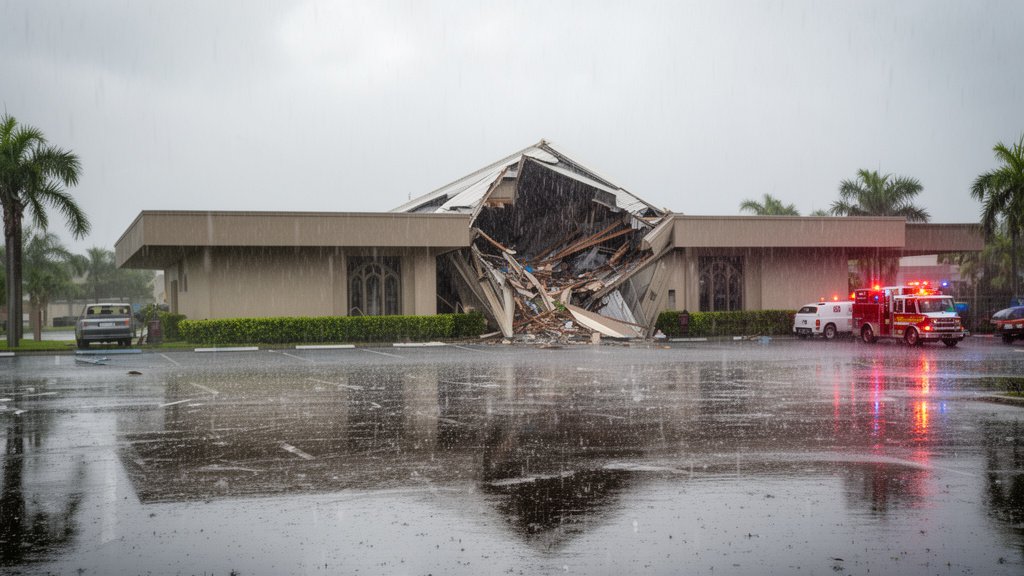
A slow-moving, high-intensity storm system has brought South Florida to a standstill, dumping relentless torrential rains that have transformed thoroughfares into impassable waterways and compromised critical infrastructure. The severe weather event, fueled by the climatic influence of El Niño, forced an immediate halt to daily operations across the region, culminating in the collapse of a south Florida synagogue roof on Thursday, November 19. As flood warnings remain in effect, municipal authorities and emergency response teams are grappling with the scope of the damage while residents face ongoing displacement and significant transit disruptions.
Key Highlights:
- Synagogue Collapse: A place of worship in South Florida suffered a major roof failure due to the weight and saturation of the torrential rainfall.
- Regional Shutdown: Both Broward County Public Schools and Miami-Dade County Public Schools announced the cancellation of all classes for Thursday, November 19, citing safety concerns and impassable roads.
- El Niño Influence: Meteorologists have confirmed that the current storm system is being supercharged by El Niño, which has altered the subtropical jet stream, creating an environment ripe for high-intensity, slow-moving precipitation events.
- Widespread Disruption: Beyond school closures, the flooding has forced widespread road closures, trapping vehicles and overwhelming local stormwater management systems.
The Unprecedented Deluge: Assessing the Structural and Civic Impact
The storm, which began to intensify late Wednesday, has tested the resilience of South Florida’s infrastructure. The collapse of the synagogue roof serves as a stark, physical manifestation of the storm’s severity. Structural engineers point to the rapid accumulation of standing water on flat roofing systems—a common architectural feature in the region—as a primary failure point during extreme weather events. When the weight of the water exceeds the load-bearing capacity of the building’s drainage and support systems, the potential for catastrophic failure increases exponentially. Emergency responders were mobilized immediately upon the collapse to ensure that the site was vacated and to assess the stability of surrounding structures.
The Meteorological Drivers: Why El Niño Matters
The intensity of this week’s rainfall is not coincidental. El Niño, characterized by warmer-than-average sea surface temperatures in the central and eastern Pacific Ocean, exerts a significant influence on global weather patterns. In Florida, El Niño typically shifts the subtropical jet stream farther south and strengthens it across the southern United States. This modification creates a ‘conveyor belt’ of moisture that feeds directly into the region, resulting in deeper, more persistent, and more moisture-rich storm systems. While winter rains are common in Florida, the ‘supercharging’ effect of El Niño often transforms standard seasonal storms into high-impact events capable of producing record-breaking rainfall totals within a few hours. The slow-moving nature of this particular system has allowed it to hover over heavily populated areas, maximizing the impact on both natural drainage basins and urban infrastructure.
Infrastructure and Economic Ripple Effects
The cancellation of classes in the Broward and Miami-Dade school districts highlights the profound impact of the storm on the region’s economic and social fabric. Schools are not merely educational hubs; they are critical components of the regional logistics chain, allowing the workforce to remain productive. The simultaneous closure of the two largest school districts in Florida underscores the danger posed by the flooded roadways. Many of the streets in low-lying coastal areas were designed decades ago and are now struggling to manage the volume of water generated by these intensified storm cycles.
Beyond the school system, the economic toll is beginning to mount as local businesses face flood-related losses, and transit networks experience significant delays. The recurring nature of these floods has sparked renewed debate among urban planners and environmental scientists regarding the necessity for a radical overhaul of the region’s stormwater management strategies. As El Niño continues to influence regional weather, the question remains whether existing pumps, canal systems, and retention basins can handle the increasing frequency of these saturation-heavy events. Experts emphasize that simply repairing existing structures is no longer sufficient; a proactive approach that incorporates climate-resilient engineering, such as permeable pavements and expanded water detention capacity, is required to prevent future systemic failures.
The Future of Climate Resilience in Florida
Looking ahead, the incident at the synagogue and the widespread flooding serve as a bellwether for the challenges Florida faces in a changing climate. The intersection of rapid urban development and heightened storm activity creates a ‘perfect storm’ for municipal planners. The focus must now shift toward long-term adaptation. This includes incentivizing the modernization of older structures, reevaluating floodplain zoning, and investing in advanced weather prediction tools that can offer better early warning signals for localized flash flooding. The emotional and physical toll of this week’s events acts as a reminder that the cost of inaction is increasingly measured not just in dollars, but in the safety and stability of the communities that call South Florida home.
FAQ: People Also Ask
Why does El Niño make rainstorms in Florida more dangerous?
El Niño pushes the subtropical jet stream south, creating a pathway for moisture-rich air to travel across the Gulf of Mexico and into Florida. This increases the frequency and intensity of rainfall, often causing ‘training’ thunderstorms—where multiple storms pass over the same location—that lead to severe flash flooding.
What are the immediate risks of roof collapses during heavy rain?
Flat roofs are particularly susceptible to ‘ponding,’ where water accumulates faster than the drainage system can remove it. The structural load of trapped water can lead to sudden, catastrophic failures. Residents should look for signs of sagging, leaks, or water stains on ceilings during heavy storm events.
Are the school closures likely to be extended?
School districts base closure decisions on NWS flood warnings and localized road safety assessments. While classes were canceled for Thursday, November 19, decisions for subsequent days are made based on receding water levels and the structural integrity of campus buildings. Parents are advised to monitor official district communications for updates.
How can residents protect their property from flash floods?
Property owners should ensure that gutters and downspouts are clear of debris, inspect roof drainage systems, and avoid driving through flooded streets. If located in a known flood-prone area, investing in sandbags and having a flood emergency kit ready is recommended.