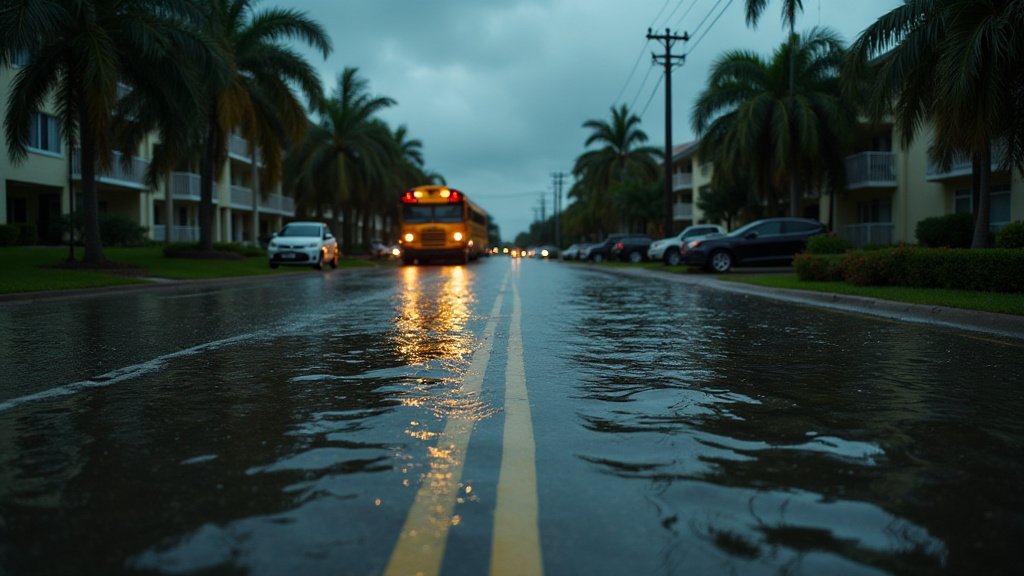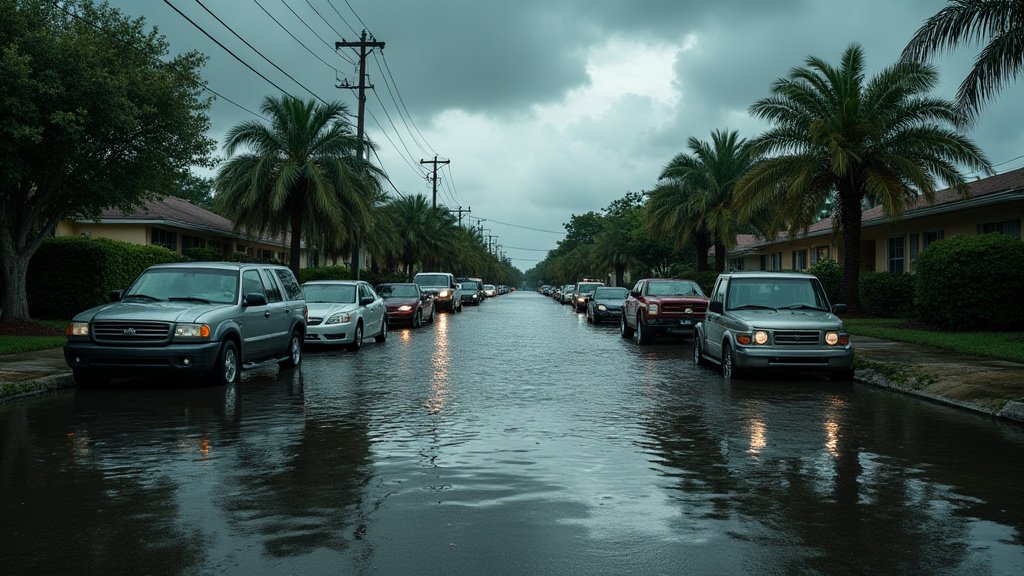
Torrential, record-breaking rainfall has paralyzed the South Florida region, forcing Broward and Miami-Dade counties to abruptly shutter all schools and administrative offices. The widespread flooding, which has transformed major thoroughfares into navigable waterways, marks a significant disruption to public services, leaving thousands of families scrambling to adjust as local governments grapple with an overwhelmed drainage infrastructure. The situation remains fluid, with emergency services advising residents to avoid travel as standing water continues to threaten property and transit routes across the tri-county area.
Key Highlights
- Massive School Closures: Both Miami-Dade County Public Schools (MDCPS) and Broward County Public Schools (BCPS) have officially closed all facilities, including administrative offices, to ensure the safety of students and staff.
- Unprecedented Rainfall: The National Weather Service (NWS) has reported record-shattering precipitation totals, with some localized areas seeing over 15 to 20 inches of rain in a single 24-hour cycle.
- State of Emergency: Local leaders and the Florida Division of Emergency Management have initiated emergency protocols, coordinating resources to manage flood mitigation and traffic management.
- Transit Paralysis: Major arteries, including sections of I-95 and local surface streets, are currently experiencing significant delays and closures, complicating emergency response efforts.
The Meteorological Anatomy of the South Florida Crisis
The flooding event currently impacting South Florida is the result of a persistent, stationary weather pattern characterized by a deep tropical moisture plume interacting with low-level instability. Meteorological data from the National Weather Service (NWS) office in Miami confirms that this event is not merely a standard summer thunderstorm; it is an extreme atmospheric event. The sheer volume of rain has exceeded the capacity of the regional drainage canals, which are designed for typical, albeit heavy, Florida rainy seasons but are ill-equipped to handle the “firehose” effect of recent convective storms.
School Districts in Crisis Mode
For Miami-Dade and Broward counties, the decision to close schools was not made lightly. With student transportation being a cornerstone of the district’s daily operation, the unpredictability of road conditions posed an untenable risk. School district officials cited the inability of buses to safely navigate standing water as a primary driver for the closures. Furthermore, many school facilities themselves have reported water intrusion, leading to immediate safety concerns regarding electrical systems and potential mold contamination. Administrators are currently working in tandem with the South Florida Water Management District to assess when these facilities will be safe for occupancy, though no definitive reopening date has been set.
Governance and Emergency Response
Governor Ron DeSantis and local county mayors have activated the emergency operation centers (EOC) to maximum readiness. The strategy involves a two-pronged approach: immediate life-safety rescue operations for those trapped in vehicles or low-lying homes, and longer-term flood mitigation efforts, such as the deployment of heavy-duty industrial pumps. The Florida Highway Patrol has been actively monitoring critical infrastructure points, focusing on major highway interchanges that are prone to “ponding,” which can rapidly turn into hazardous flood zones.
Secondary Angle: The Infrastructure Vulnerability
South Florida faces a structural challenge that transcends weather events: the “infrastructure debt.” Built upon low-lying porous limestone, the region’s geography makes traditional gravity-fed drainage systems less effective as sea levels rise and water tables saturate. Experts argue that the current flooding is a symptom of a larger, systemic issue where urban development has outpaced the modernization of stormwater management systems. This event underscores the urgent need for a massive overhaul of underground pumping stations and the potential implementation of “sponge city” concepts—urban designs that prioritize permeable surfaces over concrete to naturally absorb excess water.
Secondary Angle: Economic Dislocation
Beyond the immediate school closures, the economic ripples of this storm are substantial. When the fourth and sixth-largest school districts in the United States cease operations, it creates an immediate labor vacuum. Parents who serve as essential workers in healthcare, logistics, and retail are forced to choose between work and childcare, creating a secondary strain on the local economy. Furthermore, the real estate market—a primary driver of the South Florida economy—is facing anxiety as property insurers analyze the data from this event. Prolonged exposure to flooding inevitably impacts insurance premiums, which are already at historical highs in the state, potentially creating a feedback loop of affordability crises.
Secondary Angle: Adapting to the New Normal
As climatologists suggest that these “stalled” weather patterns may become more frequent, the regional narrative is shifting from “temporary disaster” to “long-term adaptation.” Local governments are now being forced to confront the reality that the infrastructure built in the mid-20th century is incompatible with the climate variability of the 21st. Future investments will likely pivot toward increased elevation of critical roadways and stricter zoning regulations that prevent high-density construction in flood-prone zones. This flooding event serves as a bellwether for the necessary, yet expensive, policy pivots that South Florida must embrace to remain a viable, accessible, and thriving urban center in the coming decades.
FAQ: People Also Ask
Q: Are all school activities and extracurriculars canceled?
A: Yes. All school-related activities, including sports practices, after-school programs, and adult education classes, are suspended until further notice across both Miami-Dade and Broward school districts.
Q: How long is the flooding expected to last?
A: While the heaviest rainfall is projected to diminish, the nature of South Florida’s geography means that standing water recedes slowly. Officials have advised that road conditions may remain hazardous for several days post-storm.
Q: How can residents receive the latest updates?
A: Residents are urged to monitor the official Miami-Dade and Broward County Public Schools websites, as well as the National Weather Service Miami-South Florida Twitter/X feed for real-time localized alerts.
Q: Is this flooding related to a specific named storm?
A: No. Unlike a hurricane, which has a distinct center and wind structure, this event is classified as a heavy rain event caused by a persistent tropical moisture feed, illustrating the dangers of non-named storm systems.