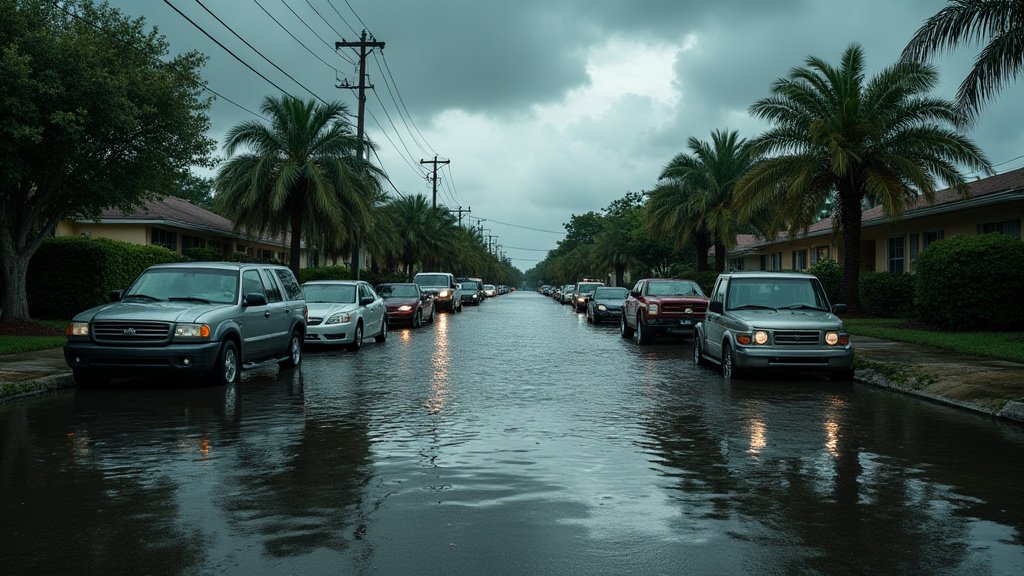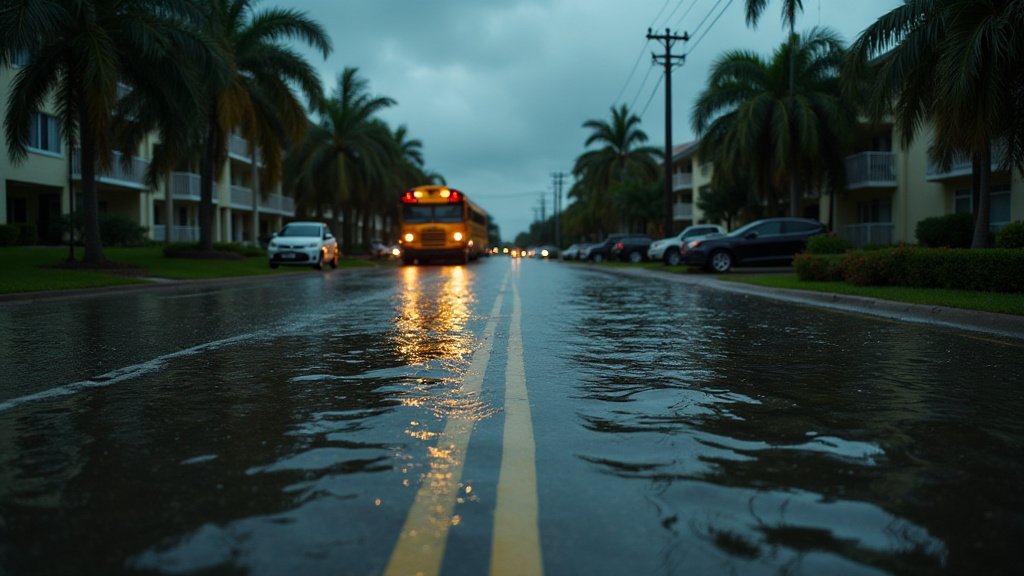
South Florida residents are grappling with the consequences of an intense, persistent rain event that has led to significant flooding throughout the region, forcing Miami-Dade and Broward County public schools to cancel classes for Thursday, November 19. The rapid accumulation of rainfall has overwhelmed drainage systems, compromised local roadways, and prompted officials in Broward County to formally declare a local state of emergency to accelerate resource allocation and disaster management efforts.
Key Highlights:
- Schools Closed: Miami-Dade County Public Schools (M-DCPS) and Broward County Public Schools (BCPS) are closed on Thursday, Nov. 19, citing safety concerns for students and staff during the severe weather.
- State of Emergency: Broward County officials have declared a local state of emergency, enabling enhanced access to emergency funds and expedited government response.
- Infrastructure Impact: Significant flooding has been reported on major thoroughfares and local facilities, causing severe traffic delays and potential structural concerns.
- Meteorological Factor: The region has experienced heavy, persistent rainfall resulting from a stalled weather system, pushing the local water management infrastructure to its limits.
The Anatomy of the South Florida Deluge and Its Impact
The decision to shutter two of the largest school districts in the United States—Miami-Dade and Broward—underscores the severity of the ongoing weather crisis. When school districts move to cancel operations, it serves as a leading indicator of regional risk, reflecting concerns not only for campus safety but also for the transportation logistics required to safely navigate a region increasingly compromised by high water levels.
Meteorological Origins and Infrastructure Strain
The current flood event is the result of a persistent, high-moisture weather system that has remained stalled over the South Florida peninsula. According to data monitored by the National Weather Service (NWS), this system has delivered consistent, heavy rainfall rather than the sudden, intense squalls typically associated with afternoon summer storms. This duration-based saturation is particularly damaging to urban environments with low elevation, where the ability of the ground and drainage systems to absorb and evacuate water is quickly exceeded.
Infrastructure, managed by entities like the Florida Department of Transportation (FDOT), is currently facing a dual challenge: surface flooding that renders roads impassable and the saturation of subsurface drainage networks. These networks, designed to handle standard runoff, are struggling to move the sheer volume of water, leading to the ponding seen across metropolitan areas. The declaration of a local state of emergency in Broward County is a tactical move, granting local agencies the authority to bypass certain procurement regulations, thereby allowing for the immediate mobilization of pump crews, debris removal teams, and flood mitigation assets.
The Logistics of Educational Continuity
For the Miami-Dade County Public Schools and Broward County Public Schools systems, the threshold for closure is strictly tied to safety protocols. These districts operate the largest bus fleets in the region. Navigating large, high-profile buses through standing water—which often masks potholes, stalled vehicles, or downed infrastructure—presents an unacceptable risk. Furthermore, the capacity for teachers and staff to report to work is severely limited by the same road conditions.
This disruption highlights the broader issue of regional resilience. As these districts manage the immediate aftermath, they must also coordinate with local municipal offices to ensure that school facilities—which often serve as staging grounds for emergency equipment or shelters—remain secure and functional. The closure is not merely a cessation of learning but an active measure to keep thousands of vehicles off the roads, thereby allowing first responders clearer access to critical areas.
Economic and Urban Resilience Factors
The economic impact of such closures and flooding extends beyond the classroom. Small businesses, commercial logistics chains, and daily commuters are all feeling the pressure. South Florida’s economy relies heavily on the fluidity of movement; when major arteries become submerged, the ripple effects are felt in delivery times, retail foot traffic, and overall productivity.
From a long-term urban planning perspective, this event serves as another data point for city planners assessing the future of South Florida’s drainage capacity. The intersection of rising sea levels and intense precipitation events necessitates a significant shift in infrastructure spending. Experts suggest that the focus must move toward decentralized water management, including the expansion of retention ponds, permeable paving, and upgraded pumping stations capable of operating under sustained heavy load conditions.
FAQ: People Also Ask
Q: Why did schools close in both Miami-Dade and Broward counties?
A: Both districts closed schools on November 19 to ensure the safety of students and staff due to persistent, heavy rainfall causing widespread flooding, making transportation and campus access hazardous.
Q: What does the state of emergency in Broward County mean for residents?
A: The declaration of a local state of emergency allows Broward County to expedite resource allocation, secure emergency funding, and deploy flood-mitigation assets more rapidly to address critical infrastructure disruptions.
Q: How can I check the status of my local school or facility?
A: Residents are advised to monitor the official websites and social media channels of Miami-Dade County Public Schools and Broward County Public Schools for real-time updates and announcements regarding the resumption of operations.
Q: Will floodwaters affect my commute tomorrow?
A: Even as rain subsides, standing water may remain on roadways. Drivers should exercise extreme caution, avoid driving through flooded streets to prevent vehicle damage and water displacement, and check local traffic reports via FDOT or news outlets.