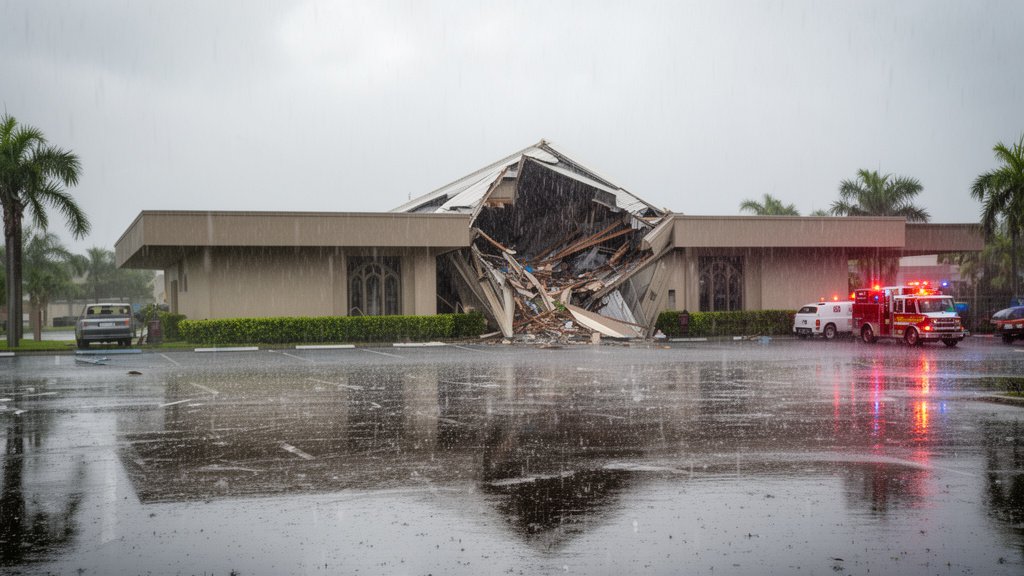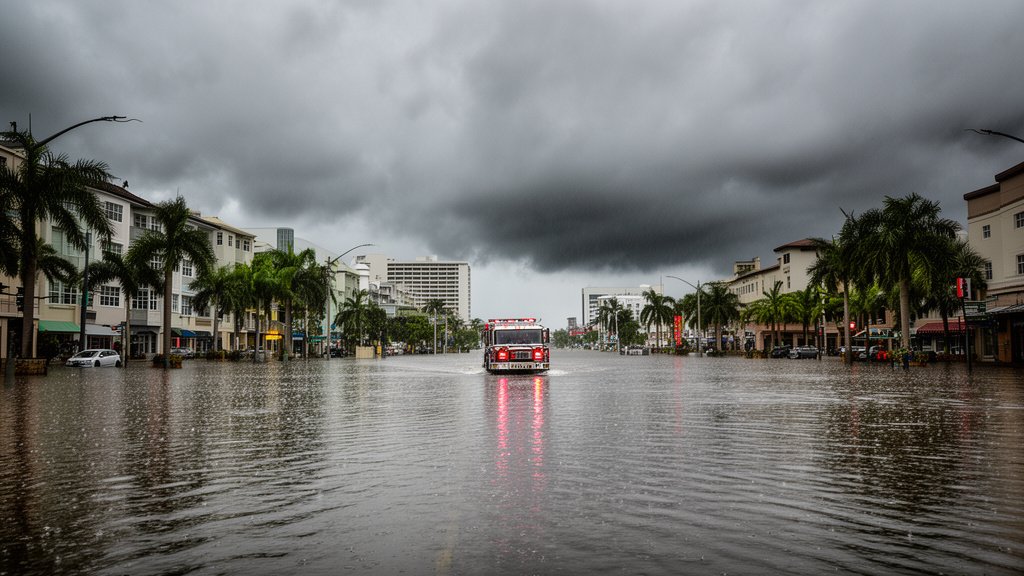
Heavy rainfall across South Florida has led to states of emergency and widespread disruptions, including the closure of Miami-Dade public schools and Miami Dade College on Thursday, November 19, 2026. A flood watch remains in effect as the region battles persistent storms and potential flash flooding.
Key Highlights
- Emergency Declaration: Local and regional officials have officially declared states of emergency to fast-track resource allocation for flood-prone zones.
- Educational Impact: Miami-Dade County Public Schools and Miami Dade College have ceased all in-person operations to ensure the safety of students and staff.
- Weather Alert: A persistent flood watch remains in effect for the entire South Florida region, with meteorologists citing slow-moving, high-precipitation storm cells.
- Resource Mobilization: Emergency Management Services (EMS) are actively conducting water rescues and monitoring drainage capacities in low-lying coastal neighborhoods.
Navigating the Deluge: Infrastructure and Public Safety Response
The catastrophic weather event unfolding across South Florida on November 19, 2026, serves as a stark reminder of the region’s acute vulnerability to extreme precipitation. As local authorities scramble to manage the fallout, the immediate focus remains on public safety, infrastructure preservation, and the mitigation of long-term economic damage. The decision to shutter the nation’s fourth-largest school district, Miami-Dade County Public Schools, along with the expansive Miami Dade College campuses, underscores the severity of the threat posed by urban inundation.
The Anatomy of the Flooding Crisis
Meteorologists with the National Weather Service (NWS) have identified a stationary moisture feed that has funneled tropical levels of precipitation over the Miami metropolitan area for over 36 consecutive hours. Unlike traditional hurricane events, which offer clear tracking data and evacuation lead times, this flash flooding event is driven by a synoptic scale pattern that has overwhelmed the region’s antiquated stormwater drainage systems.
Engineers with the South Florida Water Management District are working at maximum capacity to operate flood control pumps, but saturated soil conditions and high water tables have left nowhere for the runoff to migrate. The result is standing water that has rendered major thoroughfares impassable, disrupting transit networks and complicating the efforts of emergency responders.
The Socio-Economic Ripple Effect
Beyond the immediate necessity of suspending educational services, the economic implications for South Florida are significant. The suspension of operations at Miami Dade College and K-12 public schools forces thousands of parents into unplanned leave, impacting the local labor force. Furthermore, small businesses in coastal districts are facing critical losses due to water damage and the physical impossibility of customer access. The state of emergency declaration is essential not just for mobilizing rescue assets, but for unlocking potential disaster recovery funds and enabling local governments to bypass standard procurement hurdles to secure urgent infrastructure repairs.
Infrastructure and Future-Proofing
This event has reignited intense debates surrounding the long-term viability of South Florida’s current urban development model. With the region already dealing with sea-level rise, the added burden of unprecedented rainfall creates a ‘double-threat’ scenario. Urban planners are now being forced to confront the limitations of gravity-based drainage systems in a flat, sea-level terrain. Solutions currently being proposed by infrastructure committees include the massive expansion of subterranean water storage vaults and the implementation of ‘sponge city’ initiatives—designs that prioritize permeable surfaces over traditional concrete to absorb excess stormwater.
However, these are multi-year projects requiring billions in funding. For today, residents remain in a state of high alert, with emergency sirens punctuating the sound of persistent rain. The integration of technology, such as real-time water depth sensors connected to public warning systems, has provided residents with slightly better situational awareness than in previous decades, yet the sheer volume of water continues to outpace current mitigation efforts. As the storm lingers, the community’s resilience is once again being tested by the realities of a changing climate, demanding both immediate aid and a radical shift in how the region manages its relationship with the surrounding water table.
FAQ: People Also Ask
Q: Are Miami-Dade County Public Schools closed today?
A: Yes, Miami-Dade County Public Schools and Miami Dade College are closed effective Thursday, November 19, 2026, due to the severe flood risk and dangerous road conditions.
Q: What does a ‘State of Emergency’ mean for residents?
A: It allows local governments to access emergency funds, expedite resource procurement, and deploy specialized response teams more effectively, while alerting the public to the severity of the situation.
Q: How long is the flood watch expected to last?
A: The National Weather Service has indicated that the flood watch is active until further notice, pending the movement of the current stationary weather system out of the South Florida region.
Q: Is it safe to drive through flooded roads?
A: Emergency officials strongly advise against driving through flooded roads. Just a few inches of moving water can stall a vehicle or carry it off the road, and hazards hidden beneath the surface, such as open manholes or debris, pose severe dangers.