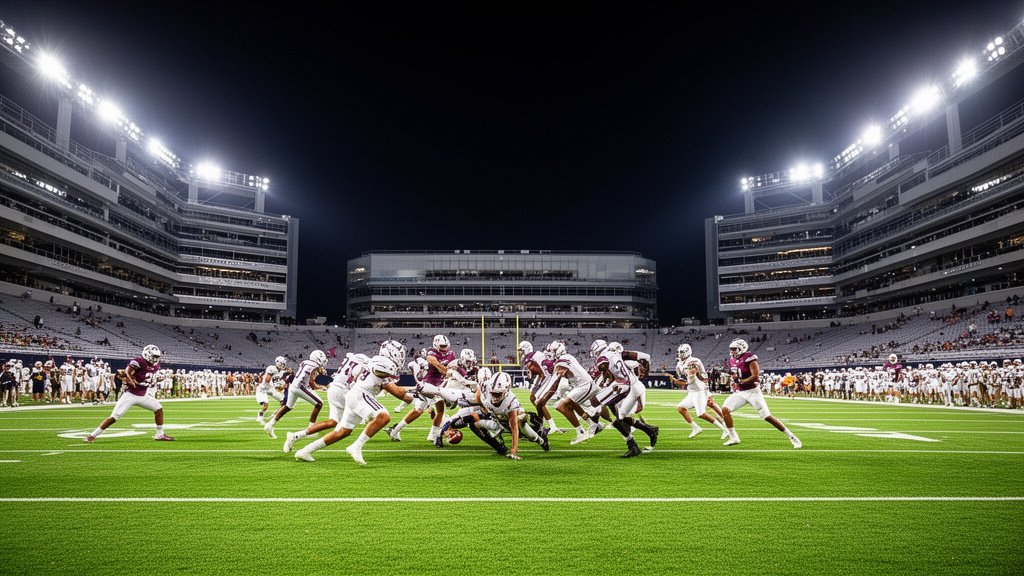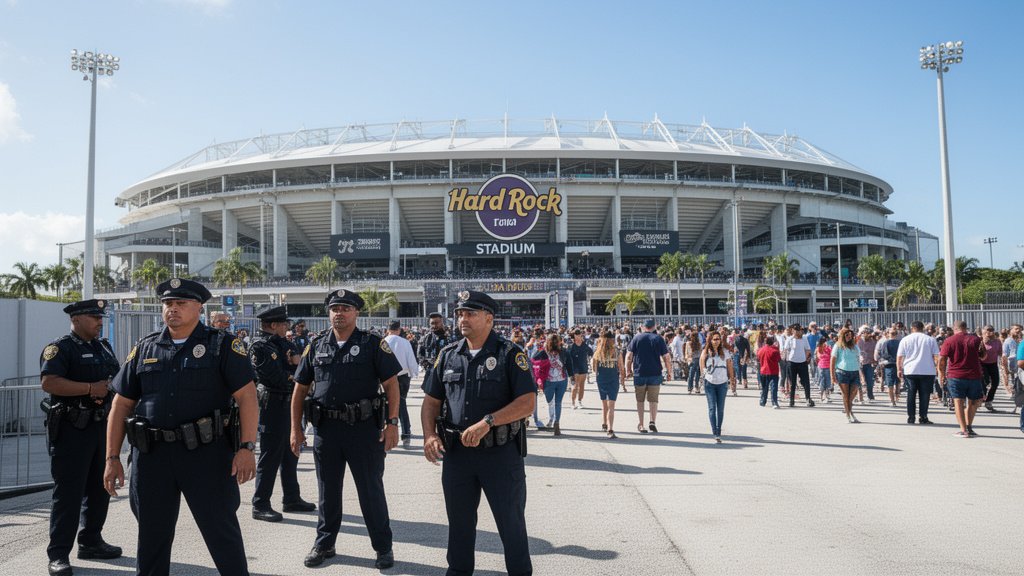
As the University of Miami prepares to host the University of Notre Dame in a high-stakes college football matchup, the Miami-Dade Police Department (MDPD) has mobilized a significant, multi-layered security operation. With national attention focused on the game and ticket demand reaching peak levels, authorities are shifting into a high-alert posture to ensure public safety around the Hard Rock Stadium complex in Miami Gardens.
Operational Security Protocols
The primary objective for Miami-Dade law enforcement is to balance the celebration of a major collegiate sporting event with the non-negotiable requirement of public order. Security officials have confirmed that staffing levels will be increased across all zones of the stadium, with a specific focus on perimeter control and high-traffic ingress and egress points. The operation involves a coalition of local agencies, including the Miami Gardens Police Department and private security firms contracted by the university, all working under the coordination of the MDPD.
Key tactical elements of the security plan include the deployment of K-9 units to sweep the concourse and parking lots prior to gate opening, as well as an increased presence of plainclothes officers within the stadium bowl to monitor crowd dynamics. Law enforcement has also coordinated with federal partners to ensure airspace monitoring around the stadium, a standard procedure for games identified as having high national interest or elevated risk profiles. Officers are prioritizing the mitigation of potential civil disturbances, managing illegal tailgating activities that extend beyond designated zones, and ensuring the rapid movement of emergency vehicles in the event of medical incidents.
Traffic Management and Fan Logistics
One of the most complex logistical challenges facing Miami-Dade authorities is the management of the heavy traffic volume expected in Miami Gardens. Hard Rock Stadium’s location creates a bottleneck effect when operating at capacity, and the influx of out-of-town visitors for a game of this magnitude places additional strain on local infrastructure.
Traffic management protocols include the use of advanced signal synchronization on major arterial roads like the Florida Turnpike and NW 199th Street. Authorities have advised attendees to arrive early, warning that parking lots will hit capacity rapidly. Furthermore, the implementation of a strict ‘Clear Bag Policy’ remains in full effect. This policy, which has been standardized across the ACC and most major conferences, is being reinforced with additional bag-check personnel at all gates to prevent bottlenecking. The goal is to maximize throughput speed while maintaining a rigorous security screen for every attendee entering the facility.
The Historical and Cultural Weight of ‘The U’ vs. The Irish
The urgency surrounding this specific security mobilization is amplified by the historic nature of the rivalry between the Miami Hurricanes and the Notre Dame Fighting Irish. Often cited as one of the most storied antagonisms in college football history—characterized by 1980s-era drama and intense cultural contrasts—the matchup draws a diverse, passionate crowd.
Local authorities recognize that passion in sports can occasionally translate into heightened tensions between fan bases. Consequently, the security strategy includes dedicated ‘fan separation’ protocols in common areas of the stadium and a zero-tolerance policy for spectator misconduct, such as fighting or severe harassment. This proactive approach is designed to prevent small skirmishes from escalating into larger crowd control issues, ensuring the environment remains family-friendly despite the intense competitive atmosphere on the field.
Economic Ripples and Local Impact
The game is not just a security challenge; it is a major economic engine. Hotels in Miami-Dade and Broward counties are reporting near-capacity occupancy rates, and local restaurants and bars are bracing for a surge in patrons. From a public safety perspective, this means the security footprint extends well beyond the stadium perimeter.
Law enforcement is coordinating with hospitality zones in South Beach, Brickell, and Downtown Miami to monitor crowds at popular sports bars and watch-party venues. The economic impact of such a game reaches into the millions of dollars, justifying the significant resource allocation by the city and county to prevent any incidents that might tarnish the region’s reputation as a top-tier destination for high-profile athletic events. The security investment is viewed not just as a cost, but as a critical infrastructure requirement to sustain the region’s ability to host future mega-events, including potential national championship games or major professional league playoff matches.
FAQ: People Also Ask
Q: What is the primary security concern for the Miami-Notre Dame game?
A: The primary concerns are crowd density management, traffic congestion around Hard Rock Stadium, and ensuring fan safety during a high-stakes, highly emotional rivalry game.
Q: Are there specific items banned from the stadium under the new protocols?
A: Yes. The standard ‘Clear Bag Policy’ is strictly enforced. Bags must be clear plastic, vinyl, or PVC and not exceed 12″ x 6″ x 12″. Small clutch bags are permitted, but all items are subject to search.
Q: Will police presence be visible outside the stadium?
A: Yes. The Miami-Dade Police Department has confirmed a highly visible uniform presence, augmented by K-9 units and traffic control officers, to deter criminal activity and manage the flow of tens of thousands of fans.
Q: How early should attendees arrive to avoid security delays?
A: Officials recommend arriving at the stadium gates at least 90 minutes before kickoff to allow for the increased screening times and traffic congestion anticipated for this high-interest matchup.