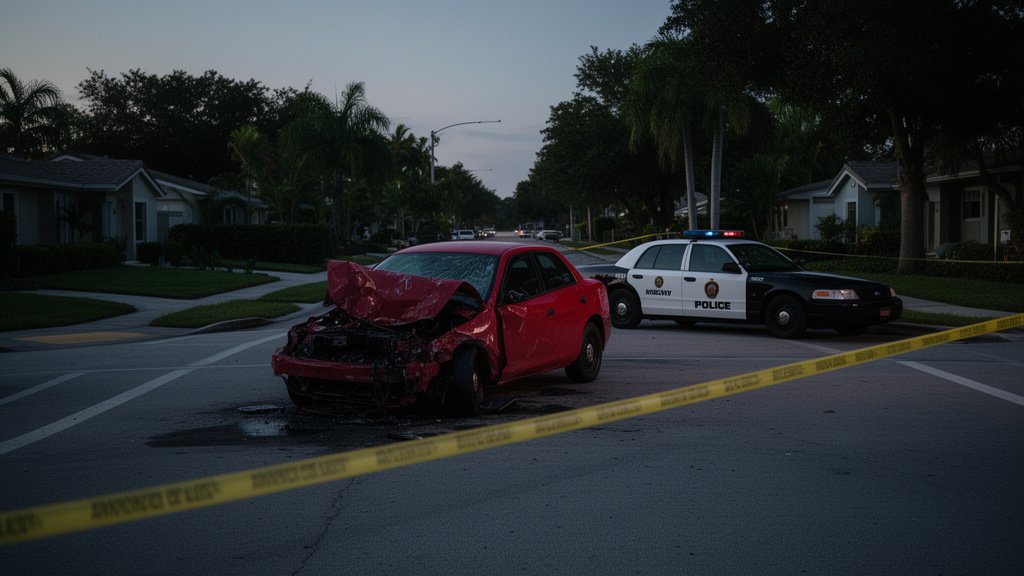
A man was transported to a local medical facility following a serious vehicular incident in Miami Shores, triggering an active investigation by law enforcement. The scene was marked by the presence of a significantly damaged red car, which authorities are currently examining as part of their preliminary inquiry into the circumstances surrounding the event. As of the latest update, the investigation remains ongoing, with local authorities working to establish a timeline of events leading up to the hospitalization.
Investigative Protocol and Scene Management
When incidents of this nature occur in municipal settings like Miami Shores, the initial priority for the Miami-Dade Police Department (MDPD) is securing the scene to preserve forensic evidence. The damaged red vehicle found at the location serves as the primary piece of physical evidence. Investigators from the Traffic Homicide Unit (THU) often prioritize the collection of paint transfers, skid mark measurements, and debris field analysis to reconstruct the incident. This process is methodical; it involves high-resolution 3D mapping of the street geometry, weather condition assessment, and time-stamping traffic patterns relative to the time the emergency calls were received.
Beyond the immediate physical evidence, investigators are actively canvassing the surrounding neighborhood for doorbell camera footage or private security system recordings. These digital artifacts are increasingly vital in modern municipal investigations, often providing the objective perspective required to verify witness accounts. The focus on the red vehicle suggests investigators are looking for specific impact points to determine the velocity and trajectory of the collision or event.
Navigating Traffic Safety in Miami-Dade
This incident highlights broader concerns regarding urban traffic safety within Miami-Dade County. The area has seen a consistent push for infrastructure improvements aimed at reducing high-speed incidents in residential corridors. According to municipal traffic safety reports, local authorities have been implementing traffic calming measures, such as enhanced signage and modified intersection geometry, to curb accidents. However, as urban density increases, the challenge of managing multi-modal traffic—including pedestrians, cyclists, and vehicular traffic—remains a persistent struggle for municipal planners.
Furthermore, the medical response time in cases like this is a critical metric for municipal efficiency. Miami-Dade Fire Rescue (MDFD) operates under strict protocols for trauma transport, ensuring that victims are moved to the nearest Level 1 or Level 2 trauma center within the ‘golden hour’—a window of time recognized by emergency medicine professionals as the period during which rapid intervention significantly improves survival outcomes and prognosis. The victim’s hospitalization status indicates the severity of the trauma, necessitating a coordinated effort between emergency response teams and hospital trauma units.
Future Implications and Community Impact
For the Miami Shores community, incidents of this magnitude often lead to town hall discussions regarding public safety and road management. When a localized investigation occurs, it often acts as a catalyst for legislative or infrastructural changes. Residents frequently petition local government bodies for increased lighting or speed enforcement in areas where such incidents have occurred. The result of this ongoing investigation will likely influence future safety initiatives, as police data will be integrated into the broader Miami-Dade traffic safety dashboard to identify potential patterns or ‘hot spots’ that require immediate engineering intervention.
As the investigation continues, authorities are urging witnesses or anyone with information regarding the incident to come forward. The cooperation of the public is considered an essential component of the investigative process, particularly in identifying the actions of the driver involved prior to the collision. While the investigation remains in its early stages, the community is reminded of the importance of vigilance and adherence to traffic safety regulations in high-traffic zones.