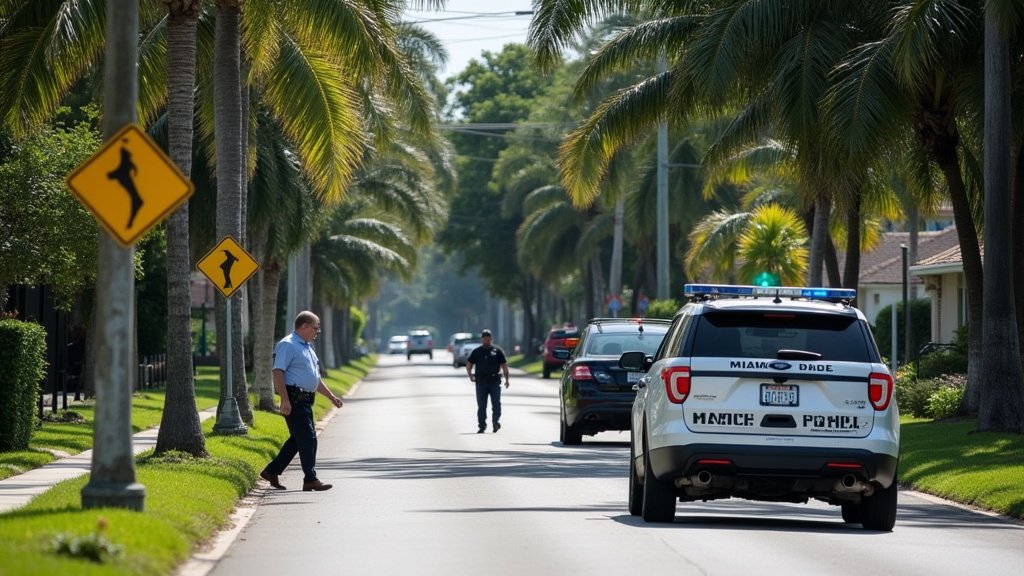
Authorities in Southwest Miami-Dade have launched an urgent search operation for 79-year-old Lydia Bermudez, who was reported missing on October 11 and is currently considered an endangered adult. The Miami-Dade Police Department is leading the investigation, canvassing the area near the 5000 block of SW 93 Court, where she was last seen, as family and law enforcement officials express deep concern for her safety. Given the individual’s age and the classification of the case as ‘endangered,’ law enforcement is treating this matter with the highest level of priority, utilizing ground units and K-9 teams to trace her potential movements.
Key Highlights
- Missing Individual: Lydia Bermudez, 79 years of age.
- Last Seen Date: October 11.
- Last Known Location: 5000 block of SW 93 Court, Southwest Miami-Dade.
- Status: Classified as an endangered adult, triggering immediate and heightened police response.
- Call to Action: Residents in the surrounding area are urged to check surveillance systems and report any sightings to the Miami-Dade Police Department immediately.
The Anatomy of a High-Priority Search Operation
The disappearance of a senior citizen is a scenario that triggers immediate, comprehensive protocols within the Miami-Dade Police Department (MDPD). When an individual is classified as an ‘endangered adult,’ it implies that the person may be suffering from cognitive impairments, such as dementia or Alzheimer’s, or that they are physically unable to care for themselves without assistance. In the case of Lydia Bermudez, the 5000 block of SW 93 Court serves as the epicenter of the investigation.
Understanding the ‘Endangered’ Classification
In law enforcement terminology, the ‘endangered’ tag is not a standard designation; it is a critical differentiator that alters the resources deployed. For an elderly person, this classification usually suggests that the individual lacks the capacity to navigate their surroundings safely or is at high risk of environmental harm. This is particularly relevant in the climate and landscape of Southwest Miami-Dade, where expansive residential zones, canal systems, and heavy traffic arterial roads create a complex environment for an elderly person to navigate on foot or via public transit. The police response in such cases often involves a multi-layered approach: immediate area canvassing, review of private and public CCTV footage, and the potential issuance of a Silver Alert to widen the search radius beyond the immediate neighborhood.
The Geography of the Search
The 5000 block of SW 93 Court is a residential area characterized by moderate density. For investigators, this location provides specific challenges and opportunities. Because the area is heavily residential, the search relies heavily on ‘neighborhood intelligence.’ This includes interviewing residents to determine if the missing individual was seen walking, interacting with others, or appearing disoriented. Law enforcement officials look for ‘path of travel’ patterns—typically, elderly individuals who become disoriented may follow familiar routes or attempt to return to a location associated with their past. By creating a radius based on the last known sighting on October 11, detectives can better deploy K-9 units, which are trained to pick up scent trails in suburban environments.
The Role of Technology in Modern Searches
While traditional search methods like physical canvassing remain the bedrock of the investigation, the integration of technology has become indispensable. Detectives are currently analyzing data from doorbell cameras and residential security systems in the vicinity of SW 93 Court. Modern surveillance systems, which are increasingly common in Miami-Dade residential zones, provide a distinct advantage in tracking the exact timeline of a missing person’s movements. This data helps investigators determine the precise direction of travel, which is critical for narrowing the search parameters. Community members in the area are often asked to review their own footage from October 11, specifically looking for anyone matching the description of Lydia Bermudez during the late afternoon hours.
Community Engagement and Collective Vigilance
The effectiveness of a search operation of this nature often hinges on the ‘eyes on the ground’ provided by the local community. The Miami-Dade Police Department has emphasized that public cooperation is not just helpful but essential. Residents living within a two-mile radius of the 5000 block of SW 93 Court are encouraged to search their own properties, including backyards, sheds, and detached garages, as it is not uncommon for individuals in a state of confusion to seek shelter in accessible but overlooked spaces. The psychological impact on the community is also notable; missing person cases involving the elderly tend to galvanize neighborhoods, fostering a sense of shared responsibility. Volunteers and neighbors often organize localized search parties, though authorities caution that such efforts should remain coordinated with official police instructions to avoid contaminating potential scent trails or disrupting professional search efforts.
The Protocol for Reporting Sightings
If a resident believes they have seen someone matching the description of Lydia Bermudez, the protocol is specific: do not attempt to apprehend or physically detain the individual, as this may cause distress or flight. Instead, the individual should be kept in view while the observer contacts the Miami-Dade Police Department via their non-emergency or emergency lines. Providing a specific time and precise location is more valuable than any other information. In cases involving cognitive decline, the individual may be non-communicative or unable to state their name, so describing their clothing and general demeanor—whether they appeared confused, tired, or distressed—is vital information for first responders.
Addressing the Broader Crisis of Aging in Place
The disappearance of an endangered senior like Lydia Bermudez highlights a growing concern in urban planning and public health: the safety of an aging population in sprawling suburban environments. As the demographic of Southwest Miami-Dade continues to shift, the challenges of ensuring the safety of seniors who ‘age in place’ become more pronounced. This includes the need for better communication between families, local law enforcement, and neighborhood associations. Many advocacy groups are pushing for more widespread implementation of GPS tracking devices for seniors prone to wandering, as well as increased neighborhood awareness training, where residents are educated on how to approach and identify an elderly person who appears lost. By learning to recognize the signs of a senior in distress, the community can become the first line of defense in preventing such disappearances.
FAQ: People Also Ask
What should I do if I see someone who looks like a missing senior?
If you see someone who fits the description of a missing person, prioritize your own safety while keeping the individual in your line of sight. Call 911 or the local police department immediately. Do not touch or grab the person, as this can trigger a flight response in someone suffering from cognitive decline. Remain calm and speak in a gentle, reassuring tone until authorities arrive.
How does the Miami-Dade Police Department determine a case is ‘endangered’?
The ‘endangered’ classification is applied when there is an immediate threat to the person’s health or life. For the elderly, this is almost automatic if they have a known medical history, require medication, or if their disappearance is entirely out of character and they lack the cognitive or physical ability to care for themselves in an uncontrolled environment.
How can I help with the search for Lydia Bermudez?
The most effective way to help is to check any personal surveillance footage (like Ring or Nest doorbells) from the afternoon of October 11 if you reside near the 5000 block of SW 93 Court. If you find footage, contact the Miami-Dade Police Department. Additionally, share the missing person flyer provided by the department on social media platforms to increase community awareness.
What is a Silver Alert and has it been issued?
A Silver Alert is a public notification system that broadcasts information about missing seniors via television, radio, and highway message boards. While the criteria for a Silver Alert are stringent, the MDPD utilizes various internal and external notification channels to ensure the public is informed. Always verify official channels for the most current updates on the status of the search.