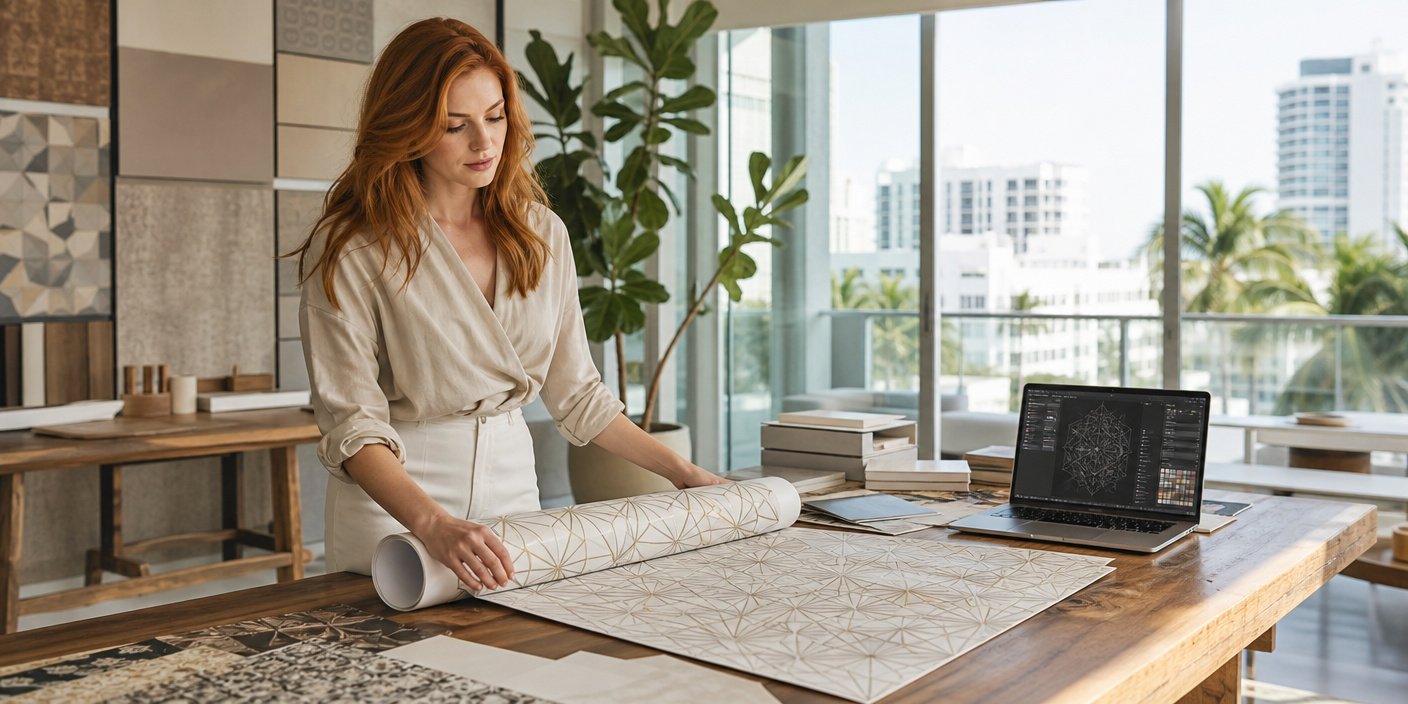
Emma Harris, previously recognized as the founder of the Miami-based childcare hiring platform EarlyDay, has officially entered the home design industry with the launch of Marova Design. This strategic transition marks a significant departure from the B2B tech sector, signaling a broader trend of technology founders applying their expertise in digital workflows to the traditionally manual and artisanal world of interior decor. Marova Design utilizes advanced generative AI to create unique, intricate wallpaper patterns, effectively bridging the gap between high-end aesthetic customization and the efficiency of modern algorithmic design.
Key Highlights
- Tech to Textile Pivot: Emma Harris, the former CEO of EarlyDay, has successfully transitioned from the childcare tech marketplace to the competitive luxury interior design market.
- Generative AI Integration: Marova Design leverages proprietary generative AI models to iterate on patterns, offering a level of speed and customization that challenges traditional wallpaper manufacturing timelines.
- Miami Tech Influence: The launch underscores Miami’s growing status as a hub for founders diversifying their portfolios across disparate industries, from fintech and HR-tech to lifestyle and design.
- The Personalization Revolution: Marova reflects a shifting consumer demand for hyper-customized, AI-assisted bespoke home goods, moving away from mass-produced retail patterns.
The Architect of the Pivot: From EarlyDay to Marova Design
The trajectory of Emma Harris’s career offers a compelling case study for the evolving “founder’s journey” in the digital age. After building EarlyDay into a robust hiring platform—specifically tailored to the childcare and education sector—Harris demonstrated a deep understanding of scaling operational marketplaces and navigating the complexities of human-centric B2B solutions. However, the move to Marova Design represents a pivot from the friction-heavy world of employment tech to the aesthetic, highly visual domain of home interior design.
Industry analysts often observe that tech founders who move into consumer goods bring a specific, analytical rigor to their creative pursuits. By treating wallpaper design not just as an art form but as a product-market fit challenge, Harris is attempting to disrupt the traditional supply chain of interior decor. In the conventional wallpaper industry, lead times for custom prints can stretch for weeks or months, and the barriers to entry for independent designers are notoriously high. By integrating AI into the foundation of Marova Design, Harris is addressing these structural inefficiencies head-on.
The Intersection of Code and Canvas
At the core of Marova Design is the use of generative AI to create wallpaper prints that are technically complex, structurally sound, and aesthetically unique. Unlike traditional designers who might spend weeks drafting a single repeating pattern, Marova’s AI-enhanced process allows for rapid prototyping and infinite iteration. This does not replace the artist’s eye; rather, it amplifies it. Harris and her team feed parameters—such as color palettes, architectural eras, or specific motifs—into their systems, which then generate a vast array of high-fidelity designs. This digital-first approach ensures that each roll of wallpaper feels bespoke, even when produced at scale.
This workflow is emblematic of a larger movement in design: the “technological artist.” By lowering the cost and time barrier of pattern generation, Marova is able to focus on high-end luxury aesthetics while maintaining the technical precision that tech-native founders are known for. It is a synthesis of data science and interior styling, where the “training data” for the AI is rooted in art history, geometry, and contemporary design trends.
Why AI is Reshaping Interior Design
The interior design sector has historically been resistant to rapid, tech-driven innovation, largely due to its reliance on artisanal craft and physical texture. However, AI is changing this dynamic by solving the “customization paradox.” Consumers want one-of-a-kind home features, but they also want them available at price points and speeds that rival mass-market retailers.
Marova Design is positioning itself to capture this middle ground. By using AI, the company can offer “collection drops” that are reactive to market data, shifting styles much faster than traditional wallpaper houses that rely on biannual or annual design cycles. Furthermore, the ability to rapidly iterate means that customers could, in the near future, see truly customized patterns that perfectly match their specific furniture or lighting setups—a capability that was previously reserved for the ultra-wealthy hiring bespoke muralists.
The Future of the Founder’s Portfolio
The move also highlights a growing trend among successful tech founders: the “creative sabbatical” that becomes a permanent business. After exiting or establishing a successful startup, founders are increasingly looking for ways to engage with the physical world. For Harris, the transition to Marova is less about leaving tech behind and more about applying a “tech-first” mindset to a new vertical. Whether it is through supply chain optimization, AI-driven creative workflows, or direct-to-consumer digital marketing, the skills forged in the tech trenches are highly transferable. As more founders enter the creative space, we should expect to see a surge in “digitally-native” home goods brands that operate more like software startups than traditional retail businesses.
FAQ: People Also Ask
How does Marova Design use AI in their wallpaper production?
Marova uses generative AI to produce complex, high-resolution patterns quickly, allowing for a wider variety of designs and faster prototyping compared to traditional hand-drawing methods.
Is Emma Harris still involved with EarlyDay?
Emma Harris is known for her successful tenure as the founder of EarlyDay. Her move to Marova Design marks a transition into the creative and home design sector.
Why are tech founders moving into home design?
Many tech founders are drawn to the industry because it offers a tangible output for their work, allowing them to apply their operational expertise to improve inefficiencies in the traditional, slow-moving supply chains of home decor.
Where is Marova Design based?
Marova Design operates within the Miami ecosystem, aligning with the city’s status as a burgeoning hub for diverse startups and creative ventures.