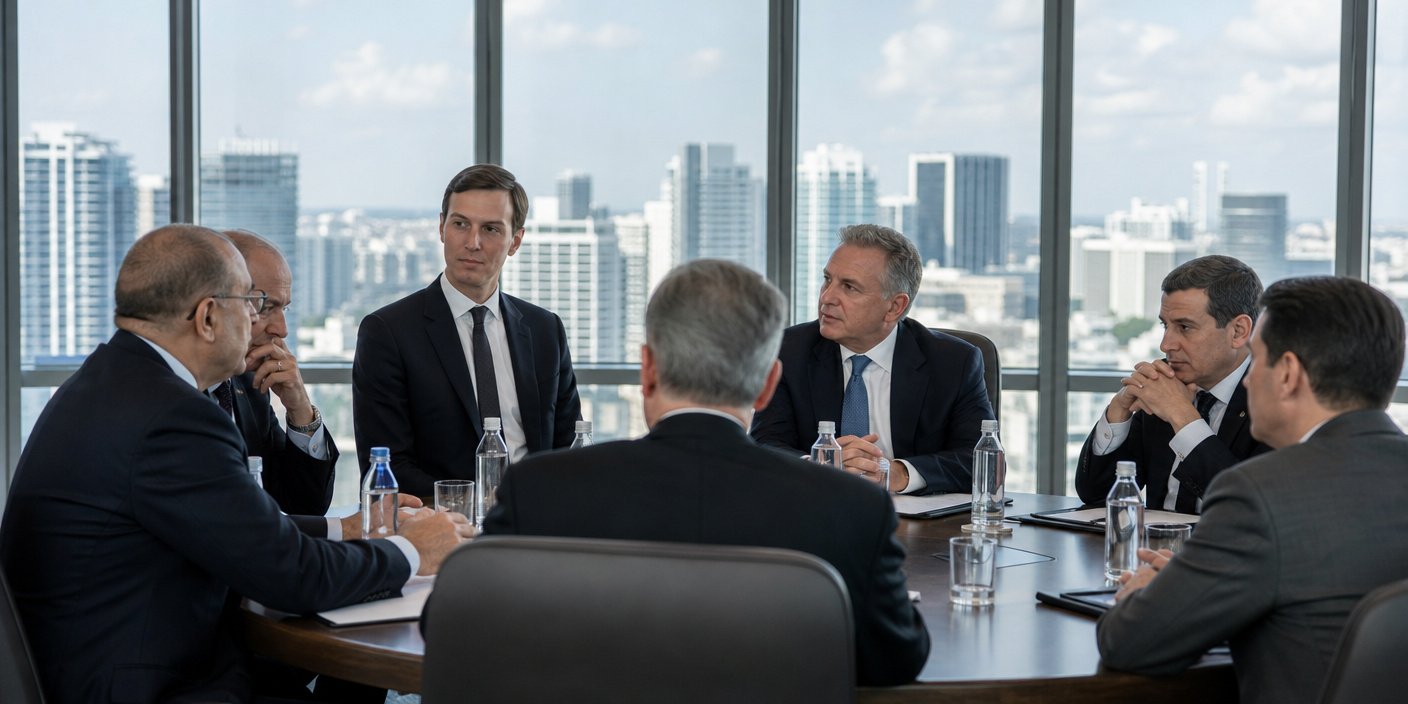
The diplomatic landscape shifted significantly today as U.S. envoys Steve Witkoff and Jared Kushner opened high-level negotiations in Miami, Florida. The summit, which has drawn a significant cross-section of European allies, NATO, and EU officials, represents a critical juncture in the ongoing effort to find a sustainable pathway to ending the conflict in Ukraine. While the details of the specific proposals remain under tight security, the presence of such a diverse delegation signals that this is not merely a bilateral discussion, but a concerted effort to harmonize Western policy regarding a potential cessation of hostilities.
The Strategic Importance of the Miami Summit
The choice of Miami as the venue for such a consequential summit is notable. By shifting the diplomatic theater away from Washington or Brussels, the organizers have created an environment that is distinct from the traditional bureaucratic pressures of capital cities. The meeting is primarily focused on reconciling the varying security concerns of the Ukrainian government with the strategic imperatives of its European allies. Sources close to the proceedings suggest that the discussion is centered on a multi-phase framework that addresses both immediate security guarantees and the long-term economic reconstruction of the region.
The Role of Private Diplomacy
Steve Witkoff and Jared Kushner, operating as special envoys, have emphasized the necessity of a pragmatic approach to these negotiations. Unlike traditional diplomatic channels, which can often be bogged down by public posturing and procedural stagnation, this Miami-based summit aims to expedite actionable proposals. The goal is to establish a unified position that can be presented to all parties involved in the conflict. This approach leverages the unique position of private envoys to facilitate back-channel communications, which have often been the catalyst for progress in protracted geopolitical disputes.
Integrating NATO and EU Perspectives
The inclusion of a broad delegation from NATO and EU officials is perhaps the most significant aspect of this summit. It underscores that any peace agreement or cessation of hostilities will require not just a bilateral consensus between the U.S. and Ukraine, but the alignment of the entire transatlantic alliance. For the EU, the concern is the immediate stabilization of energy markets and the mitigation of the humanitarian crisis. For NATO, the primary focus remains the long-term security architecture of Eastern Europe and the prevention of future escalations.
Integrating these disparate, yet interconnected, interests is the primary challenge facing the delegates in Miami. The negotiations are expected to bridge the gap between Ukrainian demands for territorial sovereignty and the geopolitical realities recognized by European partners. By bringing these stakeholders to the table simultaneously, the summit aims to avoid the fractured responses that have historically plagued international efforts to resolve the conflict.
Navigating the Hurdles to Peace
Negotiations of this magnitude face significant hurdles. The primary challenge remains the definition of a ‘fair’ peace and the enforcement mechanisms required to ensure it is upheld. Discussions in Miami are reportedly delving into the technical aspects of security guarantees, including potential monitoring missions and the role of international third-party observers.
Furthermore, the economic dimension of the peace proposal is substantial. The summit is evaluating blueprints for reconstruction, looking at how to incentivize private investment while ensuring that public funds are utilized transparently. This involves complex legal frameworks that would need to be approved by various international bodies, adding another layer of intricacy to the meetings currently underway.
A New Chapter in Transatlantic Cooperation
The Miami meetings serve as a barometer for the current state of the transatlantic relationship. The willingness of both the U.S. and European delegations to engage in this specific format suggests a mutual recognition that the status quo is increasingly untenable. If the participants can reach a consensus on the framework being discussed, it would represent a historic alignment of interests, moving beyond the reactive stance of the past two years toward a proactive, negotiated future for the region.
As the summit enters its final phases, the international community is watching closely. The outcome of these discussions will not only influence the trajectory of the war but will likely dictate the diplomatic and economic structure of the European security landscape for the next decade.
FAQ: People Also Ask
What is the primary objective of the Miami Summit?
The summit aims to unify the positions of the U.S., Ukraine, and European allies regarding concrete proposals to end the war in Ukraine. It focuses on synthesizing security guarantees, long-term stability, and economic reconstruction frameworks.
Why are Steve Witkoff and Jared Kushner leading these talks?
Witkoff and Kushner have been tasked as special envoys to facilitate private, efficient diplomacy. Their role is to move negotiations beyond the gridlock of traditional public-facing diplomatic channels and foster direct dialogue among key stakeholders.
Why is the inclusion of NATO and EU officials important?
Their presence ensures that any proposed peace framework has the collective backing of the Western alliance. It signals that a resolution is not just a U.S.-Ukraine matter, but a synchronized effort involving the broader geopolitical stability of the European continent.
What is the likely timeline for these proposals?
The Miami summit is the starting point for developing a cohesive framework. While no immediate implementation date has been announced, the goal is to finalize a set of core principles that can be presented to all parties in the conflict to initiate broader, more formal negotiations.