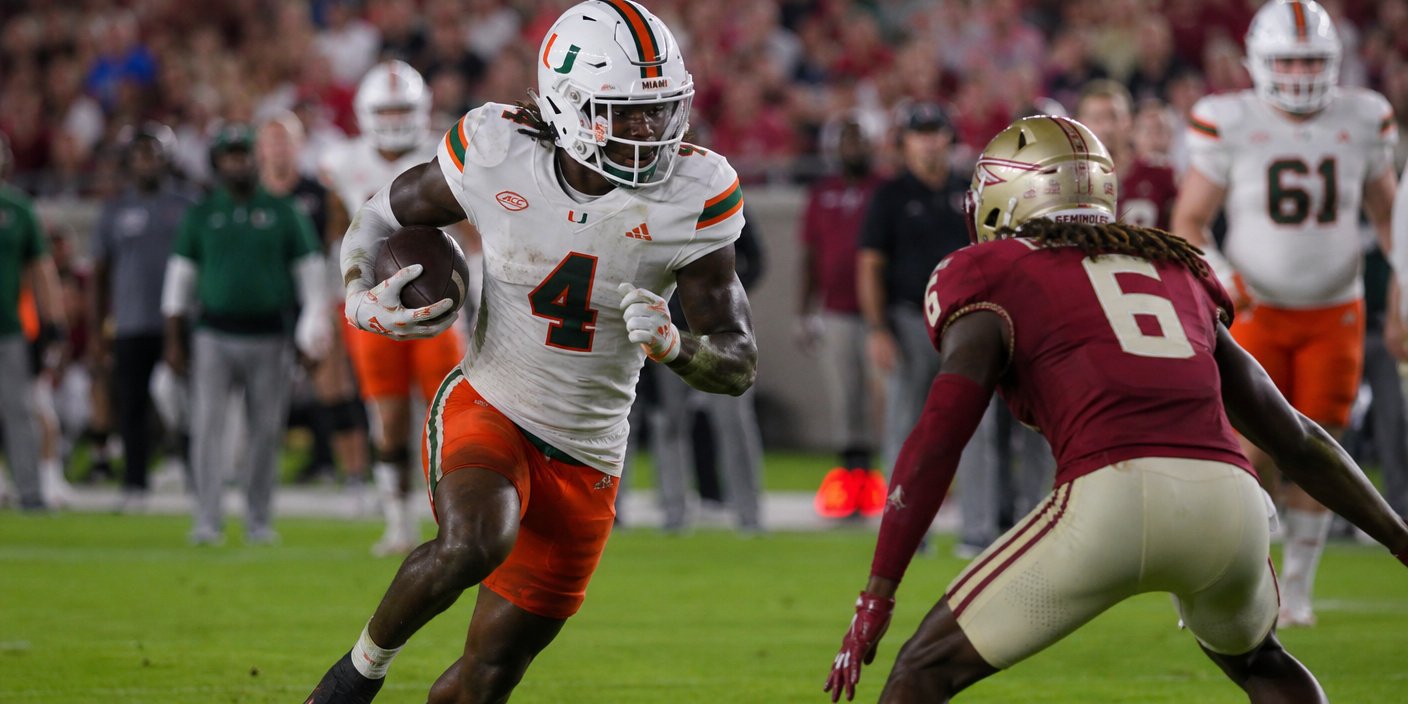
Mark Fletcher Jr. ignited a resilient second-half performance, powering the No. 5 Miami Hurricanes back from a 14-point deficit to defeat Virginia Tech 28-20, a victory that officially secures the Hurricanes’ berth in the ACC Championship Game. In a high-stakes showdown that tested the program’s composure, Miami overcame a stagnant start, utilizing a relentless ground attack to overwhelm the Hokies and cement their status as the conference’s premier contender.
Key Highlights
- Comeback Victory: Miami rallied from a 14-point hole to secure a 28-20 win, demonstrating significant late-game resilience.
- Fletcher’s Dominance: Running back Mark Fletcher Jr. spearheaded the offense, finding the end zone three times on the ground.
- Championship Bound: This win guarantees the Hurricanes a spot in the ACC Championship Game, marking a critical milestone in the season.
- Defensive Turnaround: After an early breakdown that allowed Virginia Tech a 14-0 lead, the Miami defense tightened coverage and restricted the Hokies for the remainder of the contest.
The Anatomy of the Rally: A Turning Point for the Canes
The narrative of this game was defined by two distinct acts: a sluggish, mistake-prone opening and a masterclass in situational football that followed. Entering the contest ranked No. 5 in the nation, the Hurricanes faced an immediate existential crisis as Virginia Tech capitalized on defensive lapses to jump out to a 14-0 advantage early. The atmosphere at the stadium grew tense as the Hurricanes’ rhythm appeared disjointed, but the response showcased the mental fortitude installed by head coach Mario Cristobal.
The Fletcher Effect: Grounding the Opposition
At the center of this resurgence was Mark Fletcher Jr. While the passing game sought consistency, Fletcher provided the offense with its identity. His three touchdown runs were not merely flashes of athleticism; they were products of high-efficiency, physical running. By imposing his will at the line of scrimmage, Fletcher forced Virginia Tech’s defensive front to commit resources to the box, which eventually opened up lanes for the rest of the Hurricanes’ offense. His ability to churn out yardage after contact ensured that Miami maintained possession and kept the defense off the field, effectively flipping the time-of-possession battle that had initially favored the Hokies.
Tactical Adjustments and Defensive Tenacity
Following the early deficit, the Hurricanes’ defensive coordinator orchestrated a crucial adjustment. The team shifted away from the schemes that allowed early big plays, opting for a more disciplined, zone-based approach that limited Virginia Tech’s explosive potential. By forcing the Hokies to execute long, sustained drives, Miami’s defense successfully induced three-and-outs and critical third-down stops. This defensive stability served as the foundation for the offense’s momentum; once the defense held, the offense responded with scoring drives that eroded Virginia Tech’s lead. This symbiotic relationship between the units is exactly what championship-caliber teams require, proving that Miami is capable of winning even when they are not playing their best football initially.
The Cultural Evolution Under Cristobal
Secondary to the statistical performance is what this game represents for the Miami Hurricanes program culture. Historically, Miami teams of the recent past might have folded under the pressure of a 14-point deficit against a motivated opponent. This victory validates the culture shift that Mario Cristobal has been working to instill—a culture of accountability, grit, and unwavering focus. The players’ refusal to panic when down by two scores suggests a level of maturity that has been absent in Coral Gables for years. This is no longer a team that relies solely on flashy plays; they are evolving into a unit that can grind out victories in ugly, difficult conditions.
Future Implications: The Road to the ACC Title
With a berth in the ACC Championship Game locked, Miami now controls its own destiny in the race for a potential College Football Playoff seed. While the focus remains on the upcoming regular-season finales, the psychological weight of this win cannot be overstated. Momentum is a tangible asset in college football, and entering the championship phase of the calendar with the confidence of a comeback victory provides a significant edge. The coaching staff will now look to refine the start-of-game execution to ensure the team does not find itself in similar holes during the playoffs, where the margin for error is significantly smaller.
FAQ: People Also Ask
Q: What does this win mean for Miami’s playoff chances?
A: By clinching a spot in the ACC Championship Game, Miami has positioned itself as a major contender for the College Football Playoff. Securing a conference title would significantly bolster their resume, likely guaranteeing them a high-seeded berth.
Q: How did Mark Fletcher Jr. perform statistically in this game?
A: Fletcher was the engine of the Hurricanes’ offense, recording three rushing touchdowns that were instrumental in overcoming the early 14-point deficit against Virginia Tech.
Q: What were the primary defensive issues early in the game for Miami?
A: Miami struggled with containment and assignment discipline in the first quarter, allowing Virginia Tech to exploit gaps and sustain drives, which resulted in the early 14-0 hole. However, they successfully made adjustments to limit the Hokies thereafter.
Q: Is Miami guaranteed a top-5 ranking after this win?
A: While polls are subject to change based on other results nationwide, winning under pressure as a top-5 team typically helps maintain or strengthen a team’s ranking by demonstrating an ability to overcome adversity.