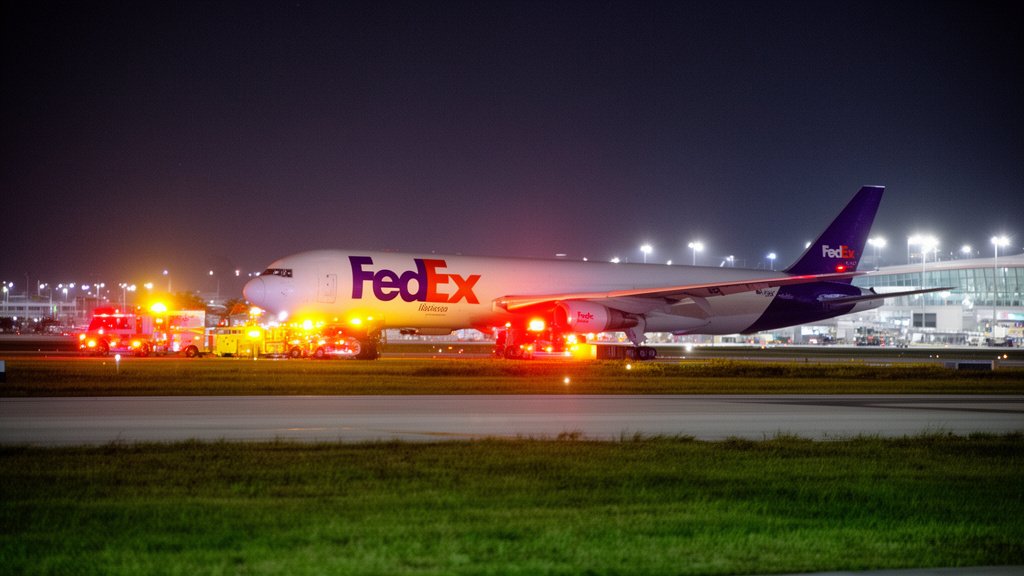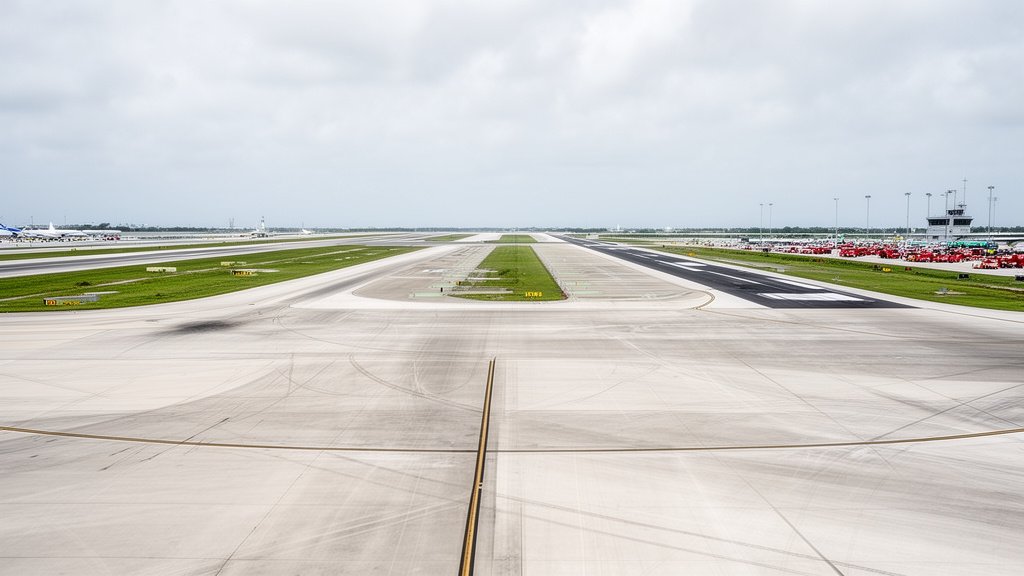
On November 25, 2026, a major operational crisis unfolded at Miami International Airport (MIA) when a FedEx cargo aircraft suffered a runway excursion, forcing airport authorities to suspend operations across all but one of its active runways. The incident, which occurred during a standard taxi or arrival procedure, prompted an immediate emergency response, with local crews rushing to the scene. Aviation authorities have confirmed that the flight crew successfully evacuated the aircraft and that no injuries were sustained. However, the event has effectively paralyzed one of the busiest air transit hubs in the United States, leading to significant flight diversions and widespread delays that are rippling through the global logistics network.
- Incident Date: November 25, 2026
- Location: Miami International Airport (MIA)
- Safety Status: No injuries reported among the flight crew
- Operational Impact: All but one runway closed, leading to massive flight disruptions
- Regulatory Status: Federal Aviation Administration (FAA) has launched an immediate investigation
Anatomy of an Airport Lockdown: The MIA Runway Incident
The abrupt shift from standard operations to emergency lockdown at MIA highlights the extreme sensitivity of modern airport logistics. When an aircraft departs from the designated runway, the immediate priority is the safety of the crew and the containment of the scene. In the case of this FedEx incident, the secondary priority—maintaining airport throughput—was severely compromised. With a single runway operating for both arrivals and departures, MIA’s capacity dropped by nearly 60%, creating a bottleneck that has forced airlines to divert incoming traffic to alternative regional airports, such as Fort Lauderdale-Hollywood International (FLL) and Palm Beach International (PBI).
The Mechanics of a Runway Excursion
A runway excursion occurs when an aircraft moves off the paved surface of the runway during takeoff or landing. While these events can stem from various factors, they are rarely the result of a single error. Instead, they often involve a confluence of variables including weather conditions, mechanical performance, runway friction levels, or pilot input. In the context of the Miami incident, the Federal Aviation Administration (FAA) is currently analyzing the tarmac environment and the aircraft’s telemetry data. The NTSB (National Transportation Safety Board) is expected to play a critical role in the technical analysis of the flight data recorder (FDR) and cockpit voice recorder (CVR) to determine if the excursion was caused by external environmental factors or internal systems failure.
Logistical Shockwaves and the FedEx Footprint
FedEx Express remains one of the largest cargo operators at Miami International Airport, utilizing the facility as a pivotal node for its Latin American and Caribbean logistics network. A disruption of this scale does not just affect passenger flights; it creates a temporary vacuum in cargo throughput. Packages, time-sensitive medical supplies, and global manufacturing components processed through the Miami hub face significant delays. Industry analysts are already projecting that the recovery time for clearing the cargo backlog will extend well beyond the initial reopening of the runways, as FedEx scrambles to reroute its fleet and manage the backlog of affected freight.
Airport Resilience and Future Planning
The closure of multiple runways at a Tier-1 airport serves as a stark reminder of the vulnerability of international transit hubs. MIA has been undergoing extensive modernization, but incidents like this emphasize that despite advanced navigation systems, the physical infrastructure of a runway remains the single point of failure for thousands of daily operations. Airport planners and the FAA will likely scrutinize this event to evaluate whether current emergency management protocols are sufficient for handling large-scale cargo disruptions without triggering total airport gridlock. As the recovery process begins, the focus shifts to towing the damaged FedEx aircraft, inspecting the runway surface for structural damage, and restoring full operational capacity before the holiday travel season reaches its peak.
FAQ: People Also Ask
Are there any reported injuries from the FedEx runway incident?
No. Authorities have confirmed that the flight crew was able to evacuate the aircraft safely, and there were no injuries reported among the crew or ground staff at the scene.
What is the current operational status of Miami International Airport (MIA)?
Following the incident, airport management closed all but one runway to ensure safety and allow for the investigation. This has caused severe delays and cancellations, and passengers are strongly advised to check with their airlines for real-time status updates.
Who is responsible for investigating this incident?
The Federal Aviation Administration (FAA) is leading the investigation into the runway excursion. They are being supported by the National Transportation Safety Board (NTSB) to analyze technical data and determine the root cause of the accident.
How will this affect flight schedules in the coming days?
Travelers should expect lingering delays as the airport works to clear the backlog caused by the runway closures. The reduction in active runways limits the airport’s hourly throughput, meaning it may take several days for full flight schedules to return to normal operation.