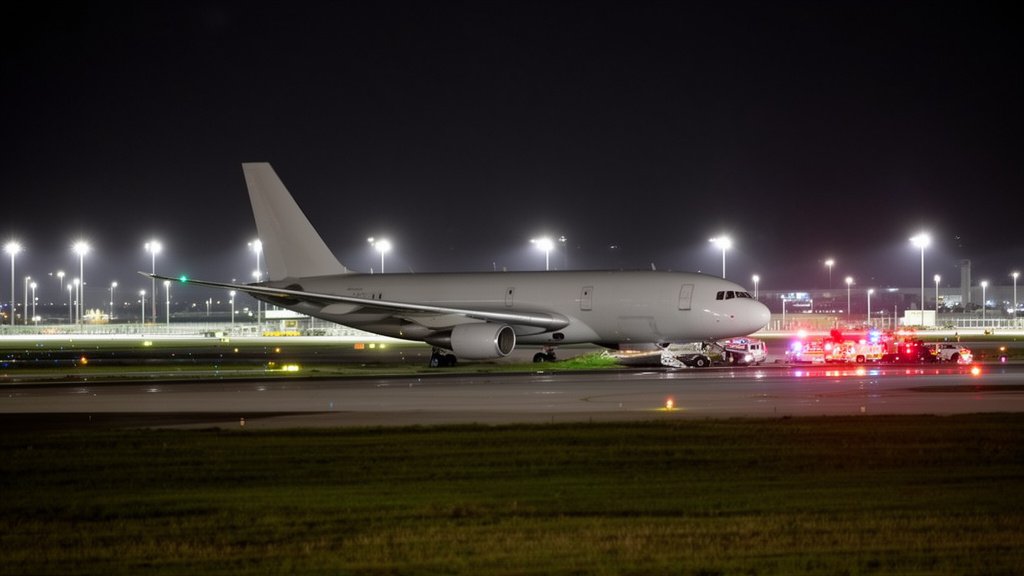
A FedEx cargo jet, operating as Flight 910, experienced a runway excursion while attempting a landing at Miami International Airport (MIA) around 8:40 p.m. on Wednesday, November 26, 2026. The incident, which occurred on Runway 26R, necessitated an immediate response from airport rescue and firefighting teams. While the aircraft came to rest beyond the designated pavement, officials have confirmed that the two crew members on board were uninjured during the event. The occurrence resulted in a temporary ground stop, creating a ripple effect of delays across one of the busiest travel hubs in the United States during the peak Thanksgiving holiday period.
- Incident Details: FedEx Flight 910 overran Runway 26R at MIA at approximately 8:40 p.m. EST on Wednesday, November 26, 2026.
- Safety Status: Both crew members aboard the aircraft were reported safe and sustained no injuries.
- Operational Impact: The incident triggered a temporary ground stop at Miami International Airport, resulting in cascading flight delays for passenger and cargo traffic during the start of the Thanksgiving holiday travel window.
- Investigation Protocols: Aviation authorities, including the Federal Aviation Administration (FAA) and likely the National Transportation Safety Board (NTSB), are expected to initiate a thorough review of the runway excursion to determine the contributing factors.
The Anatomy of a Runway Excursion
The aviation industry categorizes a runway excursion—when an aircraft departs the end or side of a runway surface—as a serious incident requiring immediate investigation. In the case of Flight 910, the timing is particularly critical given the high density of both commercial passenger traffic and logistics-heavy cargo operations at Miami International Airport. Runway 26R, a primary artery for arrival at MIA, necessitates precise braking performance and adherence to standard arrival profiles.
The Operational Ripple Effect at MIA
Miami International Airport serves as a global gateway, particularly for Latin American and Caribbean commerce. When a major runway is compromised, the logistical impact is compounded by the sheer volume of holiday travel. The ground stop initiated immediately after the 8:40 p.m. event served as a necessary safety buffer while emergency crews secured the scene and inspected the aircraft and surrounding infrastructure. For travelers, this meant an evening of terminal congestion and schedule adjustments. For air cargo operators, the temporary closure of 26R meant that time-sensitive shipments were held, highlighting the fragile nature of just-in-time delivery networks during peak seasonal periods.
Investigating the Factors: Weather, Technology, and Human Element
While the exact cause of the overrun remains under active investigation, aviation experts typically scrutinize three primary variables: meteorological conditions at the time of landing, the operational status of the aircraft’s braking and reverse thrust systems, and pilot execution. Runway surface conditions, such as the presence of rubber deposits or localized precipitation, can drastically alter stopping distances. Furthermore, modern cargo aircraft are equipped with sophisticated flight management systems that monitor performance metrics in real-time. Investigators will pull data from the flight data recorder (FDR) and cockpit voice recorder (CVR) to reconstruct the final seconds of the approach. This data is vital not only for determining the cause of this specific event but for refining safety protocols across the industry to prevent future excursions.
The Logistics Hub Vulnerability
Cargo operations often run on tighter schedules than passenger flights, operating overnight to ensure packages are sorted and processed for next-day delivery. A disruption in the cargo ecosystem—specifically involving a heavy transport jet—creates a vacuum in the sorting facilities. FedEx, a backbone of the global supply chain, relies heavily on the efficiency of major hubs like MIA to facilitate international distribution. The loss of use of a runway, even for a short duration, forces air traffic control (ATC) to re-sequence incoming aircraft, diverting traffic or holding planes in the air, which consumes fuel and disrupts crew duty-time limitations. This incident serves as a reminder of the inherent risks present in air cargo operations, which often prioritize rapid turnaround times to meet the demands of global e-commerce.
FAQ: People Also Ask
Was anyone injured in the FedEx flight incident at MIA?
No injuries were reported. The two crew members operating Flight 910 were confirmed safe following the runway overrun.
Will this incident cause long-term flight delays at Miami International Airport?
The primary impact was felt during the immediate aftermath on Wednesday evening. While the airport worked to restore normal operations, residual delays were experienced throughout the night, though major disruptions were expected to be mitigated as the runway was cleared and inspected.
What causes a cargo plane to overrun a runway?
Runway excursions can be caused by various factors, including excessive speed during approach, failure of braking systems, adverse weather conditions, or pilot error. An official investigation by the FAA and NTSB will determine the specific cause of this incident.
Is it safe to travel through MIA following the incident?
Yes. Airport authorities perform rigorous safety checks before returning a runway to active service. All aircraft operations are subject to strict FAA safety standards to ensure the runway environment is clear and secure for flight traffic.