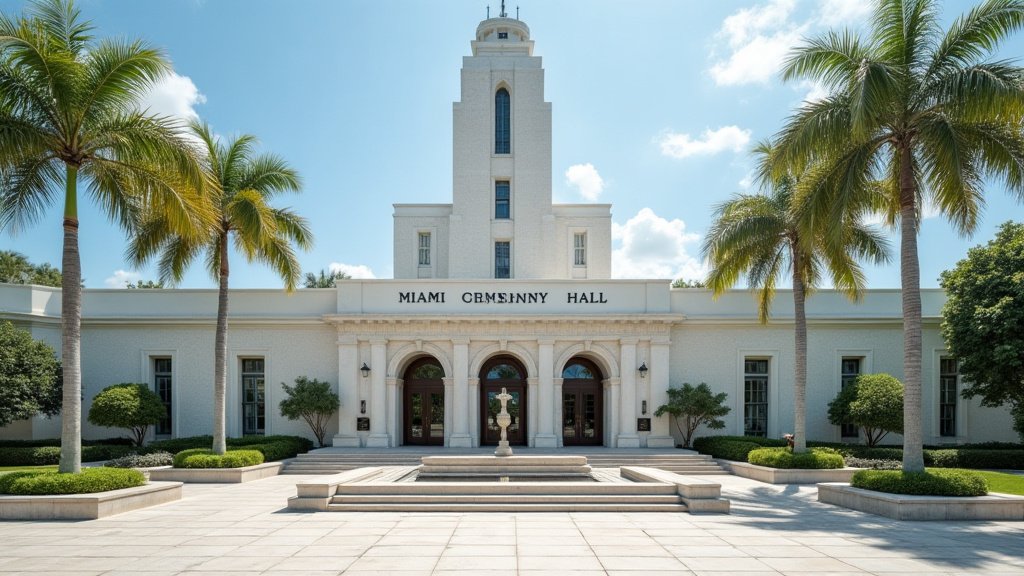
Miami City Hall is currently at a critical impasse, attempting to parse the legal nuances of Florida’s recent legislative mandates that prohibit state and local government funding for Diversity, Equity, and Inclusion (DEI) initiatives. With a looming December 10 deadline for a final decision on the city’s Equal Opportunity and Diversity Programs department, commissioners are scrambling to find the “wiggle room” necessary to ensure compliance with state law without inadvertently dismantling essential municipal infrastructure or triggering federal employment liability. The atmosphere within the commission chambers is one of cautious deliberation as legal teams and city officials work to determine exactly what constitutes a restricted “DEI initiative” under the new statute.
The Legislative Tightrope: Defining the Forbidden
The central challenge facing Miami’s administration is not merely a matter of policy preference, but one of statutory interpretation. Florida’s legislative moves to curtail DEI funding are sweeping, yet local governments are discovering that the practical implementation of these bans is fraught with complexity. When the state mandates the cessation of funding for programs classified as “DEI,” it leaves a significant void in administrative definitions. For a city as diverse and densely populated as Miami, where specific outreach programs are often woven into the fabric of public service, determining which programs are legally permissible and which cross the threshold into prohibited territory is a gargantuan task.
City commissioners are finding that the new law creates a paradox. While the state aims to homogenize the funding landscape by removing DEI expenditures, municipal governments have long-standing obligations—both moral and legal—to serve a heterogeneous population. The “wiggle room” that commissioners are hunting for refers to this grey area: can the city reclassify certain diversity and inclusion efforts under the banner of “Equal Opportunity” or “Workforce Compliance” without running afoul of the new state-level restrictions? This is the core debate currently dominating City Hall discussions.
The Administrative Dilemma: The Future of EOD
The city’s Equal Opportunity and Diversity Programs department has historically functioned as the nerve center for internal and external inclusivity efforts. Now, the department faces an uncertain future. If the commission chooses a strict interpretation of the state law, the department could see its budget effectively zeroed out, or its operational mandate significantly curtailed. This poses a logistical threat to the city’s ability to monitor fair hiring practices, handle discrimination complaints, and maintain federal compliance standards regarding equal employment opportunity regulations.
Senior staff have cautioned that simply dismantling these programs could open the city to a secondary wave of litigation. If the city lacks the institutional machinery to investigate internal complaints or ensure hiring equity, it may find itself vulnerable to federal Title VII lawsuits. This creates a high-stakes scenario where the city is caught between two fires: the Florida state government, which demands the cessation of DEI funding, and federal statutes, which demand rigorous adherence to equal opportunity standards. The commissioners are currently tasked with finding a path that satisfies the state’s requirements while preserving the necessary components of the EOD department to shield the city from federal liability.
Analyzing the Federal-State Conflict
The tension is further exacerbated by the potential for conflict between state law and federal requirements. While the Florida legislature has broad authority over state-level appropriations and municipal mandates, the U.S. government maintains strict oversight regarding equal employment practices, particularly for public sector employers. Legal analysts monitoring the situation have noted that Miami is not an outlier in this struggle; cities across the state are currently engaging in similar “legislative mapping,” attempting to discern where state bans end and federal mandates begin.
For Miami, the stakes are uniquely high given the city’s demographic profile. The EOD department is not just an administrative arm; it is a critical interface for the community. Commissioners are now weighing options ranging from total restructuring—changing the department’s nomenclature and focus to avoid the “DEI” label—to a more defensive approach that seeks a judicial stay or clarification from the state attorney general’s office. Every line item in the EOD budget is being audited for its vulnerability. The question being asked in closed-door sessions is not just “how do we stop this funding,” but “how do we sustain our operations when the language of our service is effectively being outlawed?”
The Path to December 10: What to Expect
The decision to defer the vote to December 10 was not merely a delay tactic; it was a strategic necessity to allow the City Attorney’s office time to draft a compliance framework that minimizes the risk of litigation. Between now and the upcoming vote, expect intensified lobbying from both sides of the aisle. Advocates for the EOD programs are likely to emphasize the necessity of these services for maintaining a fair and equitable city workforce, while proponents of the state legislation will push for a strict adherence to the law, regardless of the administrative fallout.
As the date approaches, the commission will likely present a resolution that attempts to thread the needle. This may involve the “re-badging” of department functions, moving resources into departments of Human Resources or Legal Compliance, thereby stripping away the prohibited DEI branding while maintaining the underlying functionality. However, this strategy carries its own risks; if the state views these changes as merely cosmetic, the city could face further scrutiny. The December 10 vote will be a bellwether for how Florida’s municipalities navigate the new legislative reality, setting a precedent that will likely be watched closely by legal observers, civil rights groups, and other city governments throughout the state.
FAQ: People Also Ask
What is the specific issue being debated regarding DEI in Miami?
Miami commissioners are trying to comply with new Florida state laws that prohibit the use of government funds for Diversity, Equity, and Inclusion (DEI) initiatives. They are currently struggling to redefine the city’s Equal Opportunity and Diversity Programs department to align with these restrictions without violating federal employment laws.
Why was the vote deferred to December 10?
The vote was deferred to give the City Attorney’s office and the commission more time to analyze the new state statute. They need to determine how to restructure city departments or budgets to comply with state law while ensuring that essential equal opportunity functions, which are often required by federal law, remain intact.
What are the risks if the city gets this wrong?
If the city follows the state law too strictly, it risks violating federal Title VII equal opportunity requirements, potentially leading to lawsuits. If the city does not follow the state law strictly enough, it faces potential legal action from the state government and non-compliance penalties.
Is this unique to Miami?
No, while Miami is the current focus due to the upcoming commission vote, municipalities across Florida are currently navigating the same legislative landscape. The challenge of reconciling state-level anti-DEI mandates with municipal operational needs is a statewide issue currently being navigated by local governments across the state.