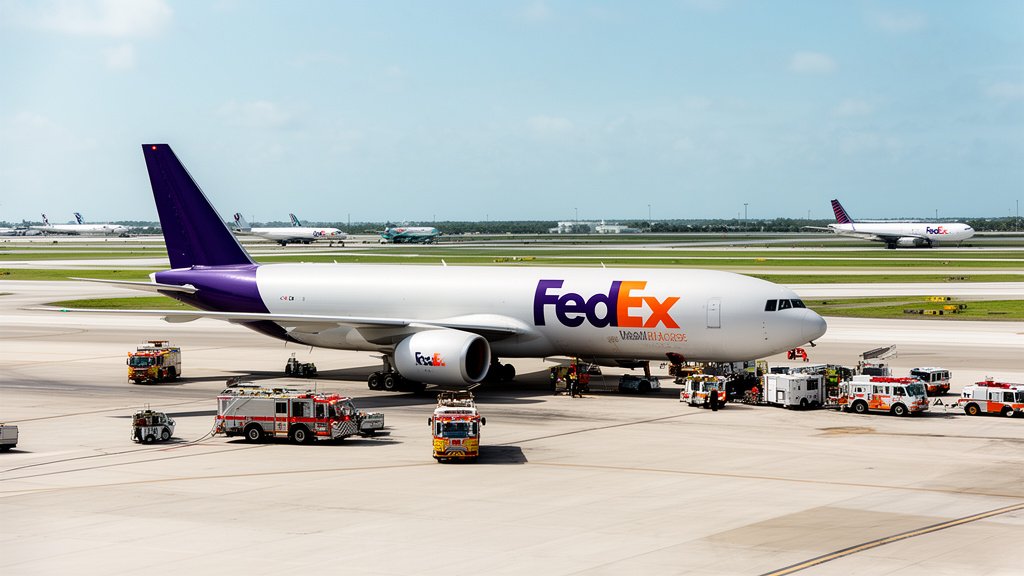
Operational efficiency at Miami International Airport (MIA) is facing renewed scrutiny following a recent runway incident involving a FedEx cargo aircraft that overshot the runway. While the event prompted immediate emergency responses and localized air traffic adjustments, the timing of the incident—coinciding with the peak surge of Thanksgiving holiday travel—has introduced significant variables for passenger airline schedules and cargo logistics hubs. As travelers navigate one of the busiest corridors in the United States, the synchronization of air traffic control, runway maintenance, and ground-crew intervention remains the focal point for avoiding broader systemic delays.
Key Highlights
- Incident Specifics: A FedEx Express cargo aircraft experienced a runway excursion at Miami International Airport, triggering a localized pause in operations to ensure safety protocols were met.
- Operational Impact: The incident required immediate coordination with the Federal Aviation Administration (FAA) to clear debris and inspect the tarmac, resulting in minor to moderate delays for incoming and outgoing passenger flights.
- Thanksgiving Logistics: Due to the holiday season’s increased volume, the runway disruption highlights the fragility of air traffic throughput at major hubs like MIA.
- Safety & Oversight: The National Transportation Safety Board (NTSB) has commenced an investigation, a standard procedure for major carrier runway excursions, to determine root causes involving mechanical or environmental factors.
Navigating the Runway Excursion: Operational Fallout and Passenger Advice
The Mechanics of the MIA Disruption
When a large aircraft such as a FedEx cargo freighter encounters a runway excursion—an event where an aircraft departs the runway during takeoff or landing—the immediate reaction is the activation of the airport’s emergency response plan. At a bustling facility like MIA, which serves as a critical gateway between North America and Latin America, the loss of even one active runway creates a ripple effect.
The incident, which occurred under specific operational conditions, necessitated a temporary ground stop for affected sections of the airfield. This pause allows ground crews to secure the aircraft, evaluate the surface integrity, and remove any FOD (Foreign Object Debris) that could threaten subsequent flights. During the Thanksgiving travel window, where planes are operating at near-maximum capacity, these minutes become critical. The resulting backlog of aircraft waiting to taxi or take off can quickly cascade, leading to a domino effect of delays that often persists for several hours after the runway is reopened.
Interdependencies: Cargo vs. Passenger Flow
One of the most misunderstood aspects of modern aviation is the degree to which cargo and passenger traffic are inextricably linked. Many major airports, including MIA, share runways and taxiways for both commercial passenger jetliners and heavy-lift cargo freighters like those operated by FedEx Express.
During the Thanksgiving rush, the demand for both air freight (to deliver holiday packages) and passenger transport reaches an annual zenith. When a cargo aircraft blocks a primary runway, the system experiences a massive bottleneck. Passenger airlines must adjust their fuel reserves, pilot flight-time limitations (mandated by FAA regulations), and connecting flight schedules. Even a 30-minute closure can force crews to wait for new departure slots, which are strictly managed by the FAA’s Air Traffic Control System Command Center.
The Role of the FAA and NTSB
The response to the MIA incident was swift, characterized by close coordination between the Miami-Dade Aviation Department and federal regulatory bodies. The FAA’s primary concern during such events is the safety of the National Airspace System. They manage the flow of traffic to ensure that while one runway is compromised, others are optimized to absorb the load.
Simultaneously, the NTSB’s presence signifies the seriousness with which these incidents are taken. The investigation will look into the specific “Ground Truth” data: weather conditions at the time of the landing, pilot communication with the tower, and the technical status of the aircraft’s braking systems. For travelers, this means that while the specific runway is cleared relatively quickly, the broader investigation into the cause can lead to prolonged procedural updates or localized traffic management adjustments that persist through the weekend.
Strategic Advice for Holiday Travelers
For those flying through Miami during the holiday peak, the incident serves as a stark reminder of the importance of real-time monitoring. First, utilize tools provided by airlines and airport authorities to track flight status continuously. Second, ensure that if your itinerary involves a tight connection at MIA, you have communicated with your airline regarding potential rebooking options should the delay ripple into your specific flight window. Finally, patience is a logistical necessity. With heavy holiday volume, the entire network is operating at full capacity; small shifts in runway availability are managed with extreme care, prioritizing safety over schedule adherence.
Future-Proofing Airport Infrastructure
The incident at MIA also prompts a broader conversation about future airport infrastructure. As air traffic density increases year-over-year, the resilience of runway configurations is being tested. Technology, such as Runway Status Lights (RWSL) and surface movement radar, is becoming increasingly vital. These systems provide automated safety alerts to pilots and controllers, effectively creating a buffer zone that helps prevent excursions before they occur. Investment in these technologies is a key focus for hub airports aiming to maintain operational throughput during unpredictable events.
FAQ: People Also Ask
Q: How do runway excursions affect my connecting flight?
A: If an excursion causes a runway closure, your incoming flight may be delayed, potentially causing you to miss a connection. Airlines typically monitor these situations and may automatically rebook passengers or hold connecting flights if the delay is deemed manageable within the crew’s legal duty limits.
Q: Why do cargo planes like FedEx share runways with passenger jets?
A: Most major international airports are “mixed-use” facilities. Because land for new, dedicated-cargo runways is scarce, airport master plans integrate cargo operations into existing runway systems to maximize overall airport throughput and efficiency.
Q: What should I do if my flight is delayed due to this incident?
A: Monitor the status of your flight through your airline’s mobile app. If a significant delay is announced, check the app for automated rebooking options. If you are already at the airport, approach the customer service desk early to discuss potential routing alternatives.
Q: Is it safe to fly out of MIA following the runway incident?
A: Yes. Once the FAA and airport authorities reopen a runway, it has been inspected and cleared for safe use. The protocols in place ensure that the airfield meets all stringent safety standards before normal flight operations resume.