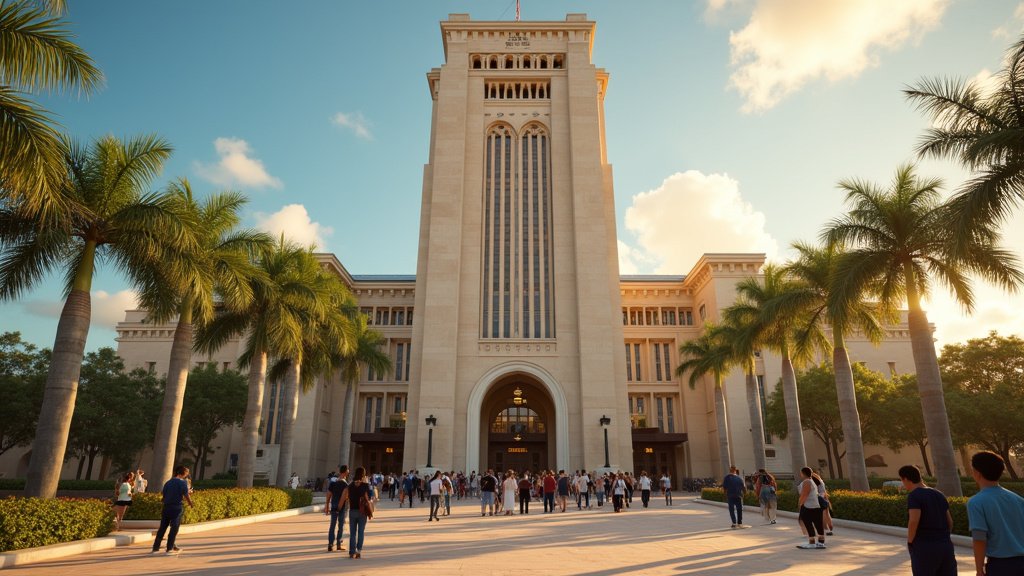
Miami, FL – October 15, 2025 – After years of meticulous renovation and a century of standing as a potent symbol of hope and resilience, Miami’s historic Freedom Tower officially reopened its doors to the public today for general admission. This landmark event marks the culmination of a multi-million dollar, two-year restoration project that has revitalized the iconic Mediterranean Revival structure, ensuring its legacy for future generations.
A Century of History and Symbolism
The Freedom Tower, originally completed in 1925, holds a significant place in Miami’s architectural and cultural narrative. Designed by the New York architectural firm Schultze and Weaver, it was initially built to house the headquarters and printing facility for The Miami News. At 289 feet, it was briefly the tallest building in the South and served as a navigational lodestar for ships entering Biscayne Bay. Its striking design, inspired by the Giralda bell tower in Seville, Spain, quickly made it a defining feature of Miami’s skyline.
However, the tower’s most profound historical chapter began in the 1960s. Following Fidel Castro’s rise to power in Cuba, the building was transformed into the Cuban Refugee Center. For over a decade, it served as the “Ellis Island of the South,” a crucial processing and assistance hub for hundreds of thousands of Cuban exiles seeking refuge and a new life in the United States. This pivotal role cemented the Freedom Tower as an enduring emblem of freedom, opportunity, and Miami’s role as a sanctuary city.
A Monumental Restoration: $25 Million Investment
The extensive, two-year, $25 million renovation project aimed to preserve the tower’s historic integrity while modernizing its facilities. The undertaking included extensive structural repairs, a complete exterior restoration, and significant interior upgrades. Key aspects of the renovation involved refurbishing the façade, repairing structural damage, updating mechanical and electrical systems, enhancing ADA compliance, and modernizing elevators and lighting. The project was supported by a combination of state grants, including a $25 million commitment from the state of Florida, and philanthropic contributions, such as a $5 million donation from the Knight Foundation. Miami Dade College, which acquired the building in 2005 and is now its steward, oversaw the restoration, working with architectural firms like MC Harry Associates and preservation architect Richard Heisenbottle.
New Exhibits Telling Stories of Migration and Home
Upon its reopening, the Freedom Tower unveils four new exhibits designed to immerse visitors in its rich history and the broader human experience of migration. The flagship exhibition, “Libertad,” spans two floors and captures the journeys of those who found refuge and began new lives in Miami, featuring personal stories, historic artifacts, and immersive media.
Complementing “Libertad” are:
* “Languages of Migration”: This exhibit, housed partly in the Kislak Center, explores the evolution of communication, migration, and identity through rare maps, interactive storytelling, and a space for personal reflection on migration journeys.
* “We Carry Our Homes With Us”: This collection examines universal themes of migration, exile, and home through contemporary artworks by renowned artists, offering a modern perspective on displacement and belonging.
* “Unidad”: This dynamic, interactive exhibit celebrates soccer (futbol) as a universal language and cultural unifier, marking a unique partnership with the FIFA Museum.
These exhibitions, enhanced by restored interiors, original architectural elements, and digital displays, aim to provide a contemporary visitor experience that tells the multifaceted story of the Freedom Tower and its significance for Miami.
Miami Dade College’s Stewardship and Future Vision
Miami Dade College has been instrumental in preserving and revitalizing this National Historic Landmark. Under the college’s stewardship, the Freedom Tower has transitioned into a vibrant cultural hub, home to museum exhibitions, educational programs, and community gatherings. President Madeline Pumariega has emphasized the college’s commitment to ensuring the tower remains a beacon of civic memory, cultural expression, and community pride for the next century. The college also plans to use the tower to continue telling the stories of those seeking freedom and opportunity, mirroring its historic role in welcoming new communities to Miami.
The reopening of the Freedom Tower is more than just the unveiling of a restored building; it is a celebration of Miami’s past, a testament to its resilience, and an investment in its future. This landmark serves as a powerful reminder of the journeys that have shaped the city and continues to inspire hope and underscore the enduring pursuit of freedom. This momentous occasion is a trending topic in local news, capturing the attention of residents and visitors alike, and solidifying its place as a vital piece of Miami’s heritage.