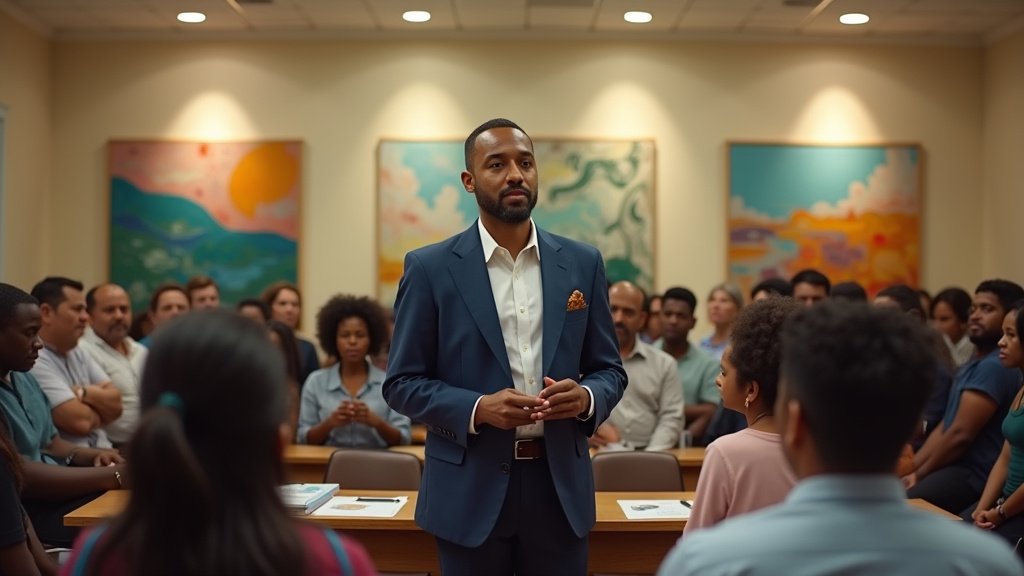
The Miami-Dade Tax Collector’s Office, under the leadership of Tax Collector Dariel Fernandez, is launching a series of nine town hall meetings across the county starting November 3rd. This initiative signifies a deliberate shift in how the Miami-Dade Tax Collector engages with residents, moving services and information directly into the community. The town halls, scheduled to run from 6:00 p.m. to 7:00 p.m. at various locations, aim to make Miami-Dade County services more accessible and transparent for Miami-Dade residents, enhancing the role of the Miami-Dade Tax Collector.
This proactive approach by Tax Collector Fernandez reflects a broader commitment to a customer-centric model, emphasizing Tax Collector accessibility, efficiency, and community engagement. The town halls are designed to address a wide range of resident needs, from property tax information and driver’s license renewal to business tax receipts, handicap permits, and other essential services provided by the Miami-Dade Tax Collector. The core idea is to meet residents where they are, rather than expecting them to navigate complex processes or travel long distances to access government functions offered by the Miami-Dade Tax Collector.
A Shift Towards Community-Centric Services by the Miami-Dade Tax Collector
The initiative to bring government services directly to the people is a cornerstone of Tax Collector Fernandez’s vision for the Miami-Dade Tax Collector. For too long, residents have faced barriers such as taking time off work, enduring long lines, or traveling extensively to resolve tax-related matters or obtain necessary licenses. Fernandez has stated that this series of town halls is designed to bring government services directly into neighborhoods, breaking down barriers of time, distance, and convenience, and increasing the visibility of the Miami-Dade Tax Collector.
Fernandez’s platform and past actions underscore a dedication to modernizing the Miami-Dade Tax Collector’s office, cutting bureaucracy, and improving efficiency through technology. This includes efforts like streamlining processes, automating tasks, and enhancing customer experience for those interacting with the Miami-Dade Tax Collector. The town halls serve as a direct extension of this philosophy, offering face-to-face interactions to answer questions, provide clarifications, and ensure every resident can access help close to home. This outreach aligns with a broader trend in public service, echoing the sentiment that “success doesn’t come to you, you have to work for it,” which in the context of government means actively reaching out to constituents. The Miami-Dade Tax Collector is committed to these community outreach programs.
Expanding Access and Enhancing Transparency for the Miami-Dade Tax Collector
Beyond the town hall meetings, the Miami-Dade Tax Collector’s Office has been actively expanding its services and Tax Collector accessibility throughout Miami-Dade County. This includes opening new branch offices, inaugurating driver’s license services at its downtown location, and exploring partnerships with municipalities like Coral Gables and Miami Beach to establish additional service points. The office has also embraced technology, with the rollout of self-service kiosks in Publix stores and a virtual walk-in system aimed at reducing wait times for those seeking local tax services from the Miami-Dade Tax Collector.
The move towards greater independence for the Miami-Dade Tax Collector’s office, a result of a 2018 constitutional amendment, has allowed Fernandez to implement these changes with greater autonomy and focus. The office now operates with its own independent budget, separate from the county’s general fund, and is funded through statutory service fees and commissions. This financial independence allows the office to prioritize efficiency and community investment. In fact, the office returns a significant portion of its commissions to local governments and has recently achieved substantial operational savings, which have been reinvested in Miami-Dade County services like public safety and park improvements.
Transparency is a key tenet of Fernandez’s approach as Miami-Dade Tax Collector. The government town halls are intended to shed light on the office’s functions and ensure residents have clear property tax information about tax policies, procedures, and expenditures. This commitment extends to Dariel Fernandez initiatives like a voluntary giving program included with property tax notices, allowing residents to contribute directly to community organizations.
Background and Context for the Miami-Dade Tax Collector
The initiative comes as Miami-Dade County, like other counties in Florida, transitions to having independently elected constitutional officers following a 2018 voter-approved amendment. Dariel Fernandez was elected Tax Collector in November 2024, tasked with increasing accountability, transparency, and uniformity for the Miami-Dade Tax Collector. His tenure has been marked by a series of reforms aimed at modernizing operations and enhancing public service, including taking over local driver license centers from the state and implementing technological advancements related to local tax services.
The town hall series is not an isolated event but part of a larger strategy by Fernandez to foster a more connected and responsive government as the Miami-Dade Tax Collector. His campaign and early actions have consistently highlighted a vision of an efficient, transparent, and customer-focused Miami-Dade Tax Collector’s office. By bringing services directly to residents through these town halls, Fernandez aims to build trust, break down barriers, and ensure that the Miami-Dade Tax Collector truly serves the needs of all its constituents through robust community outreach programs.
The upcoming government town halls represent a significant step in this direction, signaling a proactive and accessible government that actively seeks to engage with and support the Miami-Dade community. The news of these town halls offers a glimpse into the evolving landscape of local government services in Miami, underscoring the important role of the Miami-Dade Tax Collector.