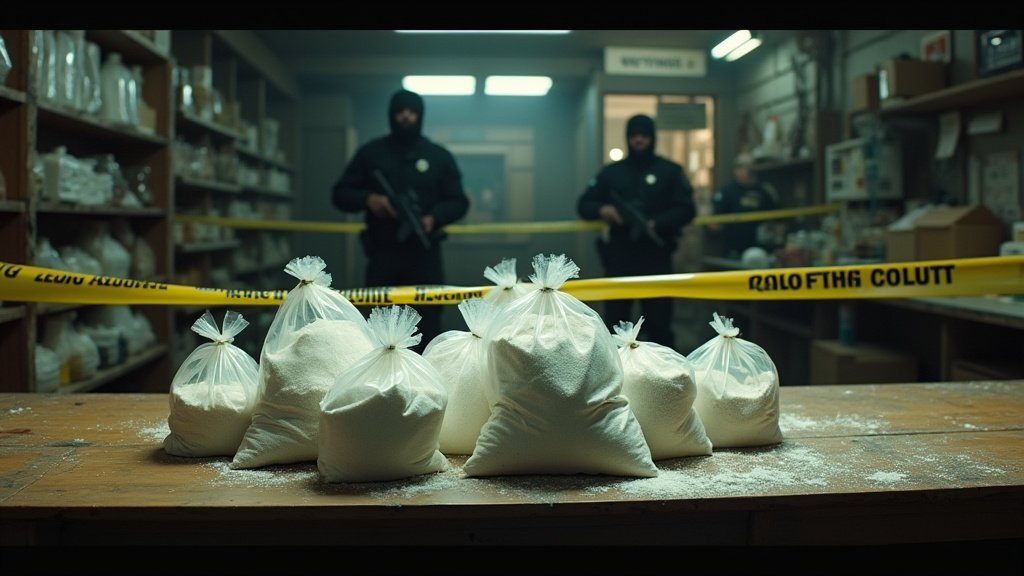
Miami SWAT officers executed a raid on a local shop this week, uncovering an estimated 200 pounds of illegal drugs following an extensive undercover operation. The bust represents a significant victory for law enforcement in combating drug trafficking in the region.
- Undercover Operation: The raid was the culmination of a months-long undercover investigation by the Miami Police Department.
- Massive Drug Seizure: Officers recovered approximately 200 pounds of various narcotics.
- Significant Arrests: Several individuals were taken into custody in connection with the operation.
- Community Impact: The seizure is expected to disrupt drug distribution networks in the Miami area.
Miami Drug Bust: A Closer Look at the Operation
The Miami Police Department’s tactical unit, SWAT, executed a high-stakes raid on a commercial establishment in Miami, leading to the discovery of a substantial quantity of illegal narcotics. The operation, which reportedly involved an undercover buy, underscores the persistent challenges law enforcement faces in combating drug distribution within urban centers. According to initial reports from the Miami PD, the raid resulted in the seizure of an estimated 200 pounds of drugs, a quantity that suggests a significant level of trafficking activity.
The Undercover Genesis
The success of the raid can be largely attributed to a meticulously planned and executed undercover operation. For several months, detectives infiltrated drug trafficking circles, gathering intelligence and identifying key players. This phase of the investigation was crucial in pinpointing the specific location and the scale of the operation being run from the targeted shop. The undercover buy, a critical component of the investigation, provided the probable cause necessary for obtaining the warrant to conduct the raid.
Scale of the Seizure
Estimates place the seized narcotics at around 200 pounds. While the specific types of drugs have not been fully detailed by the authorities pending lab analysis, the sheer volume suggests a diverse inventory catering to various illicit markets. Such a large seizure indicates that the targeted shop was not merely a retail front but likely a distribution hub, supplying drugs to other dealers and potentially to end-users across a wider geographical area.
Law Enforcement’s Response and Entities Involved
The Miami Police Department, a key entity in this operation, coordinated with SWAT for the execution of the raid. SWAT’s specialized tactical capabilities were essential for safely breaching the premises and securing the scene, given the potential for armed resistance. This collaboration highlights the multi-faceted approach required to tackle complex criminal enterprises. The involvement of federal agencies, such as the Drug Enforcement Administration (DEA), is also possible in cases involving such large quantities of narcotics, although official confirmation is pending. The success of this operation is a testament to the dedication and bravery of the officers involved.
Community and Economic Impact
Beyond the immediate disruption of drug supply, large-scale seizures like this have broader implications. They can lead to a temporary increase in drug prices on the street as traffickers scramble to replenish their stock. Furthermore, the arrests made are intended to dismantle the organizational structure of the drug networks, potentially leading to a reduction in drug-related crime, such as theft and violence, that often accompanies the illicit drug trade. The economic impact on the community is also significant, as drug trafficking diverts resources that could otherwise be invested in legitimate businesses and services.
Future Implications and Secondary Angles
This bust serves as a stark reminder of the ongoing battle against drug trafficking in Miami. Authorities will likely intensify their surveillance and enforcement efforts in the wake of this significant seizure. The operation may also prompt a review of existing strategies and resources allocated to combating drug-related offenses. Secondary angles to consider include the potential for increased inter-agency cooperation and the examination of legislative measures that could further impede drug trafficking operations. The long-term goal remains to not only apprehend those involved but also to address the root causes of drug abuse and trafficking through prevention and rehabilitation programs.
FAQ: People Also Ask
What is the primary role of SWAT in a drug raid?
SWAT (Special Weapons and Tactics) teams are primarily responsible for high-risk entries and securing dangerous situations. In a drug raid, their role includes safely breaching the premises, neutralizing any immediate threats, and securing the scene to allow other law enforcement personnel to conduct the search and evidence collection.
How do undercover operations lead to drug raids?
Undercover operations involve law enforcement officers posing as buyers or associates to infiltrate criminal organizations. By making controlled purchases (undercover buys) and gathering intelligence, they establish probable cause to obtain search warrants for suspected locations and to make arrests of individuals involved in illegal drug trafficking.
What happens to the drugs seized in a raid?
Seized drugs are typically sent to a forensic laboratory for analysis and confirmation of their identity and purity. This process is crucial for building a legal case against the suspects. After the legal proceedings are concluded, the drugs are usually destroyed under strict supervision according to established protocols.
How much is 200 pounds of drugs worth on the street?
The street value of 200 pounds of drugs can vary dramatically depending on the type of substance, its purity, and the specific market. However, it represents a significant wholesale value and an even larger retail value, potentially running into millions of dollars. For example, cocaine can fetch upwards of $20,000-$30,000 per kilogram wholesale, and 200 pounds is approximately 90 kilograms.
What is the typical penalty for possession of such a large quantity of drugs?
Possession of such a large quantity of drugs with the intent to distribute typically carries severe penalties, including lengthy prison sentences and substantial fines. The exact penalties depend on the type of drug, the quantity, and the jurisdiction (federal or state laws), but it is considered a major felony offense.