The Pendulum Swings for a Brutalist Icon
For over three decades, the Miami Marine Stadium has stood as a haunting, concrete silhouette against the Biscayne Bay skyline—a silent witness to the city’s transformation. Once the vibrant epicenter of powerboat racing and legendary concerts, the venue has been dormant since 1992, shuttered in the immediate aftermath of Hurricane Andrew. Now, the city of Miami stands at a critical juncture: voters are preparing to cast ballots that could finally determine whether the stadium is revitalized through a complex public-private partnership or left to the encroaching tides of time. This decision represents more than just a real estate play; it is a referendum on preserving Miami’s cultural history against the relentless pressure of modern development.
Key Highlights
- The Hurricane Silence: The stadium was officially closed in 1992 after Hurricane Andrew revealed significant safety concerns, ending its run as a premier venue for powerboat racing.
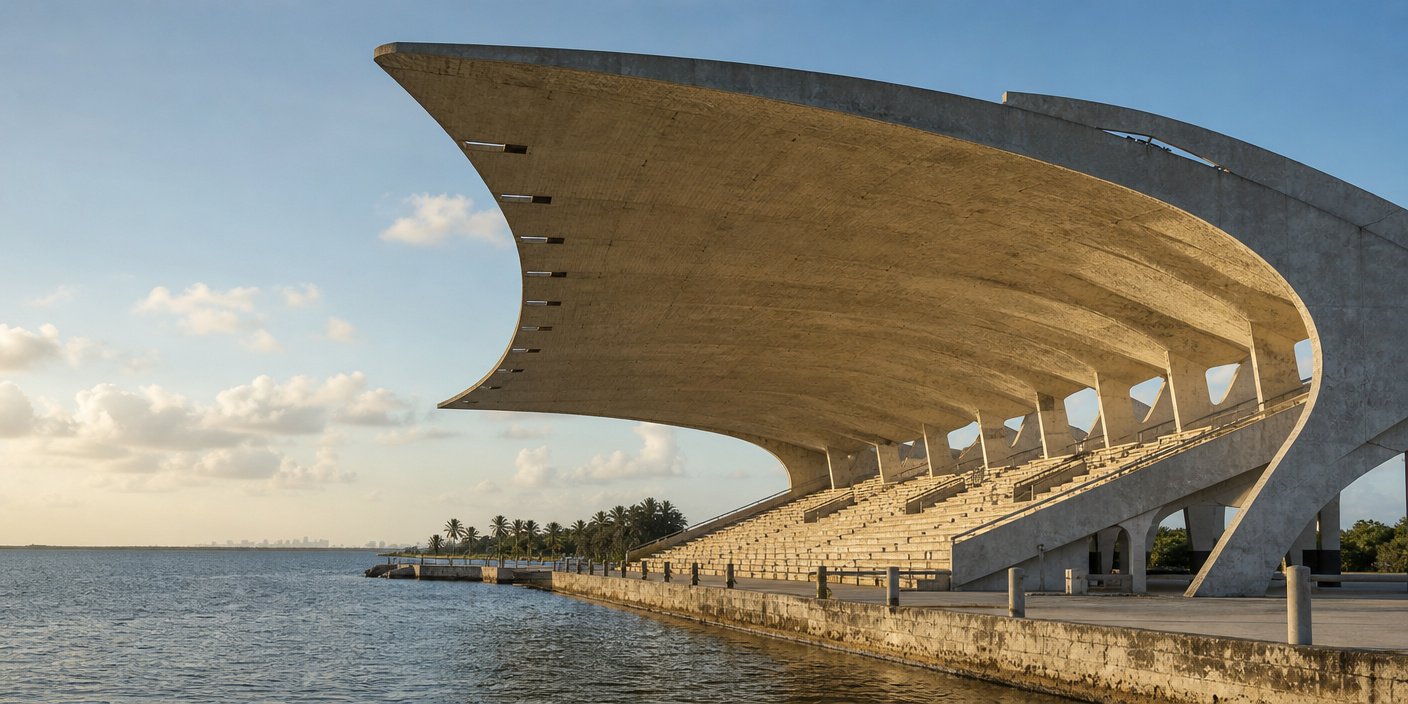
- Architectural Significance: Designed by architect Hilario Candela, the stadium is a seminal example of Brutalist architecture, famous for its sweeping, cantilevered concrete roof.
- The Buffett Factor: The late Jimmy Buffett was the most prominent celebrity advocate for the stadium, famously spearheading the ‘Save the Stadium’ campaign to prevent its demolition.
- The Voter Mandate: The upcoming ballot measure focuses on whether to allow the City of Miami to enter a long-term agreement with private developers to restore the site for mixed-use, cultural, and event purposes.
The Architectural Marvel of Virginia Key
To understand why the Miami Marine Stadium remains such a potent flashpoint in local politics, one must first appreciate the structure itself. Opened in 1963 on Virginia Key, it was the first stadium in the United States built specifically for powerboat racing. Designed by the Cuban-born architect Hilario Candela—who was only 28 at the time—the structure is a triumph of engineering and aesthetic audacity. The stadium’s most distinctive feature is its massive, sweeping cantilevered roof, which covers the seating area without the need for support columns, offering unobstructed views of the water and the Miami skyline.
This design was not merely about utility; it was a statement of Miami’s modernization during the mid-20th century. Its clean lines and massive concrete geometry epitomize the Brutalist movement, yet it integrates seamlessly with the marine environment in a way few other structures can. For decades, the stadium was a destination, hosting not only the world’s fastest powerboats but also acts like The Beach Boys and, most famously, Jimmy Buffett, whose connection to the venue helped galvanize a generation of preservationists who refuse to see it demolished.
The Golden Age and the 1992 Shutdown
During its peak, the Marine Stadium was the heartbeat of the Miami waterfront. It was a site where the city’s identity was forged in high-octane speed and music. The water-bound arena provided a unique acoustic experience, with sound reflecting off the concrete roof, creating a surreal environment for spectators. However, the venue’s luck shifted in August 1992 when Hurricane Andrew roared through South Florida. While the stadium itself held up remarkably well against the wind, city officials determined that the damage to the infrastructure—and the potential liability—necessitated an indefinite closure. Since then, it has sat as a decaying, graffiti-covered skeleton, a ‘ghost stadium’ that has fueled decades of legal battles, funding gaps, and bureaucratic indecision.
The Economic and Political Tug-of-War
The current proposal before voters is the latest in a long, storied series of attempts to revive the site. The core of the debate lies in the ‘how’ and the ‘who.’ Proponents of the revitalization argue that the city lacks the public funds to restore the stadium to code and maintain its operation independently. They propose a public-private partnership (P3), where a private entity would invest significant capital into the restoration in exchange for the rights to manage, operate, and monetize the site for events, retail, and commercial purposes.
Opponents, however, voice concerns about the privatization of public land. They argue that the ‘revitalization’ might turn a historic public asset into a gated, luxury venue inaccessible to the average Miami resident. These skeptics point to the history of similar developments in Miami, where community promises often eroded in favor of profit margins. The ballot measure is a direct reflection of this tension: Can the city preserve the ‘soul’ of the Marine Stadium while turning it into a functional, revenue-generating engine?
Secondary Angles: Future Implications
1. Urban Planning and Climate Resilience: The restoration of the stadium forces a conversation about building on Virginia Key in the era of rising sea levels. Any new construction must account for severe storm surges, a challenge that didn’t exist when the stadium was first engineered in the 1960s.
2. The Preservationist Movement: The battle over the Marine Stadium has become a case study for architectural preservation groups. It highlights the difficulty of protecting Brutalist structures, which are often misunderstood by the public and difficult to adapt for modern safety and comfort codes.
3. Economic Tourism vs. Community Value: This project tests the theory of ‘economic impact’ tourism. Will a revitalized Marine Stadium draw international tourists, or is the value of the project primarily cultural, benefiting the local residents who have fought to protect it for thirty years?
As the vote approaches, the stadium sits in a state of suspended animation. It is a monument to what once was, and a question mark for what could be. Whether the decision leads to a grand reopening or a final demolition, one thing is certain: the Miami Marine Stadium has cemented its status as the most iconic, contested concrete structure in American history.
FAQ: People Also Ask
1. Can the stadium be saved, or is it too far gone?
Architectural experts and engineering firms have surveyed the stadium repeatedly over the last two decades. The consensus is that the concrete structure, while aged, remains structurally sound. The primary challenges are the outdated electrical, plumbing, and safety systems that would need to be brought up to modern building codes.
2. What exactly would the private company do?
Under the proposed partnership models, a private company would likely fund the restoration of the main grandstand and the roof in exchange for a long-term lease. This would allow them to host concerts, sporting events, and corporate functions, while potentially adding retail or dining options to the surrounding area.
3. Was Jimmy Buffett the only person who cared about this stadium?
While Jimmy Buffett was the most vocal celebrity advocate, he was part of a robust ‘Save the Stadium’ grassroots movement. His involvement brought national attention to the site, ensuring that it wasn’t quietly demolished in the early 2000s when support for its removal was at its highest.
4. What happens if the voters say ‘no’?
If the public vote rejects the current proposal, the stadium will likely remain in its current state of limbo. Without a funding mechanism or a concrete plan for restoration, the city would continue to face rising maintenance costs for security and basic cleanup, eventually leading to a renewed push for total demolition.