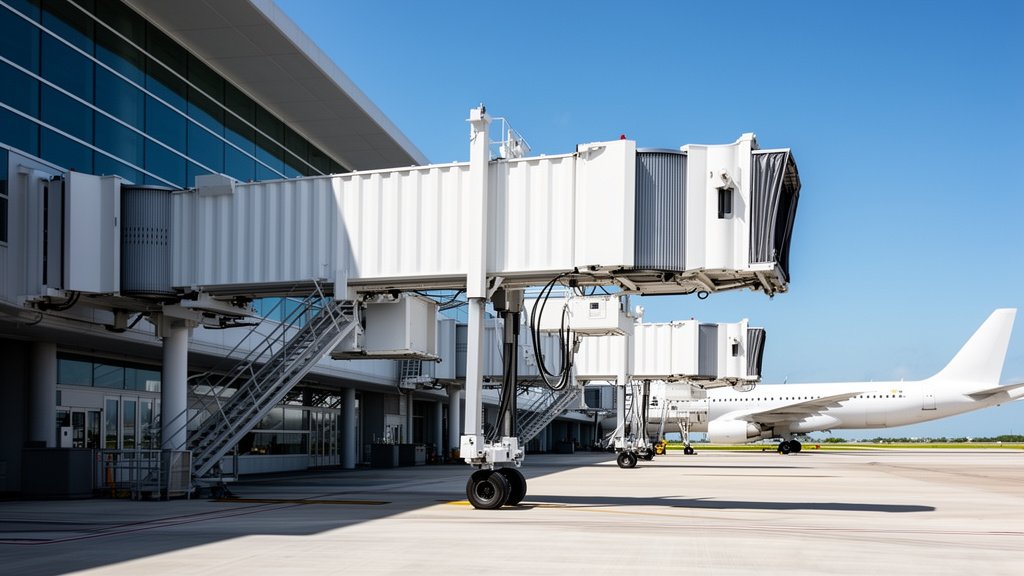
Miami International Airport (MIA) and PortMiami, the two primary engines of South Florida’s travel and tourism economy, are aggressively pursuing a $300 million comprehensive project to modernize their aging passenger boarding bridges. This substantial infrastructure push, which is currently navigating the approval process at the county level, represents one of the most significant upgrades to local transit connectivity in recent years. With $147 million already before the Miami-Dade County Commission for immediate authorization, the proposal signals a shift toward prioritizing high-tech, reliable, and energy-efficient transit hubs that can support the region’s surging passenger volumes.
The Strategic Necessity of Modernization
For decades, Miami has served as the undisputed “Gateway of the Americas” via MIA and the “Cruise Capital of the World” via PortMiami. However, the physical infrastructure facilitating the transfer of passengers from land to air or sea—the passenger boarding bridges (PBB)—has faced mounting pressures. Many of the current bridges at MIA and PortMiami are approaching the end of their operational lifecycles. These systems, which are mechanical marvels of hydraulic engineering, require increasingly frequent maintenance, leading to operational downtime that impacts scheduling and passenger satisfaction.
The proposed $300 million investment is not merely about aesthetic improvements; it is a calculated effort to integrate smart, automated technology into the boarding process. Modern boarding bridges now feature advanced sensors for smoother aircraft docking, automated climate control systems for passenger comfort, and improved weather-sealing technologies to withstand the intense, humid, and often stormy climate characteristic of South Florida. By replacing legacy systems, officials aim to reduce the time an aircraft or ship spends at the gate, directly impacting efficiency metrics and lowering operational costs in the long run.
Breaking Down the $147 Million Tranche
The immediate focus of the county commission is a $147 million funding request. This capital is earmarked for the initial phase of procurement and installation. Procurement in this sector is highly specialized; these are not off-the-shelf products, but highly engineered, customized structures tailored to the specific geometry of different aircraft models and ship designs.
This funding request is part of a broader financial strategy by the Miami-Dade Aviation and Port Departments to modernize assets that have, in some instances, been in service for several decades. The aging infrastructure has become a bottleneck, particularly during peak travel seasons when every minute of gate time is precious. The proposed $147 million will address the most critical, high-traffic gates, ensuring that the highest volume points are addressed first to maximize the return on investment for the traveling public.
The Economic Ripple Effect
Beyond the hardware, the economic implications are profound. MIA and PortMiami are massive job creators. An interruption in the flow of passengers—whether due to a bridge mechanical failure or slow boarding processes—has a cascading effect on regional commerce. Efficiency at the bridge translates to faster vessel turnarounds and quicker aircraft turnarounds, which directly impacts the bottom line of the airlines and cruise lines that call Miami home.
Moreover, as Miami competes with other major global hubs for international connectivity, the “passenger experience” is a key metric. Modern, clean, and reliable boarding bridges contribute to a seamless transition for travelers, enhancing the city’s reputation as a premium travel destination. By investing $300 million total, the county is effectively “future-proofing” its status as a top-tier global travel hub. This, in turn, supports local hospitality, retail, and logistics sectors that rely on the steady influx of international visitors.
Navigating the Approval Process
The Miami-Dade County Commission serves as the gatekeeper for this funding, evaluating the request against a backdrop of competing municipal priorities. The proposal has garnered attention for its scale, but proponents argue that the cost of inaction—ranging from emergency repair bills to lost revenue from gate downtime—far exceeds the initial capital outlay. Commissioners are tasked with auditing the procurement plans to ensure that the contracts are awarded to firms capable of meeting the rigorous engineering standards required for high-traffic international terminals.
This project is reflective of a wider trend in U.S. municipal governance: a renewed focus on “nuts-and-bolts” infrastructure. While large, flashy projects often capture headlines, the sustained investment in the critical, invisible infrastructure—like boarding bridges—is what ultimately keeps the modern economy moving. As the commission weighs the $147 million request, the eyes of the aviation and maritime logistics industries are fixed on Miami, watching to see if the city will commit the capital necessary to secure its competitive advantage for the next generation of travelers.
FAQ: People Also Ask
1. Why is the total project cost $300 million when only $147 million is up for approval?
The $300 million figure represents the comprehensive, multi-year budget required to modernize the full fleet of boarding bridges across MIA and PortMiami. The $147 million currently before the commission represents the first, critical phase of funding intended for the most urgent upgrades.
2. What are the main benefits of upgrading passenger boarding bridges?
Upgrades provide improved reliability, reduced maintenance downtime, enhanced safety features, modern climate control for passenger comfort, and advanced sensor technology that allows for faster and more precise docking of aircraft and ships.
3. How do these bridges impact the local economy?
Efficient boarding bridges ensure quick aircraft and ship turnarounds. Faster turnarounds allow for higher gate utilization, increased passenger throughput, and greater efficiency for airlines and cruise lines, which directly benefits Miami’s tourism and logistics-driven economy.
4. Who is responsible for approving this project?
The funding request is currently being reviewed and debated by the Miami-Dade County Commission, which oversees the budgetary allocations for both the Department of Aviation and PortMiami.