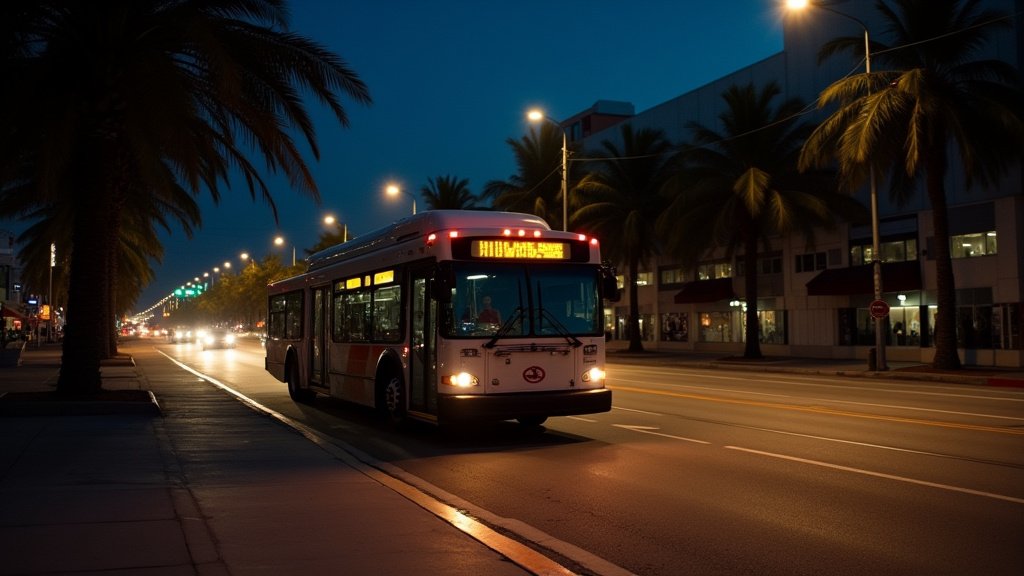
Miami-Dade County’s proposed 2026-27 budget is currently under intense scrutiny, as a controversial plan to close a looming fiscal deficit by slashing early-morning public transit routes has ignited a firestorm of local opposition. Critics, including the Miami Herald Editorial Board, argue that the county is attempting to balance its books at the expense of its most vulnerable residents—the service industry, medical, and hourly workers who rely on transit to reach their jobs before dawn. As the county grapples with fiscal realities, the move to cut these essential services raises fundamental questions about the priorities of local governance and the viability of the current public transportation funding model.
Key Highlights
- Proposed Service Reductions: The 2026-27 budget proposal suggests eliminating specific early-morning bus routes to offset a widening budget hole.
- Disproportionate Impact: These cuts primarily affect low-income, transit-dependent commuters, such as janitorial staff, nurses, and hospitality workers, whose shifts often begin before standard transit service windows.
- Alternative Funding Debate: Opponents, including editorial voices, are urging the Board of County Commissioners to explore revenue alternatives, such as modest gas tax increases, rather than service degradation.
- Systemic Fragility: The controversy underscores a long-term tension between county fiscal policy and the critical need for an accessible, 24/7 public transportation network in a major metropolitan area.
The Anatomy of the Deficit and Transit Policy
The debate over the Miami-Dade transit budget is not merely a numbers game; it is a clash of values. When the Department of Transportation and Public Works (DTPW) presented the 2026-27 budget draft, the focus was squarely on operational efficiency. However, the specific targeting of early-morning bus routes suggests that ‘efficiency’ is being redefined as cost-containment at the literal expense of mobility for the working class.
The Silent Commuters: Who Gets Hurt?
Public transit in Miami-Dade serves a specific demographic that does not operate on a traditional 9-to-5 schedule. The ‘backbone’ of the Miami economy—those who clean the offices, prep the kitchens, and provide healthcare services in the early hours—often lack access to private vehicles. Eliminating bus routes that run between 3:00 AM and 5:00 AM does not just inconvenience these riders; it effectively threatens their employment. If a cook cannot reach a kitchen by 4:30 AM, they lose their shift. If a janitor cannot reach a building by 5:00 AM, they lose their job. This creates a cascading economic effect where the county saves on fuel and driver hours, but individual residents lose their economic stability.
The Fiscal Argument: Is There a Better Way?
The Miami-Dade County Board of County Commissioners faces a difficult balancing act. Inflationary pressures, rising maintenance costs for the aging fleet, and the need to expand infrastructure present a real fiscal deficit. However, critics argue that the reliance on service cuts indicates a failure of political imagination. The suggestion to increase the gas tax—or to reallocate funds from less vital ‘vanity’ projects—has gained traction among transit advocates. By tying funding to consumption (gas) rather than cutting service for the transit-dependent, proponents argue the county could protect its most vital social service without compromising the budget.
Secondary Angle: The Erosion of Transit Trust
There is a deeper, long-term risk: the erosion of public trust. When a municipal government signals that public transit is a discretionary expense rather than an essential utility, usage patterns change. Riders who have any alternative will find one; those who do not are left stranded. Over time, this leads to a decline in ridership, which creates the very deficit the county claims to be fighting. It is a negative feedback loop that characterizes many struggling transit agencies across the United States. To break this, the county must treat transit not as a line item to be trimmed, but as a critical infrastructure asset on par with roads and sewers.
Secondary Angle: The Economic Ripple Effect
Beyond the individual worker, there is the macroeconomic impact on the Miami-Dade labor market. A metropolitan area that lacks reliable, 24/7 transit essentially creates a barrier to labor mobility. If hospitality and service employers cannot fill early-morning shifts because the workforce cannot reach the location, the local economy suffers. Therefore, the budget cut is not just a transit issue; it is a business growth issue. Local chambers of commerce have yet to weigh in fully, but the potential for labor shortages in the tourism and service sectors is a looming risk.
Secondary Angle: Historical Precedent
Historically, Miami-Dade has struggled with balancing its sprawling geography with an effective public transit network. The reliance on bus routes over heavy rail creates a system that is susceptible to exactly this type of budget maneuvering. In the past, whenever the county has faced budget shortfalls, transit has often been the ‘low-hanging fruit’ for cuts. Examining previous budget cycles shows a pattern of service stagnation, which the current 2026-27 proposal threatens to cement.
FAQ: People Also Ask
Q: Why are early-morning bus routes being targeted for cuts?
A: The county claims these routes have lower ridership numbers during these specific windows compared to peak hours. By eliminating these routes, the DTPW aims to save on fuel, driver labor costs, and maintenance associated with ‘underutilized’ equipment.
Q: What is the alternative to cutting these routes?
A: Critics, including the Miami Herald Editorial Board, have proposed adjusting the local gas tax, prioritizing transit funding over non-essential infrastructure projects, or seeking federal/state grant subsidies to cover the operational shortfall.
Q: How does this affect Miami-Dade’s overall transit-dependent population?
A: It creates a ‘transit gap’ for hourly workers. If the bus doesn’t run, these workers may be forced to rely on expensive ride-share services, which often cost more than a full day’s wage for entry-level positions, effectively pricing them out of their own employment.
Q: Is there any public recourse for residents?
A: Yes, the Miami-Dade Board of County Commissioners holds budget workshops and public hearings. Residents are encouraged to contact their district commissioners and attend these hearings to testify on how these specific cuts would impact their ability to work and live in the county.