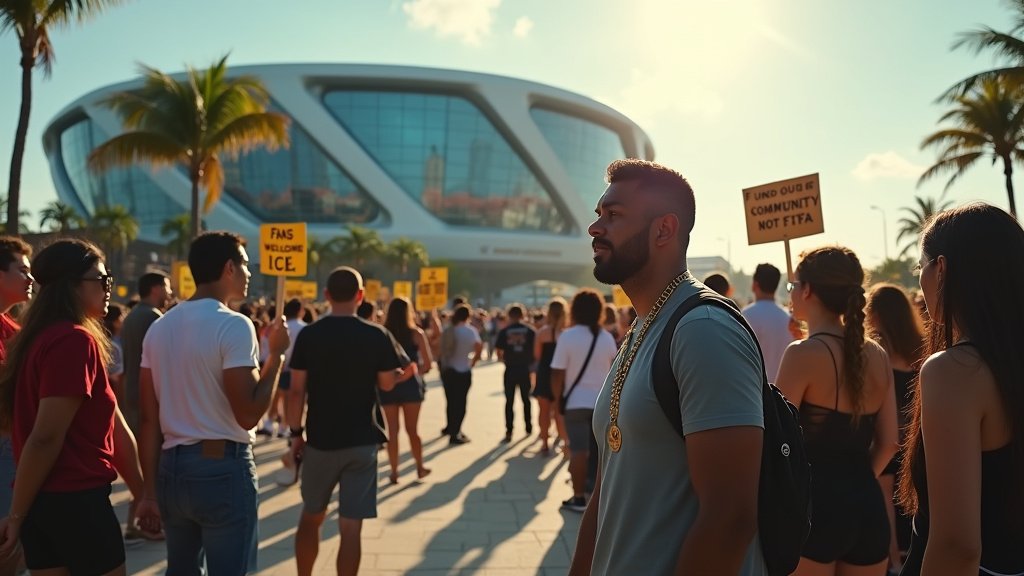
A coalition of Miami community organizations, spearheaded by documentary filmmaker Billy Corben, is escalating pressure on FIFA and Miami-Dade officials, demanding assurances that World Cup attendees will be shielded from “overzealous immigration enforcement.” The activists are also calling for the county’s substantial subsidy for the tournament to be reinvested in local communities, amplifying concerns as Miami prepares to host multiple matches for the 2026 FIFA World Cup.
Activists Raise Alarms Over Immigration Enforcement
The core of the activists’ plea centers on protecting fans and visitors from potential harassment or detention by federal immigration agents, including U.S. Customs and Border Protection (CBP) and U.S. Immigration and Customs Enforcement (ICE). Citing alleged sightings of immigration officials at recent FIFA Club World Cup games and a widely publicized incident involving a Coast Guard inspection of a World Cup kick-off party attended by Miami-Dade Mayor Daniella Levine Cava, the groups fear a “chilling effect” on potential attendees.
“We unequivocally believe that any human rights plan that does not include protections for fans who are immigrants living in the United States or visiting the country is incomplete,” stated a coalition of activists in a recent press release, urging the Miami Host Committee to commit to no immigration enforcement in or near stadiums during the games. They express particular concern about the “Trump Administration’s recent immigration policies,” which they argue have heightened fears of due process abuses and racial profiling for both immigrants and international visitors.
Filmmaker Billy Corben has been a prominent voice in this campaign, stating that people should not have to fear ICE or deportation for attending the World Cup in Miami. Activists argue that the presence of federal agents could deter international fans, leading them to choose to watch games in Canada or Mexico instead of the United States. The Department of Homeland Security (DHS) has indicated that federal agents will be involved in security for major events, asserting that enforcement actions target individuals “illegally in the U.S.—full stop”. However, this stance has not allayed the fears of those advocating for greater protections.
Financial Controversy: World Cup Subsidies vs. Community Needs
Adding another layer to the public discourse is the significant financial commitment Miami-Dade County has made to the World Cup. The county is set to spend approximately $46 million on subsidies for the event, intended to cover public safety, emergency services, and transit management. This funding package has drawn sharp criticism from some local leaders and community members, particularly in the context of a significant county budget deficit and proposed cuts to essential services for non-profits, parks, and cultural programs.
County Commissioner Kionne McGhee has been a vocal opponent, calling the World Cup subsidies a “moral failure” when vulnerable community services face deep cuts. He has called for special meetings to revisit and potentially undo past funding votes, advocating for the return of these funds to “give it to the nonprofits”. Fellow Commissioner Danielle Cohen Higgins has also questioned the allocation, stating, “Why are we writing checks to these organizations when the event is already coming? We should be investing those dollars within our community”. Mayor Daniella Levine Cava’s office has also acknowledged these concerns, noting that “those concerns remain as we balance critical needs in our community”.
FIFA’s Human Rights Commitments Under Scrutiny
FIFA, the global governing body for soccer, has publicly committed to upholding human rights, a stance that gained more prominence following controversies surrounding the 2018 and 2022 World Cup bids in Russia and Qatar. For the 2026 tournament, FIFA required candidate host cities to develop human rights action plans. The organization states its policy mandates respecting human rights in line with UN Guiding Principles and engaging with stakeholders.
Despite these policies, human rights advocates express skepticism regarding their enforcement and effectiveness. Reports suggest that FIFA may have diluted more robust proposals, and the plans are “just a plan. It’s not self-executing”. Critics point to past instances where FIFA has been accused of breaking its own rules, particularly in recent host selection processes for the 2030 and 2034 World Cups, which have faced scrutiny over transparency and due diligence in countries with human rights concerns.
Activists cite a report indicating FIFA was alerted to 145 human rights concerns at Club World Cup games, including issues related to federal policies and enforcement, lending credence to their fears about the upcoming World Cup. The call for greater transparency and actionable human rights protections from FIFA remains a central theme in the ongoing news surrounding the Miami World Cup preparations.
Broader Implications and the Path Forward
The ongoing debate highlights a complex interplay of international sporting ambitions, national security concerns, and local community priorities. As Miami gears up to host seven World Cup matches, the pressure mounts on FIFA and local officials to navigate these sensitive issues. The success of the tournament, not just in terms of sporting spectacle but also in its ability to foster an inclusive and welcoming environment, hinges on addressing these legitimate concerns raised by community advocates.
The dialogue between activists and officials is ongoing, with Yareliz Mendez-Zamora of the American Friends Service Committee noting that while a Miami Host Committee official has been in contact, no meeting date with FIFA has been set. The news underscores a critical moment for Miami, where the economic benefits of hosting a global event must be weighed against the imperative to protect civil liberties and invest in the local population. The world, as the saying goes, is watching.
This unfolding news from Miami serves as a crucial case study in how major international events intersect with pressing social and political issues, demanding careful consideration and action from all parties involved.