Hurricane Melissa’s Aftermath Reveals Cuba Poverty Hurricane and Deepening Poverty Amidst Economic Ruin
By [Investigative Team]
Published: November 19, 2025
Images emerging from the eastern provinces of Cuba in the wake of Hurricane Melissa paint a stark and devastating picture, not just of nature’s fury, but of a nation already grappling with extreme poverty and systemic economic collapse. The powerful storm, which made landfall on October 29, 2025, as a Category 3 hurricane after devastating parts of Jamaica, has ripped through an island already struggling to stand, exposing the deep-seated destitution that characterizes daily life for many Cubans. While the hurricane inflicted significant physical damage—destroying homes, crippling infrastructure, and devastating agricultural lands—it also served as a brutal mirror, reflecting a pre-existing reality of profound impoverishment and neglect, highlighting the critical issue of the Cuba Poverty Hurricane.
The Storm’s Devastating Path and Eastern Cuba Devastation
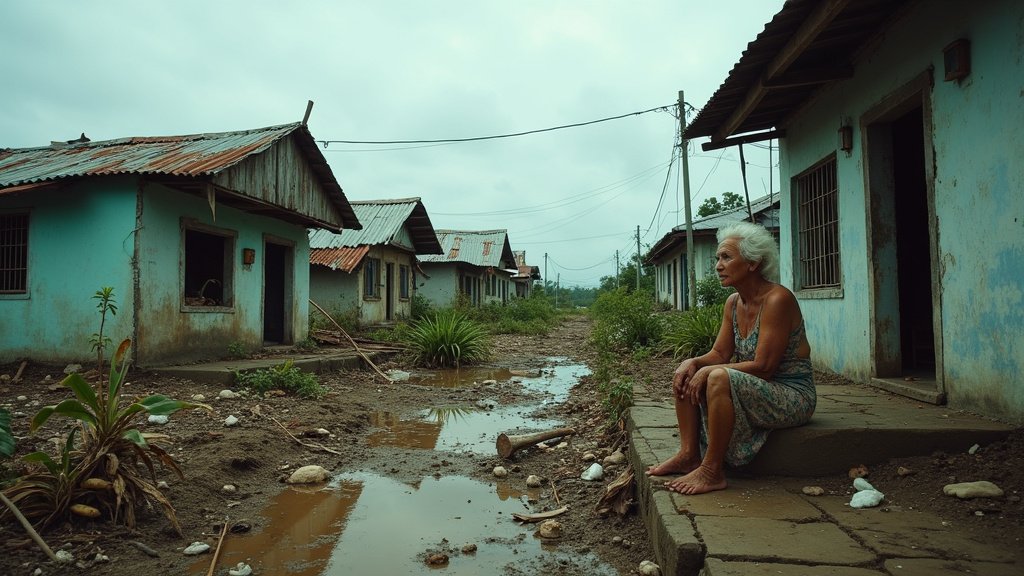
Hurricane Melissa, a monstrous Category 5 storm in the Atlantic before weakening slightly, carved a destructive path through the Caribbean. After battering Jamaica, it made landfall in eastern Cuba, unleashing torrential rains, ferocious winds, and widespread flooding. Provinces such as Santiago de Cuba, Granma, Holguín, and Guantánamo bore the brunt of its impact. Official reports indicated that over 90,000 homes were damaged or destroyed, leaving tens of thousands of families displaced by the Cuba Poverty Hurricane. The hurricane also wreaked havoc on critical infrastructure, damaging 642 healthcare facilities, 2,117 educational centers, and affecting over 103,000 hectares of crops, including vital banana, cassava, and coffee plantations. The storm’s passage led to widespread power outages, blocked roads, and disrupted telecommunications, isolating communities and hindering immediate relief efforts for those affected by the Cuba Poverty Hurricane. In the immediate aftermath, over 735,000 people were evacuated, with thousands remaining displaced weeks later as assessments of the damage continued. This exemplifies the harsh realities of the hurricane aftermath.
Shattered Lives, Stripped Bare: Glimpses of Destitution and Cuban Poverty Statistics
The visual evidence emerging from the storm’s aftermath is harrowing. Photos and videos shared by church groups, activists, and social media influencers reveal undernourished individuals, often dressed in rags and lacking basic footwear, living in makeshift shelters or the rubble of their destroyed homes. These are not merely images of storm damage; they are poignant testaments to the calamitous effects of Cuba’s ongoing economic crisis. Accounts from affected areas describe families struggling with severe food shortages, with parents lamenting their inability to feed their children, a grim reality exacerbated by the Cuba Poverty Hurricane. For many, the hurricane did not create poverty, but rather exacerbated an already dire existence marked by “decades of impoverishment and neglect by the state,” as one observer noted. The exposed Cuba poverty is a symptom of a deeper, structural fragility that has left countless Cubans living in precarious conditions, a stark indicator amplified by the Cuba Poverty Hurricane.
A Nation Already on the Brink: The Pre-existing Economic Crisis and Economic Ruin Impact
Hurricane Melissa struck an island whose economy was already in dire straits. Warnings from economists had repeatedly signaled that Cuba’s economic situation had reached rock bottom, with the impact of the Cuba Poverty Hurricane only worsening the situation. Experts gathered at conferences, including those in Miami, analyzing official data that painted a grim picture: between 2019 and 2024, the island’s gross domestic product (GDP) had declined by approximately 11%. Key sectors fared even worse, with agriculture shrinking by a staggering 57% and trade by nearly 30%. Economists declared the Cuban economy “bankrupt,” forced to import essential goods like sugar, a stark contrast to its historical status as a major producer, with the Cuba Poverty Hurricane compounding this dire state and contributing to economic ruin.
The country was already battling rampant inflation, severe shortages of food, medicine, and fuel, and a persistent energy crisis. Chronic power blackouts, a lack of foreign currency, and the impact of international sanctions had significantly eroded the population’s purchasing power. Reports indicated that in 2024, Cuba’s GDP had fallen by 1.1%, marking the second consecutive year of recession. Projections for the coming years suggested continued contraction or stagnation, with international bodies forecasting Cuba and Haiti as the only economies in the region expected to decline in 2025, a trend now worsened by the Cuba Poverty Hurricane.
The Hurricane’s Exacerbating Blow and Natural Disaster Effects
The storm’s devastation amplified these existing vulnerabilities, a consequence of the Cuba Poverty Hurricane. The destruction of homes, schools, and healthcare facilities placed immense strain on already limited resources. Damaged agricultural lands threatened to worsen food shortages, and the collapse of essential services like water and power further endangered the health and well-being of the population. The physical damage, estimated to run into billions of dollars in insured losses alone, demanded a massive response that an already depleted economy could ill afford, especially in the context of the Cuba Poverty Hurricane. The disruption to roads and access routes also complicated the delivery of much-needed aid, both domestically and internationally, during this critical Cuba Poverty Hurricane period, highlighting significant natural disaster effects.
Echoes of Neglect and a Systemic Crisis in Eastern Cuba Devastation
Commentary and analysis from writers and economists suggest that the widespread destitution revealed by Hurricane Melissa is not solely a consequence of the storm but a reflection of long-standing systemic issues. Many point to decades of economic mismanagement, unproductive state-run enterprises, and insufficient social investment as the root causes of Cuba’s structural poverty, a problem starkly illuminated by the Cuba Poverty Hurricane. Some observers note a stark social inequality, where a segment of the population lives with capitalist standards of living while others exist in profound precarity, a situation exacerbated by the Cuba Poverty Hurricane.
The response to the crisis has also highlighted challenges, particularly concerning the Cuba aid response. While international aid has been pledged, including a significant $74 million UN appeal and $3 million from the United States channeled through the Catholic Church, the effective and timely distribution of these resources to remote and affected areas remains a critical concern. The Cuban government’s preference for direct control over aid distribution has historically been a point of contention, raising questions about accessibility for those most in need in the aftermath of the Cuba Poverty Hurricane.
The Path Forward: Economic Reforms Amidst Chaos and Cuban Infrastructure Damage
As the island grapples with the immediate aftermath of Hurricane Melissa, the Cuban government has also been navigating a complex economic landscape. The timing of the storm coincided with the announcement of a new economic plan aimed at “Correcting Distortions and Revitalizing the National Economy.” This plan includes measures such as the gradual elimination of subsidies, increased prices for basic services, and institutionalized partial dollarization. However, critics argue that these reforms, implemented amidst a humanitarian crisis, may not address the fundamental inefficiencies of the state-controlled economy and could potentially deepen social divides, especially following the extensive Cuban infrastructure damage caused by the storm.
Conclusion: The Grim Reality of Cuba Poverty Hurricane
Hurricane Melissa has served as a grim, visual epilogue to years of mounting economic hardship in Cuba. The storm’s destructive force laid bare the extent of the island’s extreme poverty, affecting millions and exposing the profound vulnerability of a population already struggling against systemic economic decay. The images of devastation and destitution are not merely a snapshot of a natural disaster’s impact, but a powerful indictment of decades of economic challenges that have left a significant portion of the Cuban population in a state of enduring crisis, a crisis tragically intensified by the Cuba Poverty Hurricane. Addressing this requires more than just recovery from the hurricane; it demands a comprehensive approach to rebuilding not only structures but also the very economic and social foundations of the nation, tackling the persistent issue of the Cuba Poverty Hurricane.