Key Takeaways
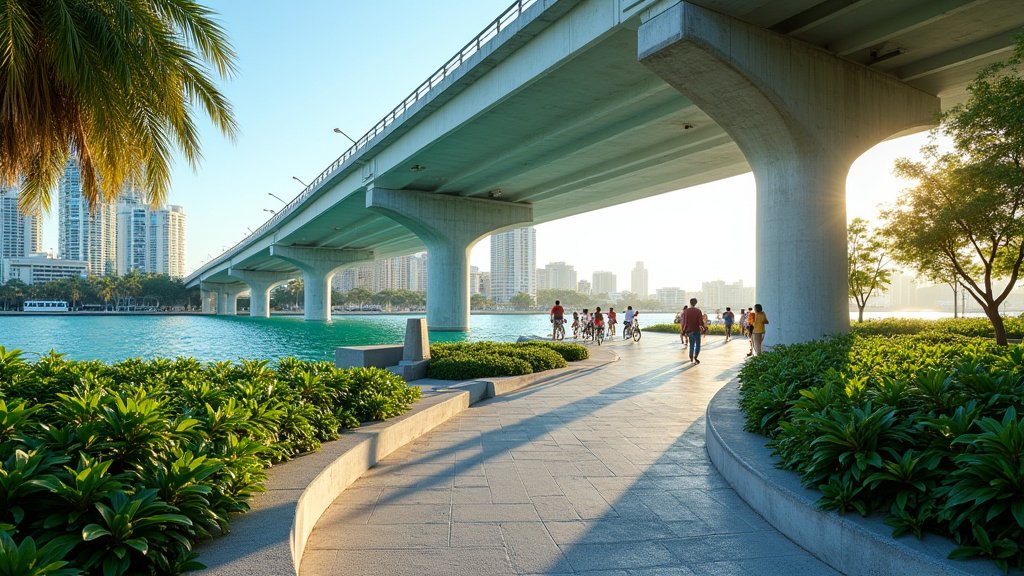
- A pedestrian and bike bridge beneath I-395, a long-planned component of Miami’s Baywalk, is nearing reality.
- The project has received final design approval and secured over $2 million in new funding.
- This bridge will close the final major gap in the Miami Baywalk, connecting Maurice A. Ferré Park to the area north of the MacArthur Causeway.
- The completion of the Baywalk is a central goal of the 2025 Downtown Miami Master Plan, aimed at enhancing public enjoyment and economic growth of the city’s waterfront.
- The chosen design, the “Bay 2-Enhanced Connector,” emerged after years of study and public input.
Summary Lead
Miami city commissioners are set to approve the design for the I-395 Baywalk Pedestrian and Bikeway Bridge on March 12, 2026, and are applying for state grant funding to cover the estimated $2.14 million first phase. This approximately 600-foot bridge will finally complete the Miami Baywalk by linking Maurice A. Ferré Park with the waterfront north of the MacArthur Causeway, creating a continuous path along Biscayne Bay. The project aims to enhance public access to the waterfront and stimulate economic growth.
The Deep Dive
Project Genesis and Vision
The vision for a continuous Miami Baywalk has been in development for decades, with the city incrementally enhancing waterfront access. However, the stretch beneath the I-395 MacArthur Causeway has persistently served as a barrier, segmenting the path and preventing seamless pedestrian and cyclist movement between downtown parks and the bayfront. Recognizing this, the 2025 Downtown Miami Master Plan highlighted the completion of this connection as a crucial step towards maximizing the utilization of Miami’s tropical waterfront for both public recreation and economic development.
Design and Development Process
Following years of study and extensive public engagement, the “Bay 2-Enhanced Connector” has been selected as the preferred design for the bridge. A feasibility study conducted in 2022 explored various concepts, including the Connector, Enhanced Connector, and Iconic Destination. Community meetings and committee presentations played a pivotal role in refining the bridge’s alignment, with updated renderings showing the structure passing through the second bay of the highway’s support columns. In June 2025, the Miami Downtown Development Authority (DDA) Urbanism Committee recommended the Enhanced Connector option for its balance of accessibility, cost-effectiveness, and aesthetics. The consulting team, led by EXP Engineering and Inform Studio, was instrumental in developing the bridge’s design, which is estimated to be approximately 20 feet wide and around 600 feet long.
Funding and Approvals
The project is moving forward with significant financial backing. Miami city commissioners were slated to approve the design on March 12, 2026, and authorize an application for state grant funding to support the first phase, estimated at $2.14 million. The project has already secured over $2 million in new funding, with early funding including a $1 million Transportation Alternatives Program grant and $275,000 from the Florida Inland Navigation District. The Downtown Development Authority (DDA) has also been working on lease agreements with the Florida Department of Transportation (FDOT) since 2019 to allow for the bridge’s construction and maintenance beneath the MacArthur Causeway.
Anticipated Impact and Benefits
The completion of the I-395 Baywalk Pedestrian and Bikeway Bridge is expected to yield substantial benefits for the city. It will finally create a continuous, uninterrupted route along Miami’s waterfront, enhancing connectivity between key areas like Maurice A. Ferré Park and the former Herald Plaza. This improved access is anticipated to boost property values and generate additional annual property tax revenue, with estimates ranging from $1.46 million to $1.95 million. Beyond the economic advantages, the bridge is a critical component of the city’s master plan to promote public enjoyment of the waterfront and foster a more resilient and connected urban environment. Urban planners envision the new span transforming a fragmented path into a truly continuous Baywalk, making it easier and safer for residents and visitors to travel between neighborhoods and waterfront destinations.
Broader Context of Miami’s Active Transportation Infrastructure
This project is part of a larger trend in Miami-Dade County to improve infrastructure for pedestrians and cyclists. While this bridge addresses a critical gap in the Baywalk, other initiatives are also underway. For instance, the Snowden Pedestrian Bridge on the Old Cutler Trail in South Dade is also being widened to improve safety and accessibility for walkers and cyclists. These projects collectively underscore a commitment to enhancing multi-modal transportation options and promoting active lifestyles within the region.
FAQ: People Also Ask
What is the main goal of the I-395 Baywalk Pedestrian and Bikeway Bridge project?
The primary goal is to close the final major gap in the Miami Baywalk, creating a continuous pedestrian and bike path along the city’s waterfront. This will enhance public access to the bay, improve connectivity between downtown parks and destinations, and contribute to the economic and recreational vitality of the area.
When is the I-395 Baywalk Pedestrian and Bikeway Bridge expected to be completed?
While the design has been approved and funding is being secured for Phase 1, specific completion dates for construction are not yet detailed in the provided articles. However, city commissioners were expected to sign off on the design and grant application process by March 12, 2026.
What are the estimated costs associated with the I-395 Baywalk Pedestrian and Bikeway Bridge?
The first phase of the project has an estimated budget of approximately $2.14 million, with over $2 million in new funding secured to help cover these costs.