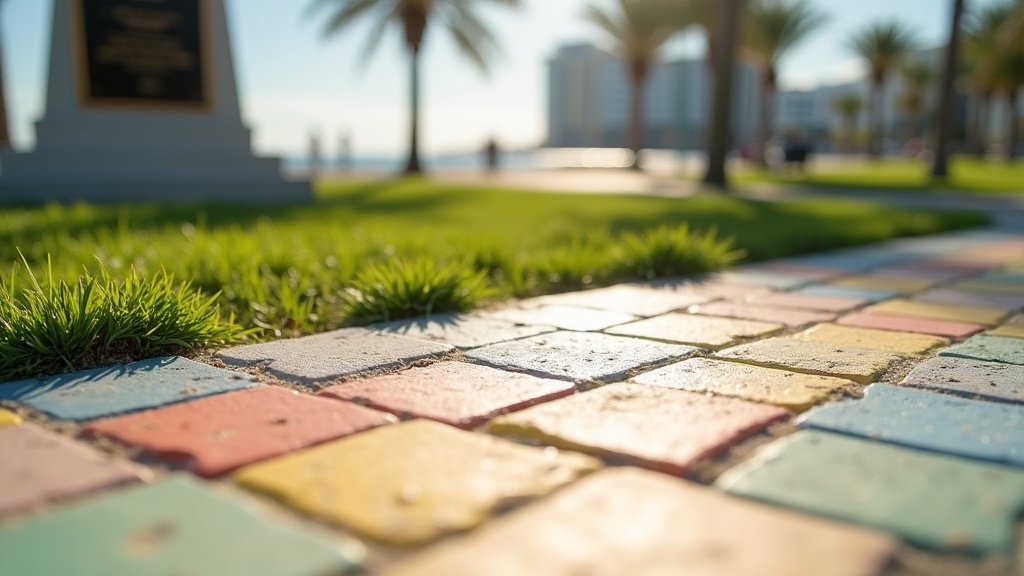
In a decisive act of municipal autonomy, Miami Beach officials have officially resurrected one of the city’s most recognizable symbols of inclusivity. On Friday, April 10, 2026, the city unveiled a newly installed rainbow sidewalk in Lummus Park, successfully relocating the vibrant, multi-colored pavers that were forcibly removed from their original location on Ocean Drive by the Florida Department of Transportation (FDOT) just six months prior. The move marks the conclusion of a high-stakes standoff between local governance and state mandates regarding public signage, effectively creating a ‘political workaround’ that serves as both a public amenity and a potent statement of resistance.
The Resurrection of a Landmark
The ceremony, which took place just ahead of the city’s 18th annual Miami Beach Pride celebrations, was more than just a ribbon-cutting; it was a reclamation of identity. The installation features 3,606 salvaged pavers from the original crosswalk that was dismantled in October 2025. By moving the project from the ‘roadway’—where state regulations regarding traffic safety and ‘ideological messaging’ previously mandated removal—to the pedestrian-friendly pathways of Lummus Park, the city has successfully navigated the legal hurdles set by the state. This new installation functions not merely as a decorative pathway, but as a permanent, legally protected monument, accompanied by a commemorative plaque that details the site’s history and its significance to the LGBTQ+ community.
Urban Resistance: The Strategy of Creative Compliance
The relocation of the rainbow pavers is a masterclass in local-level political navigation. When the FDOT ordered the removal of the original crosswalk, they cited uniform traffic standards and a crackdown on street art that could be construed as political or ideological. This move, part of a broader statewide initiative by the DeSantis administration, was viewed by many local leaders as an attempt to sanitize public spaces.
By reclassifying the installation as a ‘sidewalk’ within a public park, rather than a roadway marking, Miami Beach officials have effectively bypassed the state’s jurisdiction. This strategy highlights a growing trend among Florida municipalities: utilizing creative urban planning to maintain local values when faced with restrictive state-level policies. It is a subtle, yet powerful, assertion of the city’s right to curate its own cultural aesthetic and public identity, independent of Tallahassee’s regulatory overreach.
The Economic and Cultural Brand of Inclusivity
Beyond the political implications, the restoration of the rainbow pavers is deeply tied to the economic health of Miami Beach. The city has long positioned itself as a global beacon for LGBTQ+ tourism, an industry that contributes significantly to the local economy. For many visitors, the presence of these symbols is not just about aesthetics—it is a signal of welcome and safety.
Commissioner Tanya Katzoff Bhatt, who spearheaded the initiative, noted that the removal of the original crosswalk resulted in immediate, palpable backlash from tourists who felt the city’s values were being compromised. By bringing the rainbow back, the city is signaling to its domestic and international visitors that its commitment to diversity remains unshakable. The installation serves as a reminder that brand identity in the 21st century is increasingly defined by social values, and for Miami Beach, that value proposition is inextricably linked to its history as an inclusive, vibrant destination.
Historical Preservation: The Leonard Horowitz Connection
The design of the rainbow crosswalk is not an arbitrary choice of color; it pays homage to the late architect Leonard Horowitz. Horowitz was the visionary responsible for the iconic rainbow pastel palette that defines the Art Deco District’s architectural aesthetic. By preserving the crosswalk, the city is not just defending a political symbol; it is protecting a piece of its local architectural heritage.
The restoration serves as a bridge between the city’s past and its future, tying the struggle for LGBTQ+ equality to the very bricks that define the aesthetic of South Beach. This dual significance—as both a civil rights symbol and an architectural nod—elevated the project from a contentious political issue to a point of community pride, solidifying its place as a permanent feature of the city’s landscape.
Future Implications for Municipal Autonomy
The success of the Lummus Park installation poses an interesting question regarding the future of municipal autonomy in Florida. As cities and the state continue to grapple with shifting boundaries of authority, the ‘Miami Beach Model’—whereby local governments find clever, lawful ways to circumvent state bans—may become the blueprint for other municipalities. Whether this leads to a new era of localized governance or triggers further state-level legislation remains to be seen. However, one thing is certain: the rainbow sidewalk in Lummus Park stands as a testament to the resilience of local culture in the face of centralized pressure.