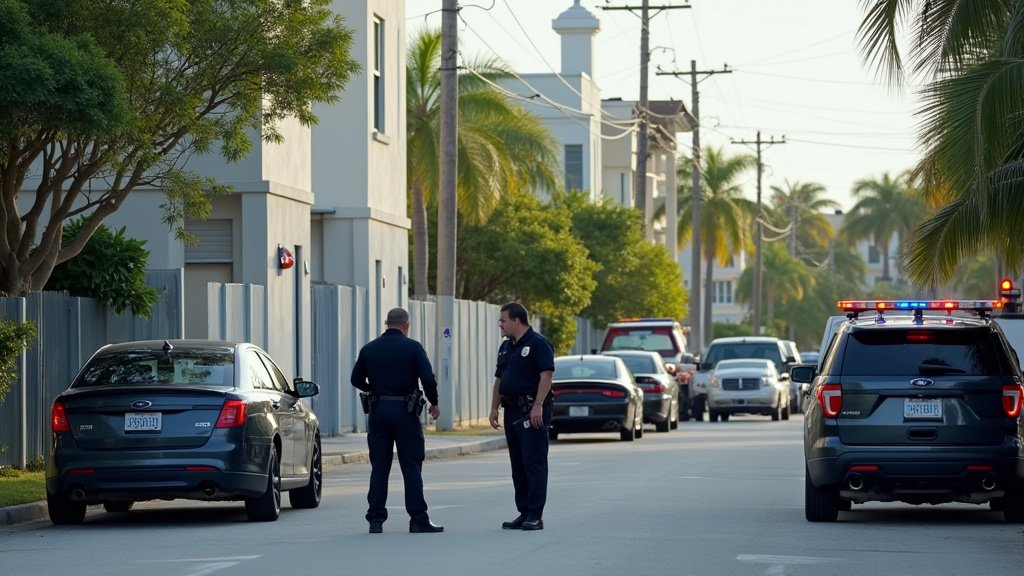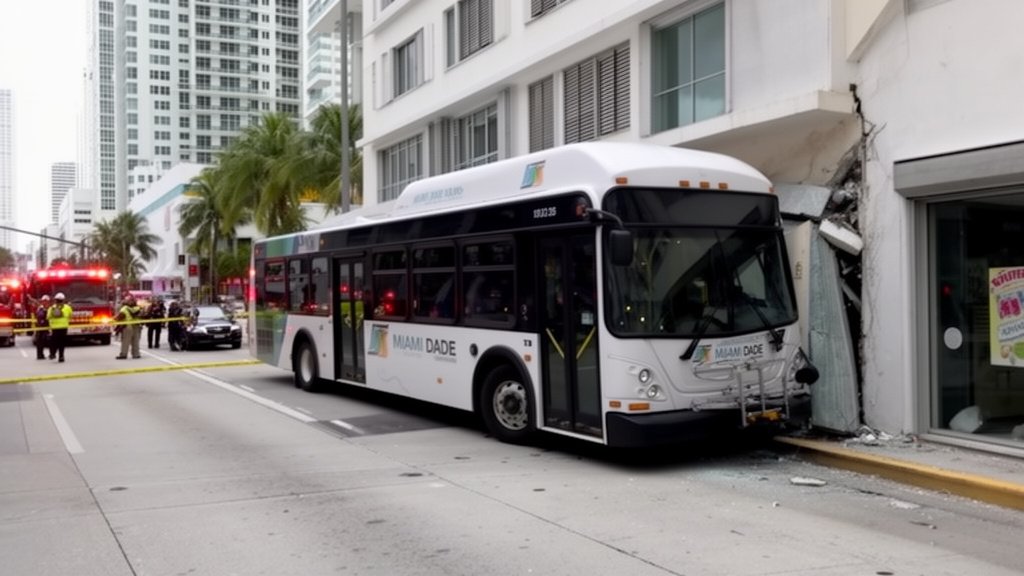
First responders successfully extricated an elderly cyclist from beneath a city trolley in a high-stakes rescue operation in Miami this morning, April 26, 2026. The incident, which occurred amidst the bustling Sunday activity of the city, prompted an immediate and coordinated response from Miami Fire Rescue, who utilized specialized heavy-rescue equipment to lift the vehicle and stabilize the victim. The individual was subsequently transported to a local trauma center with injuries that are currently being assessed by medical professionals. Local authorities have cordoned off the area to conduct a thorough investigation into the circumstances surrounding the collision, focusing on vehicle safety mechanisms, driver visibility, and the intersection’s traffic patterns at the time of the event.
Key Highlights
- Emergency Response: Miami Fire Rescue teams executed a precise extrication procedure to free the trapped cyclist without compromising structural safety.
- Condition Update: The victim, identified as an elderly male, was rushed to a nearby hospital for emergency care; his current medical status remains under evaluation.
- Ongoing Investigation: Law enforcement has launched an inquiry into the incident, examining surveillance footage and witness accounts to determine the cause of the collision.
- Traffic Disruption: Authorities temporarily halted transit along the affected route, leading to localized delays in the immediate area.
Anatomy of an Urban Rescue: Analyzing the Miami Incident
The Complexity of Heavy Vehicle Extrication
The incident in Miami serves as a stark reminder of the technical complexities involved in urban search and rescue (USAR) operations. When a vulnerable road user, such as a cyclist, becomes trapped under a heavy municipal vehicle like a trolley, every second is critical. The structural weight of a transit trolley, often exceeding several tons, presents an immediate crushing hazard, requiring specialized pneumatic lifting bags or hydraulic struts to distribute weight safely while rescuers maneuver beneath the chassis.
In this instance, the coordinated efforts of the Miami Fire Rescue unit underscore the efficacy of modern emergency protocols. Unlike standard passenger vehicle accidents, trolley incidents involve fixed-rail or heavy bus frames that offer very little clearance. The team on the scene had to balance the need for rapid extrication—often referred to as the ‘Golden Hour’ in trauma care—with the mechanical necessity of ensuring the vehicle did not shift, which could have exacerbated the cyclist’s injuries. The precision required to insert rescue jacks beneath such a massive platform while maintaining communication with the victim highlights the advanced training protocols maintained by the city’s emergency services.
Examining Urban Mobility and Cyclist Vulnerability
As cities across the United States, including Miami, strive to balance increased ridership on public transit with the push for multimodal transportation networks, the intersection of heavy vehicles and personal transport remains a critical safety failure point. The rise in cycling as a primary mode of commuting for both the elderly and the workforce creates dynamic traffic environments that infrastructure was not always designed to accommodate.
From a urban planning perspective, the incident raises important questions regarding the ‘Vision Zero’ initiatives often championed by municipal governments. Are the turning radii of city trolleys sufficient? Do cyclist blind spots, particularly when vehicles are executing sharp turns or navigating narrow lanes, necessitate further technological intervention? The investigation will likely pivot toward whether existing transit infrastructure requires physical separation—such as protected bike lanes or transit-only corridors—to mitigate these risks. Furthermore, the reliance on older trolley models or specific route configurations may be re-evaluated in the wake of such a high-profile incident.
The Human Impact and Community Response
Beyond the logistical and mechanical aspects, the psychological impact on the community is significant. Witnessing an emergency scene of this nature, especially one involving a senior citizen, triggers a collective anxiety about public safety. The immediate response from witnesses and the rapid arrival of emergency personnel are testament to the resilience of the Miami community. Public safety officials are often quick to point out that the success of these operations is rarely the result of a single hero, but rather a seamless chain of survival: from the bystander who calls 911, to the dispatcher who manages the call, to the rescue crews who clear the scene.
As we look forward, the broader conversation will likely shift toward public education. Pedestrians and cyclists are often taught to ‘see and be seen,’ but the burden of safety must be shared by transit operators and city planners. The implementation of high-definition collision avoidance sensors, enhanced driver training focusing on vulnerable road users, and better lighting at intersections are all potential levers that city officials may pull to prevent a recurrence of this morning’s events.
Future-Proofing Miami’s Transit Corridors
This incident is not an isolated event in the landscape of rapid urban growth. As Miami’s skyline expands and its population density increases, the demand for reliable, safe public transportation becomes paramount. The technological integration of modern sensor arrays—such as blind-spot detection cameras and automated braking systems on public transit vehicles—is no longer a luxury but a necessity for modern city planning. This accident may serve as a catalyst for local government to expedite the procurement of safer, more technologically advanced transit fleet vehicles.
Additionally, the role of traffic management technology, such as smart intersections that communicate with vehicles, could play a role in reducing the friction between buses, trolleys, and cyclists. By creating an ‘Internet of Things’ (IoT) ecosystem within the city’s traffic management center, Miami could potentially anticipate dangerous encounters before they occur. The data collected from today’s incident will inevitably be fed into these safety models, providing invaluable insights for future policy decisions and engineering adjustments.
FAQ: People Also Ask
Q: What is the current status of the cyclist involved in the Miami trolley accident?
A: The cyclist was transported to a local trauma center immediately following the rescue. While specific medical details are protected under privacy laws, authorities confirm he is receiving expert care.
Q: How long did the rescue operation take?
A: While the official report is still being processed, eye-witnesses and emergency timelines suggest that the extrication was performed within an optimal timeframe, utilizing high-pressure stabilization tools to ensure the trolley remained secure while the victim was removed.
Q: Are there safety concerns with Miami’s trolley system?
A: The city regularly reviews transit safety protocols. Incidents involving heavy vehicles are rare but highly scrutinized, leading to regular training updates for drivers and infrastructure reviews at high-traffic intersections.
Q: What should a cyclist do if they are involved in a collision with a large vehicle?
A: If you witness or are involved in an accident, the priority is to call 911 immediately. Do not attempt to move the victim unless they are in immediate, life-threatening danger, as this could worsen spinal or internal injuries. Allow the professional search and rescue teams to handle the extrication.