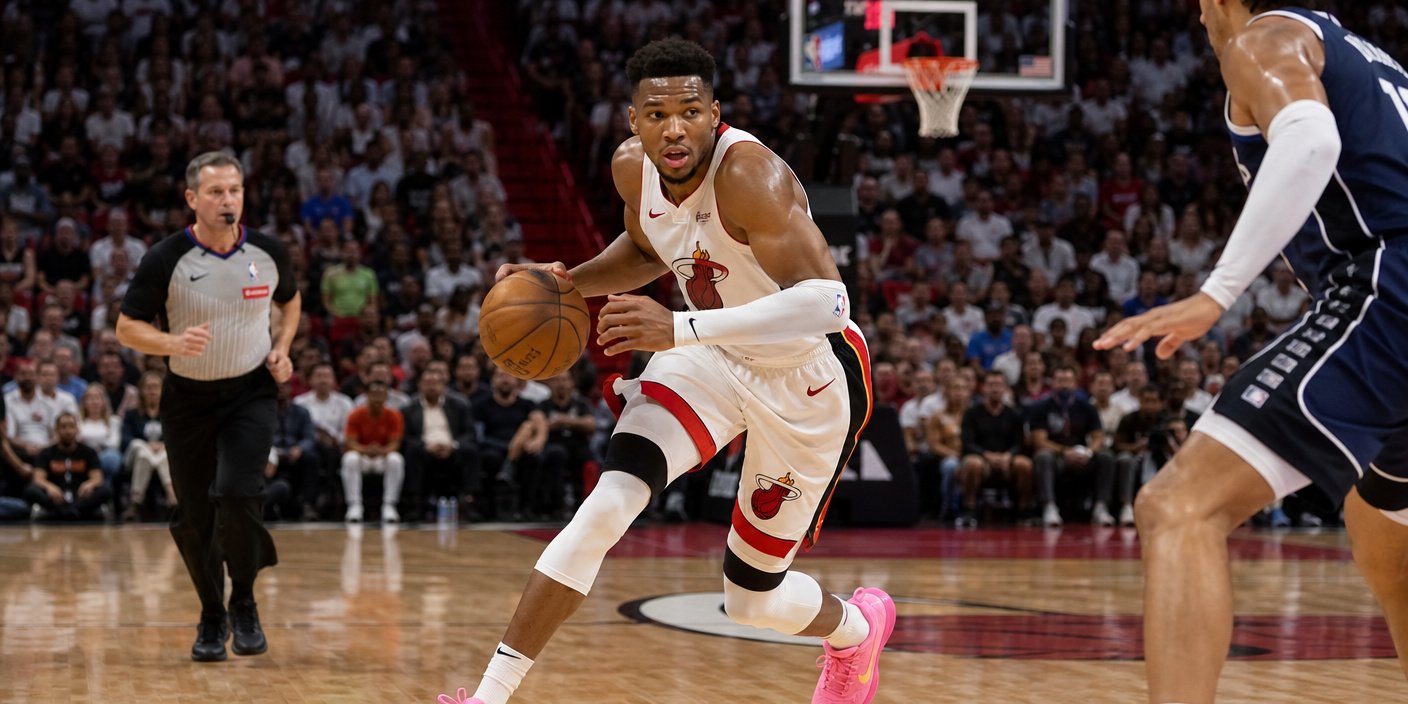
Jaime Jaquez Jr. and Kel’el Ware delivered standout performances to help the Miami Heat rout the Washington Wizards, providing a compelling look at the team’s evolving rotation. In a game characterized by high-energy play and tactical execution, the Heat dismantled the Wizards, underscoring the importance of bench production and developmental growth in the modern NBA.
- Jaime Jaquez Jr. provided a versatile scoring threat, acting as a secondary playmaker.
- Kel’el Ware dominated the paint, contributing significant rebounds and rim protection.
- The Miami Heat maintained defensive pressure throughout, forcing turnovers and limiting Washington’s offensive flow.
- The win highlights the Heat’s reliance on a ‘next man up’ philosophy as they navigate the rigorous NBA schedule.
The Resurgence of Miami’s Depth and Tactical Dominance
The Impact of Jaquez Jr.’s Versatility
Jaime Jaquez Jr. has rapidly established himself as a cornerstone of the Miami Heat’s second unit, but his contributions against the Wizards extended beyond simple scoring. Jaquez Jr. displayed a nuanced understanding of the game, operating effectively in the pick-and-roll and finding open teammates when the defense collapsed. His ability to create his own shot while maintaining high-percentage efficiency is a vital asset for a team that often relies on grueling, half-court execution. By punishing the Wizards’ defense with aggressive drives and smart cutting, Jaquez Jr. kept the tempo tilted in Miami’s favor, forcing Washington to commit resources that eventually left the perimeter vulnerable for other shooters.
Kel’el Ware’s Rising Presence
For Kel’el Ware, the performance against the Wizards served as a statement regarding his development within the Heat’s rigorous culture. Ware, known for his length and athleticism, was a focal point on the defensive end, contesting shots and securing critical defensive rebounds that prevented second-chance opportunities for Washington. His presence inside forced the Wizards to settle for contested perimeter shots, altering the offensive profile of the opposition. On the offensive side of the ball, Ware showcased an improving touch, capitalizing on pick-and-roll opportunities and effectively spacing the floor. His growth as an anchor in the paint is providing the Heat with a level of interior stability that is essential for deep postseason runs.
Defensive Tenacity and Rotational Strategy
The Heat’s ability to rout the Wizards was fundamentally rooted in their defensive tenacity. Miami’s defensive scheme, which prioritizes disciplined rotation and high-intensity perimeter pressure, effectively stifled the Wizards’ primary scoring options. By forcing Washington into inefficient shot selection and capitalizing on transition opportunities, Miami established a lead that grew steadily throughout the game. The effectiveness of the bench, anchored by Jaquez Jr. and Ware, allowed the Heat coaching staff to manage starter minutes effectively while maintaining a high level of intensity on the court. This win serves as a testament to the organizational depth that defines the Heat franchise, reinforcing the belief that they can contend with any opponent when the rotation is functioning in unison.
Looking Toward the Postseason Implications
As the regular season winds down, every victory holds significant weight in the Eastern Conference standings. This rout of the Wizards serves as a confidence booster, proving that Miami can secure comprehensive wins without relying solely on their primary stars for heavy lifting. The development of younger players like Jaquez Jr. and Ware is not merely a subplot; it is a critical component of Miami’s championship architecture. If these players can maintain this level of production, the Heat become significantly more unpredictable and dangerous, forcing opposing teams to account for a wider variety of threats. The consistency shown by these young talents will be closely monitored as the team prepares for the intensified scrutiny and physical toll of the postseason, where depth often proves to be the deciding factor.