At 8:30 a.m. this Sunday, the Miami skyline will witness a historic transformation. On the private, man-made island of Brickell Key, a 23-story structure that has served as a fixture of the city’s luxury landscape for 25 years—the former Mandarin Oriental, Miami—is scheduled to meet a dramatic end. In a highly choreographed, controlled implosion, the tower will be brought down, clearing the horizon for the next generation of high-end urban development. The event, which has been meticulously planned by Swire Properties and demolition experts over the last two years, marks the largest structural implosion Miami has seen in more than a decade, signaling a massive pivot in the region’s luxury real estate trajectory.
Key Highlights
- Historic Implosion: The 23-story former Mandarin Oriental hotel on Brickell Key is scheduled for controlled demolition today, making it the city’s largest implosion in over ten years.
- Strategic Redevelopment: Swire Properties has confirmed the site will become The Residences at Mandarin Oriental, Miami, a multi-tower, ultra-luxury project slated for completion in 2030.
- Engineering Marvel: The demolition, years in the making, utilized high-precision explosive technology to ensure the structure falls within a pre-determined, safe footprint on the island.
- Safety First: Extensive coordination with Miami city officials and specialized contractors was required to minimize noise, dust, and disruption to the densely populated surrounding areas.
The Engineering and Logistics of a Landmark Demolition
When a structure of this scale and age—a 23-story steel and concrete behemoth—needs to be removed in the middle of a high-density area like Miami, conventional deconstruction is rarely the primary option. The decision to use a controlled implosion is a testament to the engineering complexity involved in modern urban renewal. While the public often views implosions as chaotic, dramatic spectacles, the reality on the ground is one of surgical precision.
Precision Over Power
Demolition experts operating on Brickell Key have spent the better part of two years mapping the internal skeletal structure of the hotel. Unlike a bomb, which expands outward, an implosion is designed to collapse a building inward upon its own footprint. This requires a calculated sequence of explosive charges placed at critical load-bearing points. By undermining the base and specific support columns, engineers use the force of gravity to pull the building down, essentially creating a ‘controlled collapse.’ For the former Mandarin Oriental, this meant identifying the exact timing delays—often measured in milliseconds—required to ensure that the massive weight of the upper floors doesn’t buckle prematurely or tilt toward the surrounding water and nearby infrastructure.
Environmental and Safety Protocols
Perhaps the greatest challenge wasn’t just the physics of the fall, but the environmental containment. Brickell Key is a self-contained, man-made residential island at the mouth of the Miami River. Dust, noise, and vibration are the primary enemies of such a demolition. The contractors employed advanced dust mitigation strategies, including massive water suppression systems designed to capture the cloud of pulverized concrete and debris instantly. Furthermore, the exclusion zones were mapped with extreme accuracy to ensure that the surrounding residential buildings, which are among the most expensive real estate in South Florida, remained untouched by the shockwave or debris spray.
The Future of Brickell Key: From Hotel to Residential Powerhouse
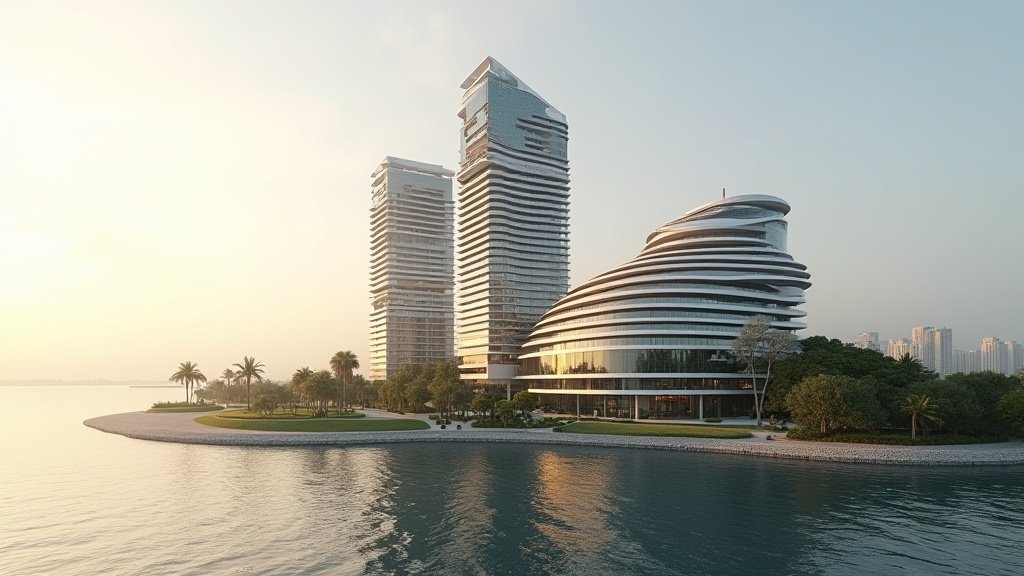
The demolition of the existing tower is not merely an act of destruction; it is a catalyst for economic growth and a shift in the residential luxury market. Swire Properties, the developer behind this ambitious site redevelopment, has outlined a vision that looks toward the next decade. The new ‘Residences at Mandarin Oriental, Miami’ project is slated to be a two-tower, ultra-luxury residential and hotel complex that will define the southern tip of the island.
Evolving the Luxury Market
Historically, Miami’s luxury market was defined by expansive hotels. However, the current trend, reflected in this project, favors branded residences—luxury condos that carry the name and service standards of world-class hospitality brands. By removing the 25-year-old hotel structure, the developers are creating space for a vertical architectural masterpiece that will align with the high demand for ultra-high-net-worth living, a market segment that has surged in Miami post-2020. The 2030 completion date reflects the sheer scale of the vision, which includes not just residential units, but a complete overhaul of the island’s hospitality infrastructure.
The Impact on the Skyline
For decades, the Mandarin Oriental’s low-slung, crescent-shaped design offered a distinct silhouette on the Miami horizon. Replacing it with two taller, more modern towers will fundamentally change the visual profile of Brickell Key. This is a classic case study of ‘highest and best use’ in land development. In a city where land is finite and water surrounds every corner, the ability to densify—to build upward and more efficiently—is the only way to sustain the city’s growth. The skyline that emerges after 2030 will likely be taller, more reflective of contemporary glass-and-steel architecture, and more oriented toward the luxury buyer who values vertical exclusivity.
FAQ: People Also Ask
1. Why was an implosion chosen instead of dismantling the building floor by floor?
Implosion is significantly faster and often safer for a structure of this size in a compact area. While dismantling (top-down) is quieter, it takes months, exposes neighbors to dust and noise for a prolonged period, and is logistically difficult for the crane equipment required. Implosion confines the trauma of demolition to a matter of seconds.
2. Is Brickell Key safe during the implosion?
Yes. The demolition team established rigorous exclusion zones and utilized seismic monitoring to protect the island’s infrastructure and neighboring properties. The plan was vetted by city engineers to ensure the structural integrity of the island itself was never at risk.
3. When will construction begin on the new project?
Following today’s implosion and the subsequent debris removal—which is expected to be a massive recycling effort, reclaiming concrete and steel—groundbreaking for the new, two-tower Residences at Mandarin Oriental is expected to commence shortly. The projected completion is set for 2030.
4. Will the implosion affect the water quality of the Miami River or Biscayne Bay?
Extensive containment measures, including silt barriers and debris catchments, were installed to prevent construction runoff and dust from entering the surrounding waterways, maintaining the environmental regulations mandated by state and federal authorities.