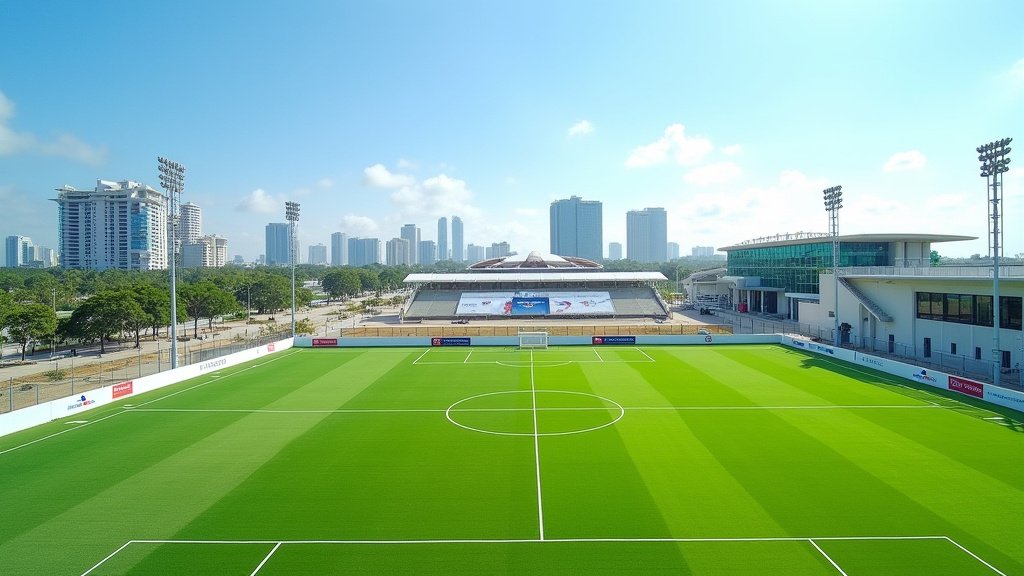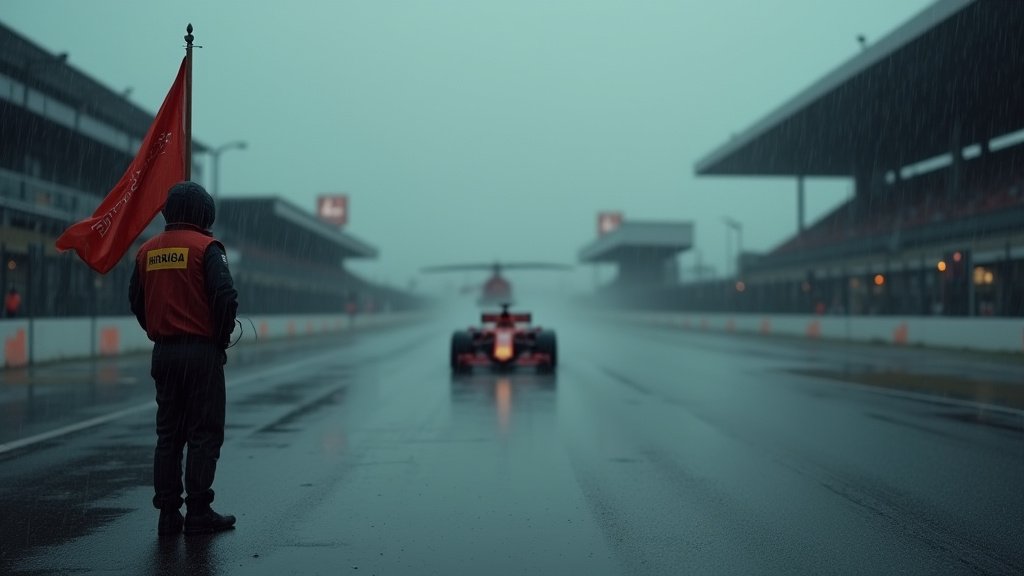
The 2026 Miami Grand Prix, highly anticipated as the ‘reset’ point for the current Formula 1 season, now faces a significant, weather-driven hurdle that threatens to derail the weekend’s proceedings. Meteorologists have issued warnings of severe thunderstorms targeting the Miami International Autodrome on race day, creating a volatile situation that extends beyond the track surface. The core issue is not merely the slick track conditions that drivers would typically face, but a stringent, non-negotiable FIA safety regulation: the absolute necessity of a fully operational medical helicopter on standby.
The Critical Link: Medical Helicopter Safety Regulations
The survival of the race depends entirely on the capability of the medical air ambulance to operate. Under FIA safety protocols, a Grand Prix event cannot commence—or continue—unless a dedicated medical helicopter is on-site and capable of reaching a designated trauma hospital within a strict timeframe. This rule serves as the final arbiter for race control. If low ceilings, extreme winds, or the threat of lightning make air travel unsafe for the medical team, the race must be halted immediately.
This is not a matter of track grip or tire choice; it is a fundamental safety mandate established to ensure that in the event of a catastrophic incident, the highest level of emergency trauma care can be accessed without delay. The regulation is designed to remove the choice from the hands of the teams, promoters, or broadcast executives. If the skies are deemed too dangerous for the helicopter, the asphalt remains empty. For the Miami circuit, situated in a region prone to rapid, intense meteorological shifts, this regulation is a constant, looming pressure, especially when thunderstorm forecasts hit the 70% threshold currently predicted for Sunday.
The 2026 Technical Reset: A Weekend of Unknowns
Compounding the weather anxiety is the fact that this weekend was intended to be the definitive ‘relaunch’ of the 2026 season. After an opening series of races marked by criticism of the new energy management regulations, the FIA has introduced a package of technical tweaks debuting at this event. Teams have been working through a rare, extended break to integrate these updates, which include modified energy recovery limits, refined ERS deployment, and new safety systems for race starts.
Drivers and engineers have been eagerly anticipating this weekend to see if these upgrades mitigate the ‘lift and coast’ driving styles that have plagued the season thus far. However, should the rain arrive with the severity forecasted, the on-track data teams collect will be fundamentally skewed. Wet weather mandates different driving lines, creates distinct cooling requirements, and limits the ability to test aerodynamic improvements effectively. A rain-soaked Miami GP would essentially render the massive effort to ‘reset’ the competitive order moot, forcing teams to rely on simulator data rather than track reality.
Florida’s Volatile Micro-Climates
The Miami International Autodrome’s geography presents a unique challenge for race control. The circuit is characterized by its high humidity and the propensity for localized, intense thunderstorms that can appear with virtually no warning. Unlike circuits in Europe, where weather fronts can be tracked over hours, Florida’s storms often form due to heating and moisture convergence in the afternoon—precisely the time when the Grand Prix is scheduled to start.
This makes the ‘medical helicopter’ safety protocol significantly more difficult to manage. A clear sky at 3:00 PM can transition to a lightning-heavy environment by 4:00 PM. Race control is currently balancing the pressures of a massive, global live broadcast with the unforgiving nature of these storm cells. The sport has learned from historical tragedies—most notably the 2014 Japanese Grand Prix—that waiting too long to consider the safety of air support is not an option. Consequently, the threshold for suspending a session has become significantly lower in recent years.
Secondary Angles: The Economic and Strategic Fallout
1. The Economic Impact of Race Interruptions: Beyond the sport, the Miami Grand Prix is a massive economic driver. A cancellation or extended delay directly impacts hospitality, tourism, and sponsorship obligations. The financial cost of a ‘no-race’ weekend is staggering, putting immense pressure on FIA officials to find windows of opportunity to race, even if conditions are sub-optimal, without crossing the line into negligence.
2. Evolution of Weather Tracking Technology: F1 has invested heavily in micro-weather forecasting. Teams now employ dedicated meteorologists who track humidity, wind speed, and lightning strikes at a localized, building-by-building level. This data is fed directly to the pit wall. The question arises: can this hyper-local data provide enough confidence to keep the medical helicopter ‘green’ even when the surrounding area shows storm activity, or will the protocol remain overly cautious?
3. Driver Psychology in Uncertain Conditions: For the drivers, the uncertainty is mentally taxing. The challenge of adjusting to new car regulations is already significant; adding the stress of a high-risk weather environment forces them to recalibrate their risk-reward calculations. A driver fighting for a championship position must decide how hard to push when they know that a mistake could lead to a race-ending red flag, especially if that red flag is triggered by a helicopter safety ground-stop.
As the paddock prepares for the lights to go out, all eyes are on the horizon. The 2026 Miami Grand Prix promises to be a test of technical innovation, but it is ultimately the raw, unpredictable power of the Florida sky that will determine whether the weekend fulfills its promise as a turning point for the season, or ends in a logistical and meteorological stalemate.