Formula 1 rookie Kimi Antonelli has sensationally won the Miami Grand Prix, navigating treacherous, storm-lashed conditions that saw numerous retirements and safety car periods. The young Italian, in only his second-ever F1 race, demonstrated remarkable composure and skill to take the checkered flag, much to the surprise of seasoned rivals.
Key Highlights:
- Kimi Antonelli secures a historic maiden F1 victory at the Miami Grand Prix.
- Extreme weather conditions led to multiple crashes and safety car interventions.
- Several pre-race favorites were forced to retire due to the challenging environment.
- Antonelli’s performance marks a significant breakthrough for the Williams Racing team.
A Stormy Debut
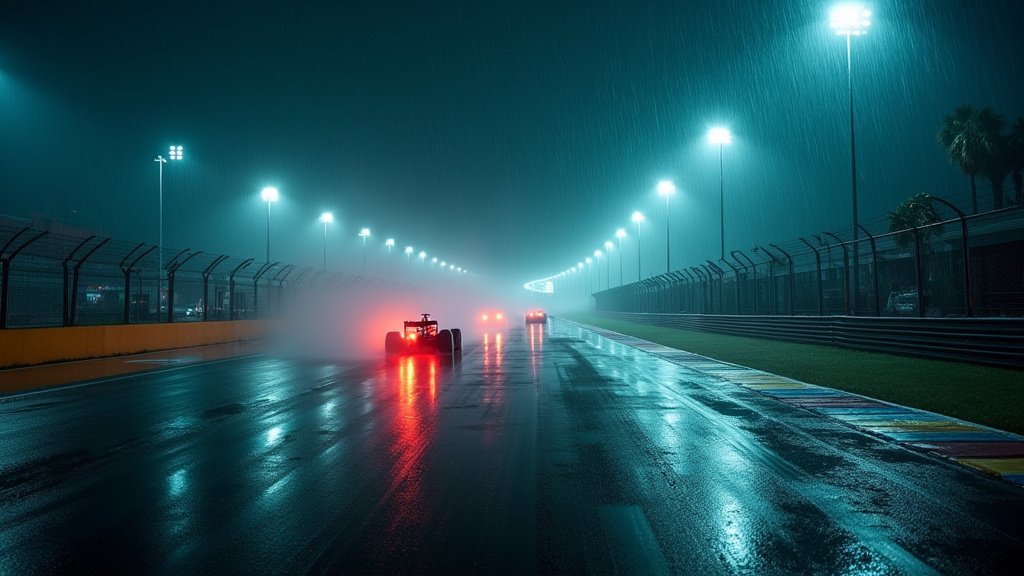
The Miami International Autodrome, usually bathed in sunshine, was a scene of meteorological mayhem today. Torrential rain and high winds transformed the circuit into a treacherous test of nerve and machine. From the moment the lights went out, the race was a chaotic affair, with spray reducing visibility to near zero and standing water making grip a precious commodity. Early laps saw multiple incidents, including a multi-car pile-up at Turn 1 that brought out the safety car for the first time. Many drivers struggled to keep their cars on track, with spins and off-track excursions becoming commonplace. The challenging conditions amplified the importance of driver skill, with those able to adapt and manage their tires effectively gaining a significant advantage.
The Antonelli Phenomenon
Amidst the chaos, 18-year-old Kimi Antonelli, a protégé of the Mercedes junior program, emerged as the unlikely star. Driving for the Williams Racing team under a loan deal, Antonelli displayed a maturity far beyond his years. He consistently navigated the difficult conditions, making bold overtakes and managing his pace with precision. His ability to keep his car on the black stuff when others faltered was remarkable. He inherited the lead during a late-race safety car period and held off the charging pack with a series of flawless laps to claim a sensational victory. This win is not only a career-defining moment for Antonelli but also a massive boost for the struggling Williams team, who have been in need of a strong result for several seasons. The F1 paddock is buzzing with talk of a new superstar, with many already anointing him as a future world champion.
Weather’s Wild Influence
The weather played a decisive role throughout the weekend. Practice sessions were also affected by rain, giving teams limited dry running to fine-tune their setups. Qualifying saw many drivers make mistakes in the wet, shaking up the grid. Sunday’s race, however, was the ultimate test. The downpour intensified just before the start, forcing a delayed commencement and the decision to begin the race on wet tires. As the rain subsided and drivers switched to intermediates and then slicks, the track conditions continued to evolve, demanding constant adaptation and strategic tire management. The safety car was deployed no less than four times, neutralizing Antony progress and bunching up the field, adding to the drama and providing opportunities for drivers to regroup and strategize.
Rival Reactions and Retirements
Many of Formula 1’s established stars saw their races end prematurely. Championship contenders like Max Verstappen and Charles Leclerc were among those who either crashed out or suffered significant damage due to the conditions. George Russell, Antonelli’s supposed mentor, had a difficult race, struggling with the car’s balance in the wet and eventually retiring after an incident. The high attrition rate meant that drivers who could simply bring their cars home safely were often rewarded, but Antonelli’s win was not just about survival; it was a masterful display of controlled aggression and strategic acumen. The disappointment was palpable for drivers who had shown pace in practice but were undone by the unpredictable elements.
The Future is Wet?
Antonelli’s triumph raises questions about the future of the sport and the impact of unpredictable weather on racing. While thrilling for spectators, such extreme conditions also pose significant safety risks. Formula 1’s governing body, the FIA, will undoubtedly review the procedures and safety measures in place for future races in similar weather. For now, however, the focus is on Kimi Antonelli, the young phenom who conquered the storm and announced his arrival on the grandest stage. His performance has reignited excitement for the Williams team and provided a compelling narrative for the remainder of the season.
FAQ: People Also Ask
Who is Kimi Antonelli?
Kimi Antonelli is an 18-year-old Italian racing driver who is part of the Mercedes-AMG Formula 1 junior program. He is competing in Formula 2 in 2024 and made his Formula 1 debut at the Miami Grand Prix as a surprise entry driving for Williams Racing.
What team does Kimi Antonelli drive for in F1?
For the Miami Grand Prix, Kimi Antonelli is driving for the Williams Racing team on loan from the Mercedes-AMG Formula 1 team.
What were the conditions like at the Miami Grand Prix?
The Miami Grand Prix was significantly affected by severe weather, including heavy rain and strong winds. These conditions led to reduced visibility, standing water on the track, and numerous incidents, including multiple safety car periods.
How did Kimi Antonelli win his first F1 race?
Antonelli won his first F1 race by demonstrating exceptional skill and composure in extremely challenging wet conditions. He managed the difficult track, made crucial overtakes, and capitalized on opportunities presented by safety cars and the retirements of other drivers to secure the victory.
What is the significance of Antonelli’s win for Williams Racing?
Antonelli’s victory is a monumental achievement for the Williams Racing team, who have struggled for competitiveness in recent seasons. It provides a much-needed morale boost and signals a potential turning point for the historic Formula 1 outfit.