South Florida is bracing for a deluge as localized flooding becomes a significant concern on Monday due to persistent downpours and thunderstorms. Residents are advised to exercise caution and stay updated on weather advisories as the region navigates a period of intense rainfall.
Key Highlights:
- Localized flooding is a primary concern across South Florida.
- Heavy downpours and thunderstorms are expected.
- Residents should monitor weather alerts and take necessary precautions.
- The forecast indicates a continuation of wet conditions throughout the early part of the week.
Weather Woes: Understanding the Flood Risk
The weather pattern gripping South Florida this Monday presents a serious risk of localized flooding, prompting officials to issue advisories for residents. The National Weather Service has indicated that the combination of saturated ground from recent rains and the continuous barrage of thunderstorms means that even moderate rainfall could lead to significant water accumulation in low-lying areas. This persistent atmospheric moisture is attributed to a slow-moving weather system interacting with warm, humid air prevalent in the region, creating a recipe for heavy precipitation.
Rainfall Intensity and Duration
Forecasters are closely watching the intensity and duration of the rainfall. While individual storm cells might be brief, the sheer volume of water they are capable of depositing in a short period is concerning. The primary concern is flash flooding, which can develop rapidly and pose an immediate danger to motorists and pedestrians. Areas with poor drainage or those situated near small streams and canals are particularly vulnerable. The possibility of prolonged rainfall over several hours increases the likelihood of wider, more persistent flooding, potentially impacting transportation networks and daily commutes.
Thunderstorm Activity and Associated Hazards
Alongside the heavy rain, thunderstorms are a significant component of the current weather. These storms bring not only deluge but also the risk of lightning strikes and, in some instances, gusty winds. The atmospheric instability required for these storms means that conditions can change rapidly, with thunderstorms popping up unexpectedly. While tornadoes are not the primary concern, the intense downbursts of rain can exacerbate flash flooding scenarios by overwhelming drainage systems almost instantaneously. Safety recommendations include seeking sturdy shelter during active thunderstorms and avoiding areas prone to flooding.
Preparing for the Worst: Advisories and Precautions
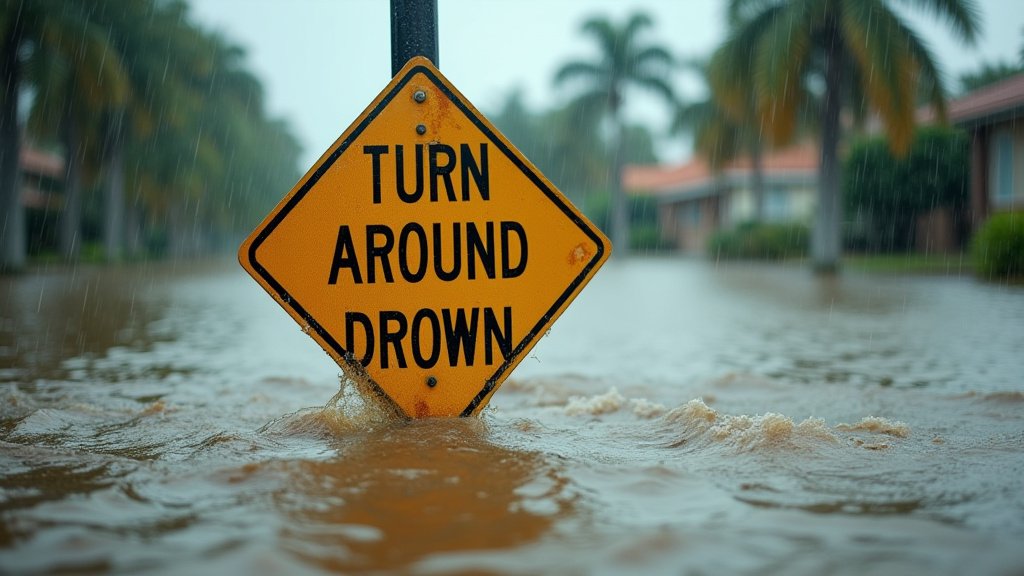
Local authorities are urging residents to stay informed through official weather channels and to prepare for potential disruptions. This includes ensuring storm drains around properties are clear of debris, securing outdoor items that could be swept away by floodwaters, and having an emergency kit ready. For those who must travel, it is crucial to avoid driving through flooded roadways, as the depth and current of the water can be deceptive and dangerous. The phrase ‘Turn Around, Don’t Drown’ is being emphasized as a critical safety message for all drivers in the affected areas.
Entities Impacted and Response Efforts
The South Florida Water Management District (SFWMD) is closely monitoring water levels across canals and levees. Their operational teams are working to manage water discharges from the system to create additional storage capacity for incoming rainfall, a critical task given the saturated conditions. Emergency management agencies across counties like Miami-Dade, Broward, and Palm Beach are on alert, ready to coordinate response efforts should significant flooding occur. Local transportation departments are also deploying resources to monitor roadways and manage traffic disruptions. The Federal Emergency Management Agency (FEMA) is also being kept abreast of the situation, though no federal assistance requests have been made at this time.
FAQ: People Also Ask
What is localized flooding?
Localized flooding occurs when rainfall overwhelms the capacity of local drainage systems, leading to water accumulation in specific areas, such as streets, yards, and underpasses. It can happen very quickly, often during intense thunderstorms.
How can I prepare my home for heavy rain and potential flooding?
To prepare your home, clear debris from gutters and storm drains, secure outdoor furniture and trash cans, and consider elevating appliances or critical utilities if you live in a high-risk flood zone. It’s also advisable to have an emergency supply kit ready.
What should I do if I encounter a flooded road?
Never attempt to drive or walk through flooded roadways. The water may be deeper than it appears, and the current can be strong enough to sweep away vehicles. The slogan ‘Turn Around, Don’t Drown’ is a critical safety reminder.
How does the South Florida Water Management District help manage floodwaters?
The SFWMD manages a vast network of canals, levees, and water control structures. They actively monitor water levels and adjust operations to move water through the system, releasing excess water to the ocean or Lake Okeechobee when conditions permit, or holding it back to prevent flooding in downstream areas.
Are there any specific areas in South Florida more prone to flooding?
Generally, low-lying coastal areas, communities with older or inadequate drainage infrastructure, and areas near canals or bodies of water are more prone to localized flooding. Neighborhoods that have experienced flooding in the past are also often at higher risk during subsequent heavy rainfall events.