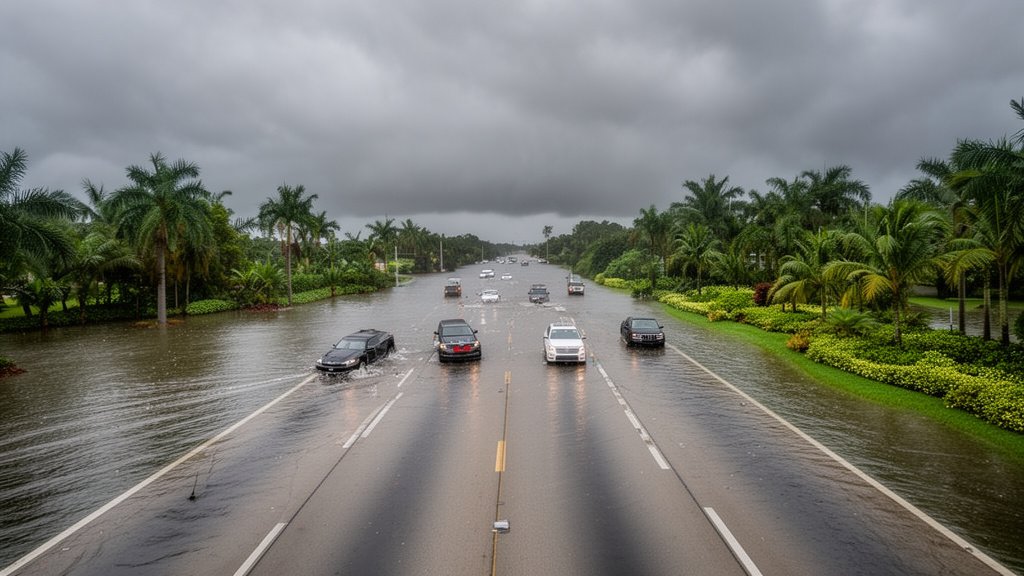
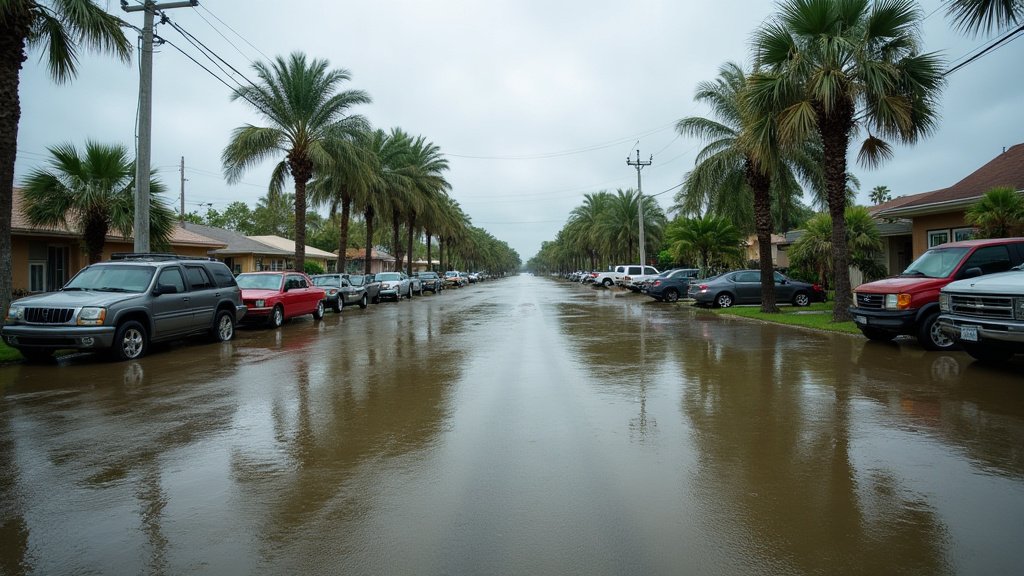
South Florida is currently navigating a period of heightened environmental volatility, as the region from Fort Lauderdale to Miami faces a significant coastal flooding threat. A confluence of seasonal “King tides,” coupled with heavy rainfall and persistent gusty winds, has triggered weather alerts that remain in effect through Tuesday, October 27. Local authorities and the National Weather Service are advising residents and business owners to exercise extreme caution as high-tide cycles push seawater beyond normal containment zones, potentially impacting infrastructure, drainage systems, and low-lying coastal thoroughfares.
Key Highlights
- Weather Alert Status: A coastal flood advisory is active through October 27, specifically targeting the coastline from Broward County through Miami-Dade County.
- The Triple Threat: The flooding event is driven by the combination of astronomically high King tides, sustained gusty winds preventing water runoff, and unseasonable precipitation.
- Infrastructure Impact: Critical drainage and pump systems are currently operating at peak capacity, with officials monitoring for potential overwhelmed storm drains.
- Public Safety Warning: Motorists are strongly advised to avoid driving through standing water, which can hide hazards and cause irreparable damage to vehicle components due to saltwater corrosion.
Navigating the Rising Waters: The South Florida Coastal Crisis
The current coastal flooding event unfolding across South Florida is a stark reminder of the region’s unique geological and meteorological vulnerability. While King tides—the highest tides of the year caused by the gravitational alignment of the sun, moon, and earth—are a predictable annual occurrence, their impact is significantly magnified when combined with local weather anomalies. In this instance, the combination of gusty winds and heavy rainfall has created a compounding effect that stretches the capacity of traditional drainage infrastructure to its breaking point.
The Meteorological Mechanics of the Threat
At the core of the issue are the King tides, which occur when the moon is at perigee or syzygy. In South Florida, these tides are exacerbated by the porous limestone bedrock characteristic of the region, which allows water to rise from beneath the ground, rendering traditional seawalls ineffective in some areas. When this rise is met with surface rain and onshore winds, the water has nowhere to retreat. The National Weather Service has highlighted that the wind direction is particularly critical; strong easterly gusts act as a wall, preventing seawater from draining back into the ocean and forcing it deeper into urban environments. This results in the “sunny day” flooding often seen in neighborhoods far from the immediate shoreline, as water pushes through the stormwater system in reverse.
Infrastructure Under Stress: A Case of Adaptation
Both Miami-Dade and Broward counties have invested heavily in high-capacity pump stations and retrofitted drainage systems designed to mitigate these exact conditions. However, the intensity of this current weather event serves as a stress test for these systems. In cities like Fort Lauderdale and Miami Beach, where road elevations have been a point of contention and engineering focus, crews are actively monitoring “hot spots”—intersections and arterial roads known to flood during high tides. The challenge is not just the volume of water, but the salt content. Saltwater intrusion is a silent, long-term threat to the infrastructure, corroding the very metal and concrete reinforcements that keep the city dry. Emergency management officials are utilizing real-time sensor data to direct traffic away from saturated zones, yet the localized nature of these floods means that conditions can change within minutes.
The Economic and Community Implications
Beyond the immediate logistical hurdles, the persistent flooding brings significant economic implications. Local tourism, a bedrock of the South Florida economy, faces disruption as beaches and boardwalks are rendered inaccessible. Furthermore, property owners in low-lying zones face insurance complexities and rising costs associated with flood mitigation. Small businesses, particularly those with street-level storefronts, must implement temporary flood barriers. The broader conversation has shifted from emergency management to long-term resilience. Urban planners are now evaluating a “living shoreline” approach, incorporating mangrove restoration and natural wetlands to act as biological buffers against the encroaching tide, moving away from reliance solely on mechanical solutions. As the October 27 deadline for the current alert approaches, the community remains in a state of high readiness, aware that as global sea levels continue to rise, these King tide events will move from being episodic inconveniences to defining features of coastal life.
FAQ: People Also Ask
Q: What exactly are King tides?
A: King tides are the highest tides of the year, occurring when the sun and moon’s gravitational forces reinforce each other. They are natural, predictable events that happen annually but can cause significant flooding when paired with other weather conditions like high winds or rain.
Q: Why does the water rise even when it isn’t raining?
A: In South Florida, the bedrock is highly porous. During high tide, the ocean pressure can push water upward through the ground and up through storm drains, a process known as “tidal flooding” or “sunny day flooding,” occurring independently of rainfall.
Q: Is it safe to drive through the flooded streets?
A: No. Authorities strongly advise against driving through flooded roads. Saltwater is highly corrosive to vehicle electronics and mechanical parts. Furthermore, hidden hazards such as open manholes, debris, or deep potholes pose significant risks to both the vehicle and the driver.
Q: How long will this flooding threat persist?
A: The current weather alert is in effect through Tuesday, October 27. Residents should monitor the National Weather Service and local municipal emergency dashboards for updates beyond that date, as tide patterns can fluctuate based on broader atmospheric conditions.