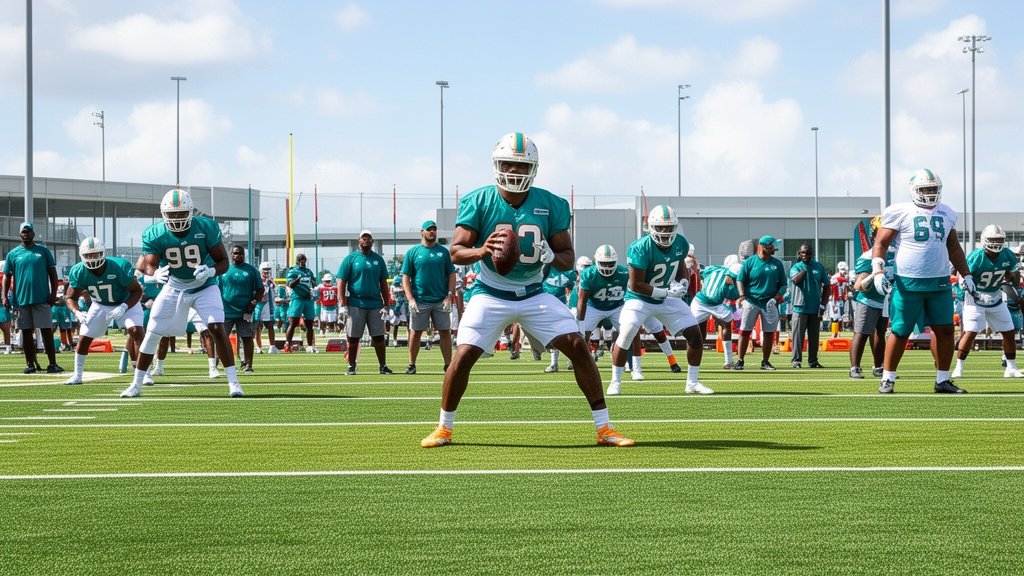
The Miami Dolphins have officially finalized their 53-man roster for the 2026 season, marking the definitive end of a high-stakes training camp and signaling the transition to the NFL regular season. After weeks of rigorous evaluation, internal competition, and strategic maneuvering, the organization has settled on the core group that will carry the franchise through the upcoming campaign. Securing the final Miami Dolphins 53-man roster is the culmination of a rigorous off-season, during which the front office prioritized long-term flexibility, positional depth, and high-impact personnel moves. This roster construction reflects the culmination of months of personnel evaluation, now anchored by key strategic acquisitions facilitated through significant trades with the Green Bay Packers and the Jacksonville Jaguars.
Key Highlights
- Roster Finalization: The organization has completed its required cut-down to the initial 53-man roster, locking in the players who will report for Week 1 preparation.
- Strategic Trades: Major personnel movements were secured through strategic transactions with the Green Bay Packers and the Jacksonville Jaguars, addressing specific needs in the offensive and defensive trenches.
- Camp Conclusion: The official closing of training camp signals a shift in focus from evaluation and competition to game-planning and situational preparation.
- Depth Chart Stabilization: The finalized list provides clarity on the starting rotation and the crucial support roles needed to sustain the team throughout the grueling 17-game season.
Roster Mechanics: The 2026 Strategic Overhaul
The process of building the Miami Dolphins 53-man roster for 2026 was defined by a calculated approach to talent acquisition and salary cap management. Unlike previous seasons, the 2026 approach relied heavily on leveraging trade capital to fill immediate gaps rather than relying solely on the draft or free-agency desperation. The front office’s decision to engage in high-profile trades with the Green Bay Packers and the Jacksonville Jaguars was not merely a reaction to camp performance but a proactive effort to solidify the team’s identity. This strategy acknowledges the volatility of the modern NFL, where roster depth is often the difference between a playoff berth and an early exit.
The Green Bay-Jacksonville Trade Connection
The trades with the Green Bay Packers and the Jacksonville Jaguars represent the backbone of this year’s roster construction. By executing these trades, the Dolphins signaled a commitment to strengthening specific units that had underperformed in the previous season. While the details of the compensation packages remain scrutinized by analysts, the impact on the field is immediate. The acquisition of players via the Packers trade has provided a veteran presence in the secondary, offering stability in coverage schemes. Conversely, the moves involving the Jacksonville Jaguars were primarily focused on the interior offensive line, ensuring that the quarterback’s protection remains a top priority.
These trades were not singular events but part of a cohesive philosophy. By bringing in established talent from teams like Green Bay and Jacksonville, Miami has successfully integrated players who understand the rigors of postseason contention. This transition from ‘project’ players to ‘plug-and-play’ veterans demonstrates a shift in team maturity, aimed at maximizing the competitive window of the current roster.
Depth Chart Analysis: Assessing the Final 53
With the roster now set at 53, the focus turns to the individual units. The balance between special teams, offensive versatility, and defensive rotation is delicate. The 2026 roster shows a heavy emphasis on positionless football—players capable of filling multiple roles to mitigate injury risks.
On the offensive side, the receivers room is crowded, but the coaching staff has opted to keep a diverse mix of speedsters and reliable possession targets. The backfield reflects a committee approach, utilizing different running back styles for early-down power and third-down passing situations. Defensively, the linebacking corps is the most changed unit, reflecting the need to combat modern spread offenses that utilize tight ends as primary pass-catching threats. The decision to retain several undrafted free agents highlights the staff’s commitment to finding diamonds in the rough, proving that the front office is willing to reward performance over draft pedigree.
Evaluating the 2026 Outlook
The transition from training camp to the regular season is notoriously difficult, yet the 2026 Dolphins appear positioned for stability. By finalizing the roster early, the team gains the advantage of cohesion. Players now have the certainty of their roles, allowing them to focus entirely on the nuances of the playbook and the development of chemistry with their teammates. This season, the expectation is not just to compete, but to control the tempo of games through superior preparation and depth.
The inclusion of veteran assets acquired via the Packers and Jaguars trades serves as a stabilizer for the younger members of the team. As the Dolphins head into the regular season, the ‘Next Man Up’ philosophy will be tested, but the depth built during this off-season gives the coaching staff confidence that the roster is resilient enough to withstand the attrition of an NFL season. The 53-man roster is not merely a list of names; it is a calculated statement of intent for the 2026 season.
FAQ: People Also Ask
1. How do the new trades affect the Dolphins’ salary cap in 2026?
Significant trades involve complex financial structures. The Dolphins’ front office utilized salary cap restructuring during the acquisition phase to ensure the team remains compliant while maximizing the talent influx from Green Bay and Jacksonville.
2. Were any surprise cuts made during the finalization of the 53-man roster?
Every year features difficult personnel decisions. While the team aims for continuity, several veterans with established history were released in favor of younger, higher-upside prospects who demonstrated superior physical readiness during the final weeks of camp.
3. Will there be further changes to the roster after the initial 53 are set?
While the roster is ‘finalized,’ it is rarely static. The NFL waiver wire remains active, and the Dolphins will continue to monitor other teams’ cuts to address potential injury concerns or positional weaknesses that may arise during early season practices.
4. What positions saw the most competition during training camp?
Competition was fiercest at the wide receiver and defensive back positions. The high volume of talent competing for limited spots forced the coaching staff to make difficult decisions that ultimately prioritize tactical versatility over raw individual stats.